





What's Happening?
Defense technology company Anduril Industries has vacated its maritime operations along Seattle’s Lake Washington Ship Canal. This move comes after the U.S. Navy canceled the specific unmanned vessel acquisition program that Anduril was pursuing at the former
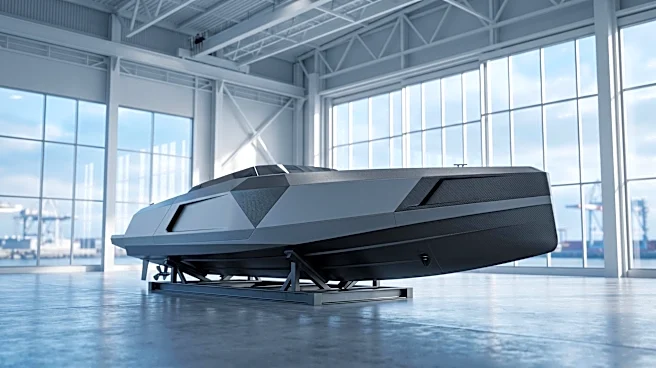
Foss Maritime shipyard site. Anduril confirmed the exit, stating that the shipyard footprint was no longer needed following the Navy's decision to cancel the Modular Attack Surface Craft (MASC) program. The company had previously invested tens of millions of dollars to revamp the shipyard, intending it to be a U.S. hub for low-rate vessel assembly, integration, and testing of Autonomous Surface Vessels (ASVs) for the MASC program. Despite this departure, Anduril's broader presence in Western Washington continues to grow, with plans to expand its regional workforce to 1,000 people, focusing on augmented reality displays, edge computing hardware, and other military technologies.
Why It's Important?
Anduril's exit from the Seattle shipyard highlights the volatile nature of defense contracts and the significant impact of government program cancellations on private sector investments and regional economic development. The cancellation of the MASC program by the U.S. Navy directly led to Anduril abandoning its substantial investment in the Seattle facility, demonstrating how quickly strategic plans can shift in response to federal procurement changes. This event also underscores the Navy's evolving acquisition strategy for unmanned surface vessels, moving away from traditional program competitions towards at-sea demonstrations for Medium Unmanned Surface Vessels (MUSVs). For the defense industry, this shift means companies must adapt rapidly to new evaluation methods and potentially face increased uncertainty in securing future contracts. While Anduril's maritime operations in Seattle have ceased, its continued growth in other technology sectors within the region indicates a strategic pivot, emphasizing areas like edge computing and augmented reality, which are crucial for modern military applications.
What's Next?
Following the cancellation of the MASC program, the U.S. Navy has adopted a new acquisition strategy for Medium Unmanned Surface Vessels (MUSVs), which involves evaluating autonomous vessels through at-sea demonstrations. Companies that successfully deploy vessels in these tests will receive $15 million and become eligible for follow-on production. Initial testing for this new program was set to begin in June and conclude in October. Anduril was not among the seven defense vendors selected to move forward in this initial phase, which included companies like Leidos and Huntington Ingalls Industries. While Anduril has not commented on its plans for the new MUSV program, its focus will likely shift to other areas of its expanding operations in Western Washington, including the development of augmented reality displays and edge computing hardware. The company aims to grow its regional workforce to 1,000 people, indicating a continued commitment to its broader technology initiatives despite the setback in its maritime division.
Beyond the Headlines
The incident with Anduril and the U.S. Navy's MASC program cancellation reveals deeper implications regarding the future of defense technology procurement and the role of private innovation in national security. The Navy's move towards at-sea demonstrations for MUSVs suggests a desire for more agile and performance-based acquisition, potentially favoring companies that can rapidly prototype and demonstrate functional systems over those relying on traditional, lengthy development cycles. This shift could encourage a more dynamic and competitive landscape in defense tech, but also introduces risks for companies making large upfront investments in specific programs. Furthermore, the focus on unmanned vessels and advanced computing technologies like edge computing highlights a broader trend in military modernization, where autonomy and data processing at the tactical edge are becoming paramount. The ethical and strategic considerations of deploying autonomous warships, as well as the economic impact on regions like Seattle that host defense contractors, will continue to be significant topics of discussion.