
What's Happening?
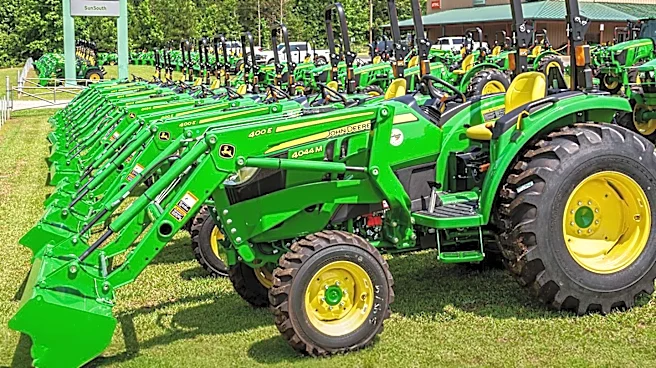
U.S. four-wheel-drive tractor sales experienced a 7.7% increase in October, with 337 units sold compared to 313 in the previous year, according to RFD-TV’s Tony St. James. This rise offers a positive signal
within an agricultural equipment market that otherwise shows weakness across several categories. While larger two-wheel-drive tractors (above 100 horsepower) also saw a 3.2% improvement, overall farm tractor sales slightly declined by 0.5% in October, totaling 16,905 units for two-wheel-drive and 17,242 total farm tractors. Year-to-date figures indicate a more significant downturn, with total farm tractor sales down 11.6% from the previous year, reaching 152,306 units as of October. Curt Blades, senior vice president at AEM, acknowledged the gains in 4WD tractor sales as a "welcome bright spot" but noted the challenging agricultural market conditions, including ongoing trade questions.
Why It's Important?
The slight uptick in four-wheel-drive tractor sales is important as it provides a glimmer of optimism in an otherwise struggling agricultural equipment sector. The agricultural industry's health is a critical component of the U.S. economy, and equipment sales are a key indicator of farmer confidence and investment capacity. An aging farm equipment fleet, as highlighted by AGCO Chairman, President and CEO Eric Hansotia, suggests a potential for future demand improvement, which could stimulate manufacturing and related industries. The current market volatility, exacerbated by trade uncertainties, directly impacts farmers' willingness to invest in new machinery, affecting their productivity and the broader agricultural supply chain. The resilience of the industry, as noted by Curt Blades, and its commitment to modernizing equipment, are crucial for maintaining competitiveness and efficiency in U.S. agriculture.
What's Next?
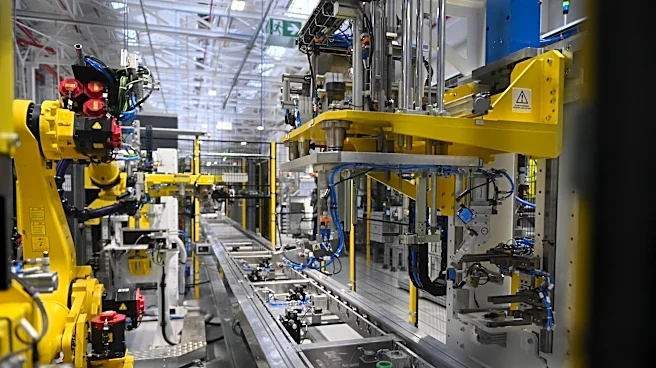
Industry leaders are looking towards 2027 for a potential recovery in the agricultural equipment market. AGCO Chairman, President and CEO Eric Hansotia believes the industry is at the "trough of the downturn" and anticipates "some recovery coming in 2027," driven by an aging tractor fleet. This expectation is leading to significant investments, such as CNH's $50 million modernization of its Racine facility with automated robotics and a total of $5 billion in research and development spending across its U.S. operations through 2030. John Deere has also indicated a positive outlook by rehiring hundreds of workers and reporting a boost in machinery orders. Future sales will depend on various factors, including farm income expectations, credit conditions, and commodity markets, which will influence producers' willingness to invest in new machinery.
Beyond the Headlines
The dynamics of the agricultural equipment market extend beyond mere sales figures, reflecting deeper economic and technological shifts within U.S. agriculture. The emphasis on modernizing equipment and adopting innovative technologies, as mentioned by Curt Blades, points to a broader trend towards precision agriculture and efficiency. Investments in automation and robotics, like those by CNH, suggest a move towards more advanced manufacturing processes and potentially a more skilled workforce. The aging tractor fleet also highlights the financial pressures farmers face, often delaying capital expenditures until market conditions improve. This situation underscores the interconnectedness of agricultural policy, commodity prices, and technological adoption in shaping the future of farming and the industries that support it.