



What's Happening?
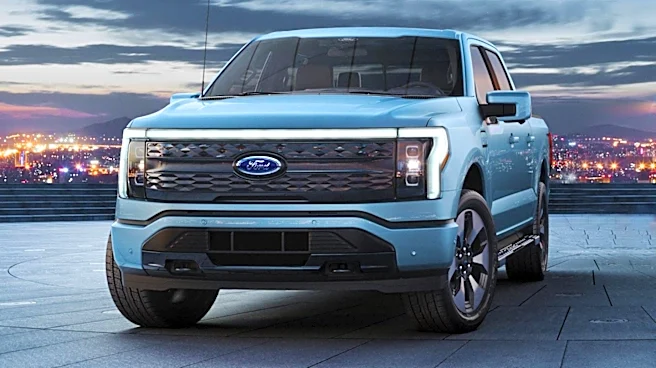
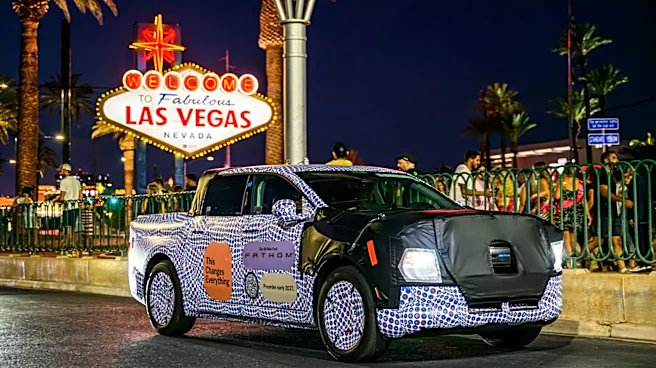
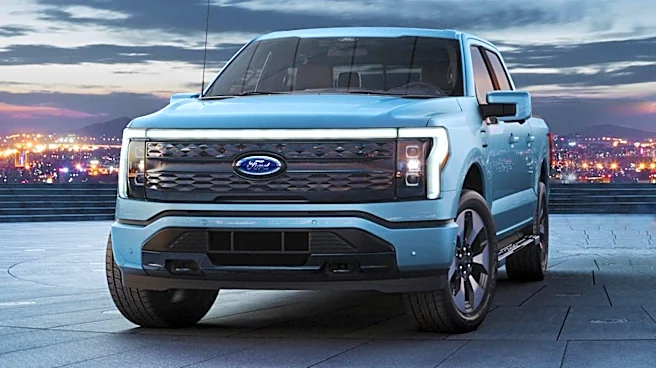
Ford has commenced the shipment of the first U.S.-made lithium iron phosphate (LFP) battery cells from its new Michigan battery plant. These LFP cells are destined for the Louisville Assembly Plant, where they will power prototypes of Ford's Fathom electric
pickup. The BlueOval Battery Park Michigan, a $3 billion facility, began producing these cells last month, utilizing technology licensed from Chinese battery manufacturer CATL. Ford states that the production lines at this plant are capable of producing 40 cells per minute, making them among the fastest LFP battery production lines outside of China. The decision to use LFP batteries is aimed at reducing the cost of Ford's electric vehicles (EVs), as this chemistry does not require nickel or cobalt, and the rectangular cells can be integrated directly into the vehicle's chassis, further cutting expenses.
Why It's Important?
This development marks a significant step in Ford's strategy to localize EV battery production and reduce manufacturing costs, which is crucial for making EVs more accessible to a broader U.S. consumer base. By producing LFP batteries domestically, Ford aims to mitigate supply chain risks and potentially qualify for federal incentives tied to U.S. manufacturing. The move also addresses concerns about reliance on foreign suppliers, particularly from China, a point of contention for some U.S. lawmakers and officials like Transportation Secretary Sean Duffy. The cost-effectiveness of LFP batteries, due to the absence of nickel and cobalt, could accelerate EV adoption by lowering purchase prices, thereby impacting the competitive landscape of the U.S. automotive market and supporting the national transition to electric vehicles.
What's Next?
Ford plans to open its battery pack plant in Marshall, Michigan, in 2027, with the Fathom electric pickup expected to launch in the fourth quarter of next year. The continued ramp-up of domestic battery production will be critical for meeting these timelines and scaling EV manufacturing. The partnership with CATL, despite some political criticism, is enabling Ford to rapidly bring LFP battery technology to the U.S. This strategy could set a precedent for other automakers looking to quickly localize advanced battery production. Future developments will likely include monitoring the Fathom's market reception and the broader impact of cost-effective LFP batteries on EV sales and manufacturing strategies across the U.S. auto industry.
Beyond the Headlines
The establishment of the BlueOval Battery Park Michigan and the production of LFP cells highlight a broader trend of re-shoring critical manufacturing capabilities to the U.S., particularly in strategic sectors like EV technology. This initiative not only creates jobs but also strengthens national economic security by reducing dependence on foreign supply chains for essential components. The political scrutiny surrounding Ford's partnership with CATL underscores the ongoing geopolitical tensions and the delicate balance between leveraging global expertise and fostering domestic industrial independence. This move could also spur further innovation in battery technology within the U.S., as companies strive to develop alternative chemistries and manufacturing processes that are both cost-effective and domestically sourced, shaping the long-term trajectory of the U.S. EV market.