

What's Happening?
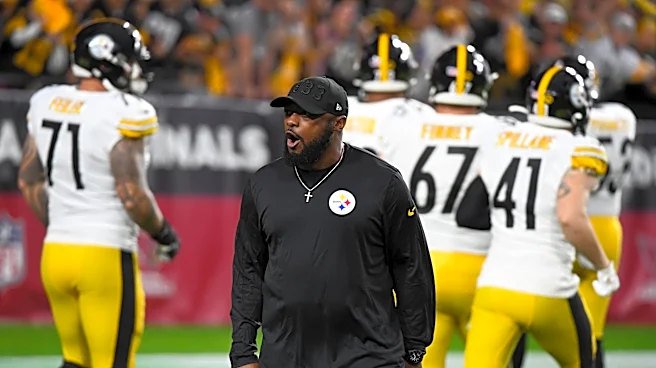
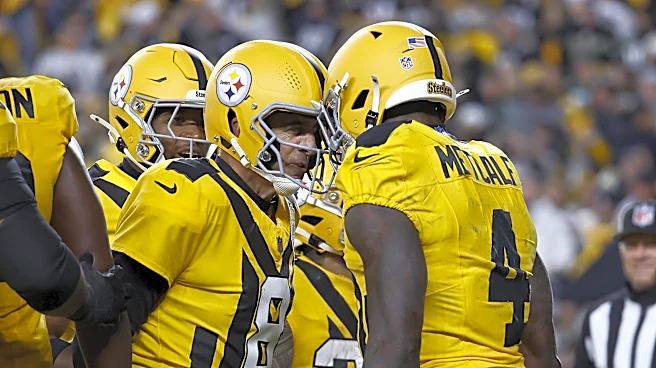
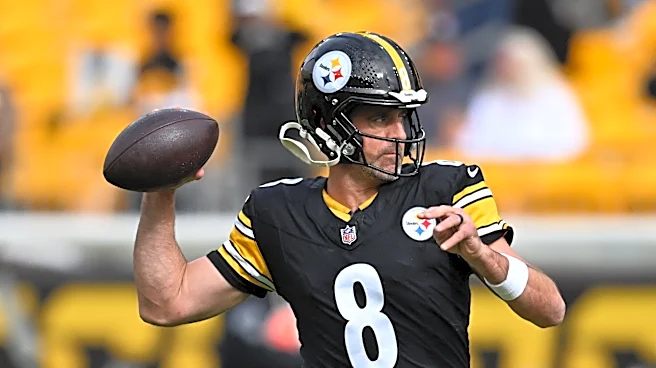
The Pittsburgh Steelers, under Head Coach Mike McCarthy, have adopted a weekly captain format for the current season, a departure from traditional season-long captaincies. This new approach aims to provide various players with opportunities to develop
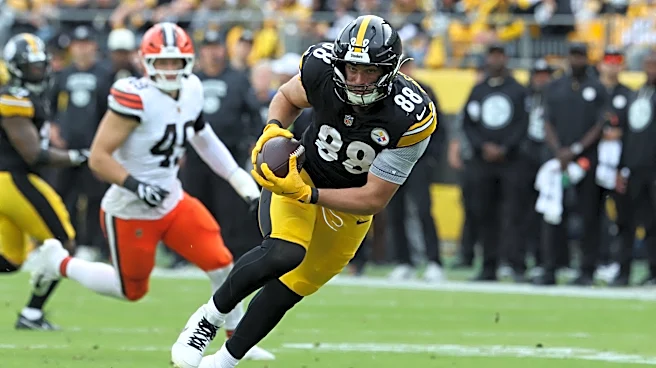
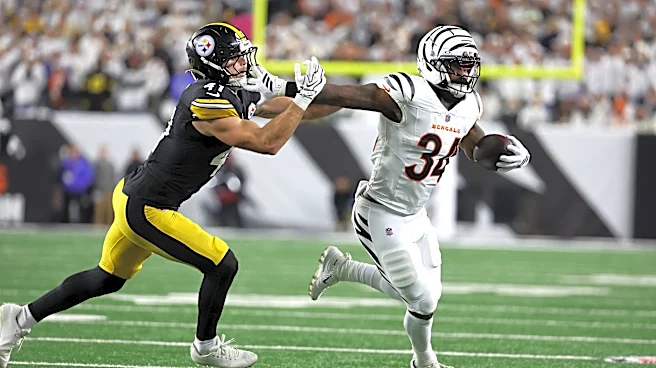
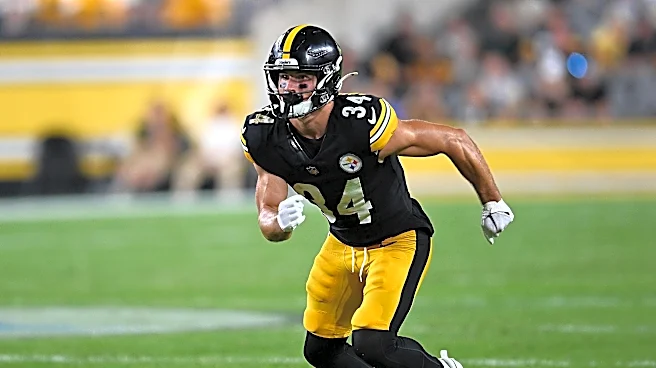
and demonstrate leadership skills. Tight end Darnell Washington, currently in his fourth year, has been recognized in this system, with Aaron Rodgers noting the importance of hearing from different voices within the locker room. While Washington is experiencing his best season as a professional, his fellow tight end Robert Tonyan, in his ninth year, offers a different kind of value through his extensive experience. The decision to involve players like Washington as captains is seen as a way to foster leadership among younger players and special teamers, emphasizing that leadership is not exclusive to the most experienced or highest-performing individuals.
Why It's Important?
This shift in captain selection by the Steelers signifies a modern approach to team leadership and player development in professional sports. By rotating captains weekly, the team is actively cultivating a broader base of leaders, which can enhance team cohesion and adaptability. For players like Darnell Washington, this provides a valuable platform to grow beyond their on-field performance, contributing to the team's culture and strategy. This strategy can lead to a more resilient team, as multiple players gain experience in guiding their peers and communicating effectively. It also challenges the conventional notion that leadership is solely tied to seniority or star power, promoting a more inclusive environment where diverse perspectives are valued.
What's Next?
The Steelers are expected to continue with their weekly captain rotation, offering more players the chance to step into leadership roles throughout the season. This ongoing process will likely contribute to the development of a deeper leadership pool within the team. The impact of this strategy will be observed in how the team performs under pressure and how different players respond to the responsibility of captaincy. It could also influence how other NFL teams approach leadership development, potentially leading to a broader trend of more dynamic and inclusive leadership structures in professional sports. The continued emphasis on diverse voices, as highlighted by Aaron Rodgers, suggests a long-term commitment to this philosophy.
Beyond the Headlines
The Steelers' innovative captaincy model reflects a growing understanding in organizational psychology that leadership is a distributed and dynamic process, not solely vested in a few individuals. By empowering a wider array of players to lead, the team is likely fostering a stronger sense of ownership and accountability across the roster. This approach can lead to increased player engagement, improved communication, and a more robust team culture capable of adapting to challenges. It also provides a valuable lesson in leadership development, suggesting that providing opportunities for leadership, even in short stints, can significantly contribute to an individual's growth and the collective strength of a group. This model could have implications beyond sports, offering insights into how organizations in various sectors can cultivate leadership at all levels.