










What's Happening?
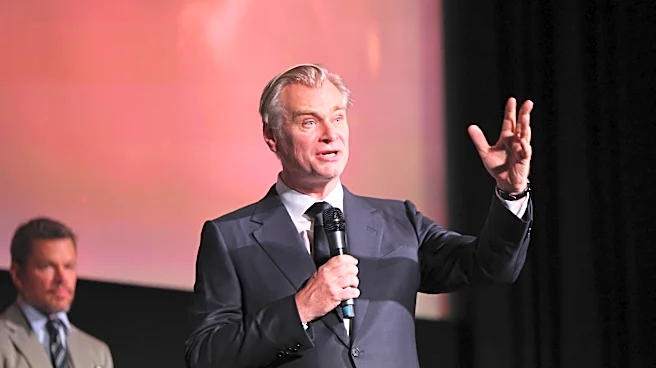
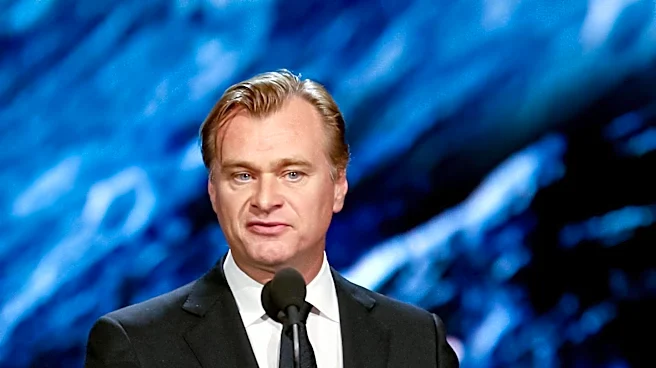
Christopher Nolan's latest film, 'The Odyssey', has been released to critical acclaim, with reviewers praising it as a 'must-watch cinematic experience'. The film, which adapts the ancient epic poem attributed to Homer, follows the journey of Odysseus,
played by Matt Damon, as he attempts to return home after the Trojan War. Critics have highlighted the film's ability to create a believable world, despite its mythical elements, and its epic scope that captures the essence of the original poem. The film's production design, use of real locations, and a strong cast contribute to its immersive experience, setting it apart from other modern blockbusters that often rely on irony and digital effects.
Why It's Important?
The success of 'The Odyssey' underscores the potential for big-budget films to deliver both artistic vision and commercial appeal. In an era where studio blockbusters are often criticized for lack of originality and over-reliance on franchises, Nolan's film demonstrates that a director's singular vision can still thrive. This could encourage studios to invest in more director-driven projects, potentially leading to a renaissance in filmmaking where creativity is prioritized. The film's reception also highlights the audience's appetite for well-crafted narratives that respect the source material, which could influence future adaptations of classic literature.
What's Next?
Following the positive reception of 'The Odyssey', it is likely that studios will be more open to greenlighting projects that allow directors greater creative freedom. This could lead to a shift in the types of films being produced, with a focus on storytelling and world-building. Additionally, the film's success may inspire other filmmakers to tackle ambitious adaptations of classic works, potentially leading to a new wave of epic films. The industry will be watching closely to see if 'The Odyssey' can maintain its momentum at the box office, which would further validate the viability of such projects.