





What's Happening?
Tesla's electric Semi truck, initially unveiled as a concept in November 2017, has seen its first deliveries in late 2022 after several years of delays. Between 200 and 300 units have been delivered as part of pilot fleets, exclusively in North America.
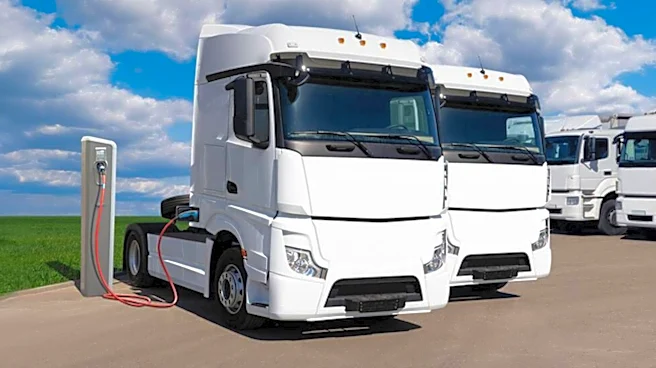
Notable U.S. companies participating in these pilot programs include PepsiCo, Walmart, and ArcBest. The initial target price for the Semi was $150,000, but current series prices for the version offering approximately 800 kilometers of autonomy are around $290,000. Industrial production is set to ramp up in 2026 with the opening of a dedicated factory in Nevada, aiming for a capacity of 50,000 units per year. The truck is designed to handle a total authorized weight of up to 40 tons and can recover 60% of its battery charge in about 30 minutes using MCS-compatible chargers that support up to 1.2 megawatts.
Why It's Important?
The involvement of major U.S. companies like PepsiCo, Walmart, and ArcBest in the Tesla Semi pilot programs signifies a critical step in the adoption of electric heavy-duty vehicles within the American logistics and transportation sectors. These pilot programs provide real-world data on the performance, reliability, and operational costs of electric trucks, which is crucial for broader market acceptance. For these companies, integrating electric trucks can contribute to their sustainability goals, reduce fuel costs, and potentially enhance their public image. The success of these pilots could influence other large U.S. corporations to invest in electric fleets, accelerating the transition away from diesel-powered trucks and impacting the energy infrastructure required to support high-power charging. The high price point of the Semi, significantly above its initial projection, also highlights the substantial investment required for companies to electrify their fleets, potentially creating a barrier for smaller businesses.
What's Next?
Tesla plans to begin industrial production of the Semi in 2026 with the opening of a new factory in Nevada, aiming for a capacity of 50,000 units annually. This ramp-up in production will be critical for Tesla to meet potential demand and demonstrate its ability to scale manufacturing. The company will need to continue addressing the challenges related to charging infrastructure, as fully utilizing the megawatt-plus charging capabilities requires significant installations at depots and along transportation routes. The performance and feedback from ongoing pilot programs with U.S. companies will likely inform future iterations and deployment strategies for the Semi. As the electric truck market matures, Tesla will also face increasing competition from established manufacturers like Volvo Trucks and Mercedes-Benz Trucks, which are already commercializing electric heavy-duty vehicles.
Beyond the Headlines
The deployment of electric heavy-duty trucks like the Tesla Semi has profound implications for the U.S. energy grid and infrastructure. The need for megawatt-level charging stations will necessitate substantial upgrades to electrical grids, particularly in industrial areas and along major freight corridors. This shift could drive innovation in energy storage solutions and smart grid technologies. Furthermore, the widespread adoption of electric trucks could significantly reduce carbon emissions from the transportation sector, contributing to national climate goals and improving air quality in communities near busy trucking routes. However, the environmental benefits are also tied to the source of electricity; a grid heavily reliant on fossil fuels would diminish the overall positive impact. The transition also presents a cultural shift for the trucking industry, requiring new training for drivers and maintenance personnel, and potentially altering the economics of long-haul transportation.