




What's Happening?
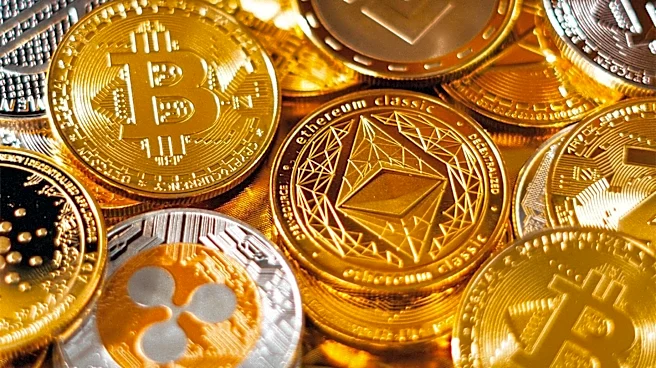
North Korean launderers are employing a novel technique involving meme coins to obscure the movement of cryptocurrency stolen from the $6.4 billion Binance hack. According to Elliptic, these launderers create their own 'worthless' tokens and use them
to funnel stolen cryptoassets through decentralized exchange liquidity pools. This method ensures that funds do not directly transfer from wallets holding stolen assets to the receiving wallets, making the trail harder to follow. This technique has been observed on Tron and NEAR blockchains, and a similar approach on Solana. Elliptic first identified this method in 2025 during the laundering of funds stolen from Bybit. While the amounts laundered using this specific meme coin technique are currently small, approximately 117,000 NEAR (around $430,000), the method is inexpensive to execute and has the potential to process much larger sums.
Why It's Important?
This development highlights the evolving sophistication of North Korea's cybercrime operations and its persistent efforts to circumvent international sanctions. The use of meme coins for money laundering poses a significant challenge for cryptocurrency exchanges and regulatory bodies, as it exploits the decentralized nature of blockchain technology and the ease with which new tokens can be created. This technique complicates the tracing of illicit funds, slowing down investigators and making it harder to recover stolen assets. The ability of North Korea to generate substantial revenue through cyberattacks and sophisticated laundering schemes directly supports its sanctioned weapons programs, posing a threat to global security. For compliance teams, this means that funds originating from liquidity pools, especially those involving newly created or obscure tokens, can no longer be automatically considered 'clean,' necessitating enhanced due diligence and analytical tools.
What's Next?
Compliance teams and blockchain analytics firms will need to adapt their strategies to detect and counter this new laundering method. This includes developing more advanced algorithms to identify suspicious patterns in liquidity pools and scrutinizing transactions involving newly created or low-liquidity tokens. Regulatory bodies may also consider issuing new guidelines or strengthening existing ones to address the misuse of decentralized finance (DeFi) platforms for illicit activities. North Korea is likely to continue refining this technique and exploring other innovative ways to launder stolen cryptocurrency, making ongoing vigilance and technological advancements crucial for cybersecurity and financial crime prevention. The international community will need to enhance cooperation to share intelligence and develop coordinated responses to these evolving threats.
Beyond the Headlines
The use of meme coins for money laundering by a state actor like North Korea reveals a deeper implication: the weaponization of seemingly innocuous digital assets. Meme coins, often created for humor or speculation, are being repurposed for serious financial crime, blurring the lines between legitimate and illicit activities in the crypto space. This trend underscores the inherent challenges in regulating a rapidly evolving decentralized ecosystem. The 'cheap to run' nature of this technique means that even small, resource-constrained actors can engage in sophisticated financial crimes, democratizing illicit finance. Furthermore, the fact that the trail can still be followed on-chain, albeit with increased difficulty, highlights the persistent transparency of blockchain technology, even when sophisticated obfuscation methods are employed. This ongoing cat-and-mouse game between cybercriminals and law enforcement will continue to drive innovation in both illicit activities and forensic analysis.