









What's Happening?
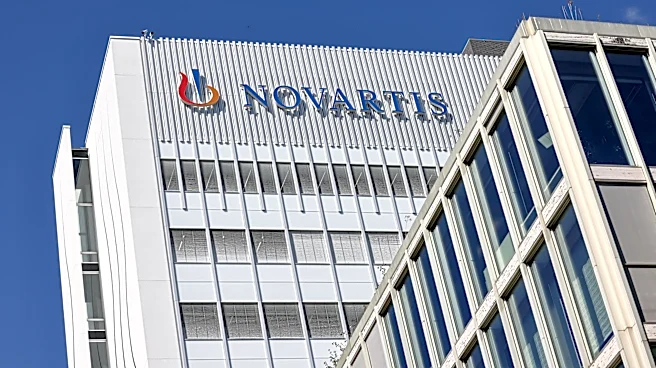
Novartis has entered into a significant partnership with Antares Therapeutics, committing $105 million upfront and up to $1.8 billion in potential milestone payments. The collaboration aims to develop small molecule oncology therapies targeting hard-to-treat
cancers. Antares will lead research activities using its discovery engine, which integrates covalent drug design, chemical proteomics, and machine learning. This partnership allows Novartis to leverage Antares' expertise in targeting historically undruggable cancer targets, with the potential to advance these programs into clinical development. The deal builds on Novartis' strategic focus on oncology and follows a recent acquisition of a PI3Kα inhibitor for $2 billion.
Why It's Important?
This partnership underscores the growing trend of collaboration between large pharmaceutical companies and biotech firms to accelerate the development of innovative cancer therapies. By combining Novartis' global development capabilities with Antares' cutting-edge discovery technology, the collaboration aims to bring new precision medicines to market more rapidly. This could have significant implications for patients with hard-to-treat cancers, offering new treatment options and potentially improving outcomes. The deal also highlights the increasing importance of precision medicine in oncology, as companies seek to develop targeted therapies that address specific genetic and molecular profiles of tumors.
What's Next?
As the partnership progresses, Antares will focus on advancing its lead cancer program into human trials. Novartis may exercise its rights to further develop successful candidates, potentially leading to new clinical trials and regulatory submissions. The collaboration could also inspire similar partnerships in the biotech and pharmaceutical industries, as companies look to combine resources and expertise to tackle complex medical challenges. Additionally, the success of this partnership could influence investment trends, with increased funding directed towards precision medicine and oncology research.