
What's Happening?
The 2026 Tour de France has set a new record as the fastest edition in history, with an average speed of 43.328 kilometers per hour. This surpasses the previous record of 42.849 kilometers per hour set last year. The race was marked by a brutal heat wave
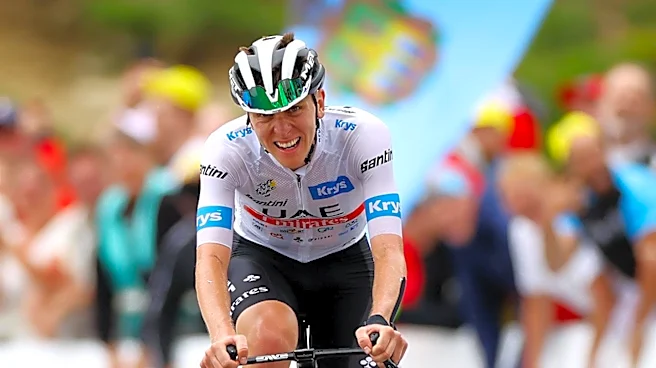
and a challenging final push through the Alps, yet these conditions did not deter the cyclists. The event saw the fastest-ever road stage and a record-breaking ascent of Alpe d'Huez. The increase in speed is attributed to advancements in fueling strategies, with cyclists consuming up to 160 grams of carbohydrates per hour, and the emergence of superteams with significant financial backing. These teams, such as UAE Emirates-XRG, have raised the level of competition, contributing to the accelerated pace of the race.
Why It's Important?
The record-breaking speeds at the 2026 Tour de France highlight the evolving nature of professional cycling, where nutrition, technology, and team dynamics play crucial roles. The increased carbohydrate intake by cyclists is a significant factor in enhancing performance and recovery, allowing athletes to maintain high intensity throughout the race. The presence of well-funded superteams has intensified competition, pushing the boundaries of what is possible in the sport. This evolution reflects broader trends in sports where data-driven strategies and technological advancements are increasingly shaping outcomes. The implications extend beyond cycling, as these developments could influence training and performance strategies in other sports.
What's Next?
Looking ahead, the Tour de France is expected to continue evolving with further advancements in technology and nutrition. The trend of increasing speeds may persist as teams invest more in research and development to gain competitive edges. The role of superteams is likely to grow, potentially leading to a more stratified competition landscape. Additionally, the impact of climate change on race conditions could prompt further innovations in training and equipment to adapt to extreme weather. Stakeholders in the cycling world will be closely monitoring these developments to maintain competitiveness and ensure the sport's sustainability.