


What's Happening?
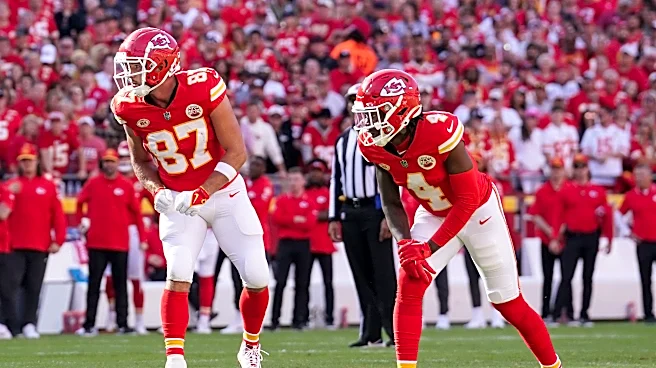
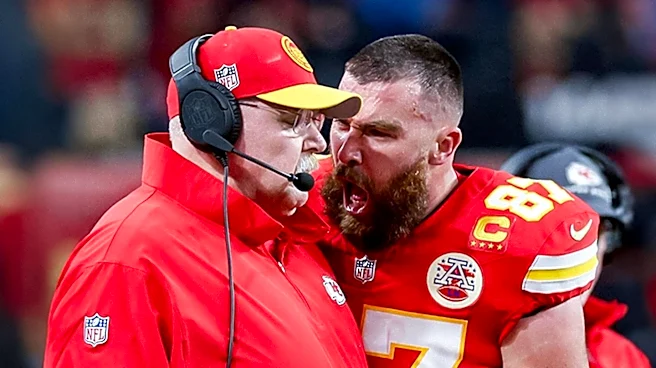
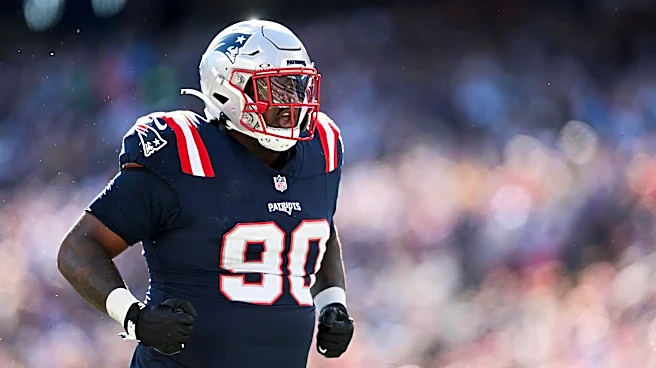
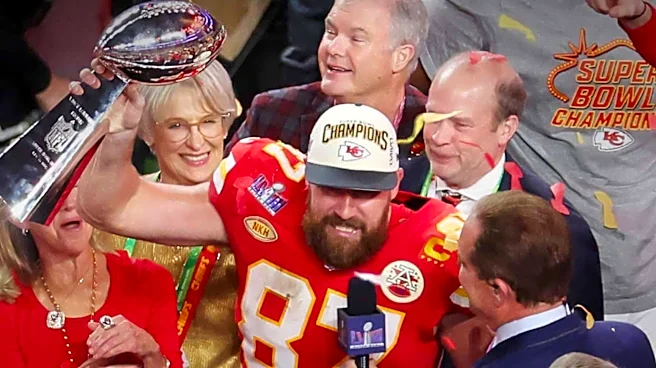
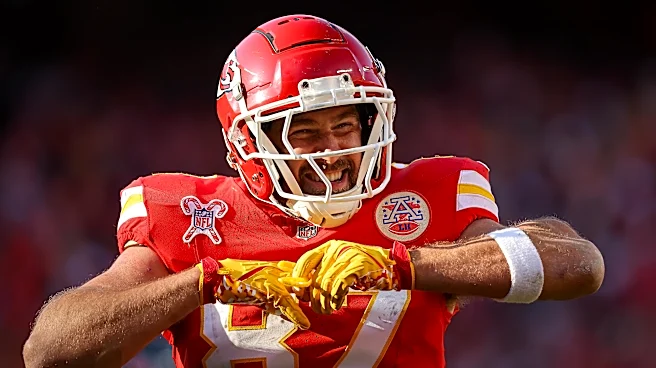
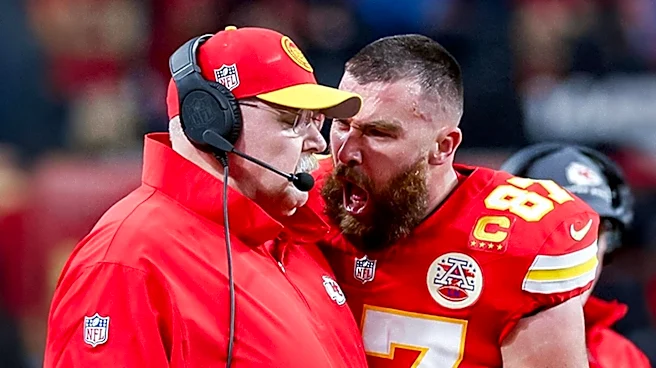
During Rob Gronkowski's Hall of Fame induction, former Patriots linebacker Rob Ninkovich made comments distinguishing Travis Kelce's playing style, stating, 'He’s [Kelce] a receiver. This guy’s [Gronkowski] a tight end.' Ninkovich's argument centers on the
difference in how Kelce and Gronkowski approach the tight end position, implying that Kelce's role is more akin to a wide receiver due to his perceived lack of blocking. This statement reignited the long-standing debate among NFL analysts and fans about who is the superior tight end.
Why It's Important?
Ninkovich's comments highlight a fundamental debate within professional football regarding positional definitions and player roles, particularly for hybrid positions like tight end. This discussion is important because it influences how players are evaluated, compensated, and ultimately, how offensive schemes are designed. For Travis Kelce, being labeled primarily as a 'receiver' by a former player like Ninkovich, especially during a significant event for a peer like Gronkowski, can affect public perception and potentially future contract negotiations. It also underscores the evolving nature of the tight end position in the NFL, where some players are utilized more for their receiving prowess than their blocking ability, challenging traditional definitions.
What's Next?
The ongoing debate about Travis Kelce's classification as a tight end or receiver is likely to continue, fueled by comments from former players and analysts. This discussion could influence how future tight ends are drafted and developed, with teams potentially prioritizing specific skill sets based on their offensive philosophies. For Kelce, continued high-level performance will be the ultimate rebuttal to such criticisms, as his statistics consistently place him among the league's elite. The conversation also serves as a reminder of the subjective nature of player evaluation and the strong opinions held by those within the football community, particularly when comparing generational talents.
Beyond the Headlines
This debate extends beyond mere semantics, touching upon the strategic evolution of the NFL. The increasing specialization of players, even within traditional positions, reflects a league that constantly adapts to maximize offensive efficiency. Ninkovich's remarks, while seemingly critical, also highlight the respect for traditional, all-around tight end play that combines both receiving and blocking. This tension between traditional roles and modern specialization reveals a deeper philosophical divide in football strategy. It also speaks to the competitive nature of the sport, where comparisons between elite players are inevitable and often serve to define eras and legacies.