








What's Happening?
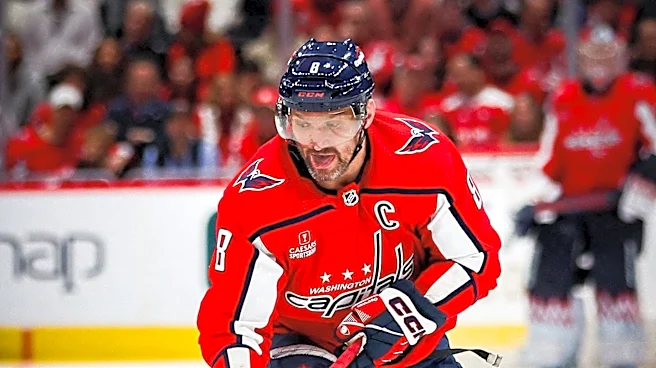
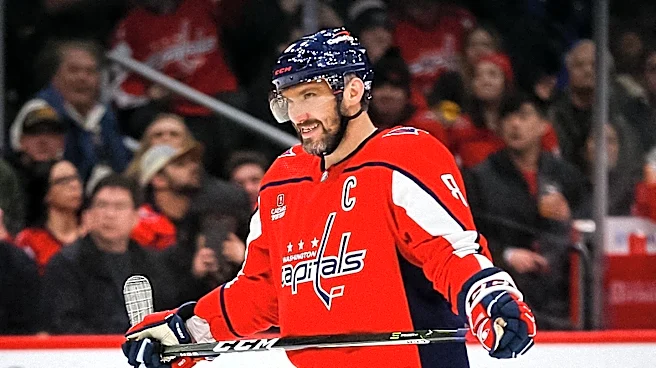
Alex Ovechkin, a prominent player for the Washington Capitals, expressed concerns about the team's ability to re-sign him due to aggressive offseason acquisitions. The Capitals added several high-profile players, including Alex Tuch and Jordan Kyrou,
which significantly impacted their salary cap. Ovechkin, who was a free agent, feared that the remaining cap space might not suffice to secure his contract. However, after brief negotiations, he signed a one-year deal with a $4.25 million cap hit, with potential bonuses that could increase his earnings. The Capitals now have $975,000 in cap space left, and any further roster adjustments might require trading a player.
Why It's Important?
The situation highlights the challenges teams face in balancing aggressive player acquisitions with salary cap constraints. For the Capitals, securing Ovechkin was crucial given his status as a key player and fan favorite. The team's ability to manage its cap space effectively will impact its competitiveness in the upcoming season. This scenario also underscores the broader financial strategies teams must employ in the NHL, where cap management is as critical as on-ice performance. The Capitals' decisions could influence their long-term success and ability to retain other key players.
What's Next?
The Capitals may need to make additional roster moves to ensure compliance with salary cap regulations. This could involve trading players or making strategic decisions about player contracts. The team's management will likely continue to monitor cap space closely, especially with potential performance bonuses that could affect future cap calculations. Fans and analysts will be watching to see how these financial maneuvers impact the team's performance in the upcoming season.