

What's Happening?
In Chennai, a growing trend of upcycling old saris into new garments is gaining momentum, driven by designers focused on reducing textile waste and promoting sustainability. This practice, which has roots in traditional household repurposing, has evolved
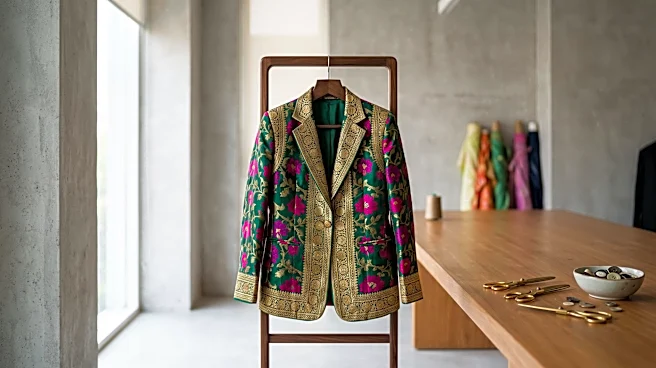
into a commercial venture since the 2010s. Designers are reimagining pre-owned fabrics, particularly silk saris, into contemporary ensembles such as frocks, lehengas, kurtas, corset-style outfits, and blazers. The process is intricate and demanding, requiring careful positioning of original borders, motifs, and designs to maintain visual appeal, and sometimes dealing with the delicate nature of older fabrics. This movement is seen as a crucial step in generating less fashion industry waste, with designers emphasizing that upcycling helps preserve a fabric's lineage and diverts waste from landfills, contributing significantly to sustainability efforts over fast fashion.
Why It's Important?
The upcycling trend in Chennai holds significant importance for both environmental sustainability and economic innovation. By transforming old saris into new clothing and other products, designers are directly addressing the massive issue of textile waste, diverting materials from landfills and reducing the environmental footprint of the fashion industry. This practice promotes a circular economy model, where resources are reused and repurposed, rather than discarded after a single use. Economically, it creates new business opportunities for designers and boutiques, fostering a niche market for unique, custom-made garments. It also empowers consumers to make more sustainable choices, offering an alternative to fast fashion and encouraging a deeper appreciation for craftsmanship and the longevity of clothing. Furthermore, this trend preserves cultural heritage by giving new life to traditional garments like saris, integrating them into modern fashion while honoring their original aesthetic and sentimental value.
What's Next?
The upcycling trend in Chennai is expected to continue its expansion, with designers likely exploring even more innovative ways to repurpose old textiles. This could include a broader range of products beyond clothing, such as home decor items, accessories, and art pieces, as the concept of giving garments a second life gains wider acceptance. As consumer awareness about sustainable fashion grows, demand for upcycled products is likely to increase, prompting more businesses to enter this market. There may also be a rise in workshops and educational initiatives to teach upcycling skills, further democratizing the practice. Collaborations between designers, textile manufacturers, and waste management companies could emerge to streamline the collection and processing of discarded fabrics. Additionally, the success of this trend in Chennai could inspire similar initiatives in other regions, contributing to a larger global movement towards sustainable and circular fashion practices.
Beyond the Headlines
Beyond its immediate environmental and economic benefits, the upcycling trend in Chennai reflects a deeper cultural shift towards valuing resourcefulness and heritage. It challenges the modern consumerist mindset of constant newness and disposability, encouraging a return to practices of repair, reuse, and appreciation for existing materials. Ethically, it promotes responsible consumption and production, offering a tangible solution to the ethical dilemmas posed by fast fashion's environmental impact and labor practices. Culturally, it redefines the narrative around 'old' clothes, transforming them from discarded items into valuable resources with unique stories and aesthetic potential. This movement also highlights the ingenuity of local artisans and designers, showcasing how traditional skills can be adapted to address contemporary challenges. In the long term, this trend could contribute to a broader societal re-evaluation of waste, fostering a more mindful approach to consumption and production across various industries, not just fashion.