


What's Happening?
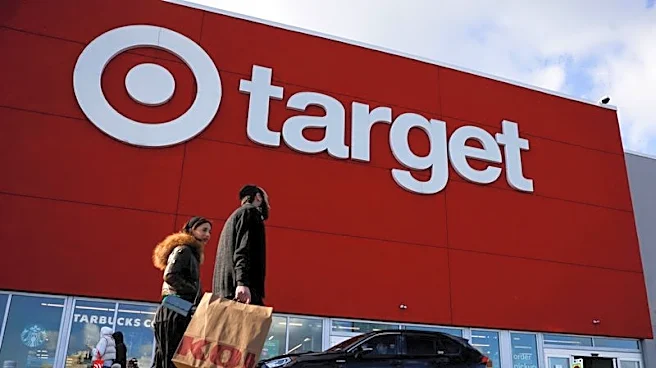
Target has announced a significant increase in its second-quarter operating income, reaching $2.6 billion. This surge is largely attributed to a $994 million pre-tax reimbursement from tariff refunds. The company also reported a 3.8% rise in comparable
sales and a 5.3% increase in overall revenue, totaling $26.54 billion, surpassing consensus estimates. Target's gross margin improved from 28% to 29%, even when excluding the tariff refund benefit, due to reduced markdowns and cancellation costs, alongside increased non-merchandise sales. The retailer saw growth across all six core merchandising categories, including apparel, beauty, food and beverage, hardlines, home, and household essentials. Initiatives like 'Fun 101' for hardlines and an expansion of unique food items have contributed to this positive performance, driving customer traffic and sales.
Why It's Important?
This financial turnaround for Target is important for the U.S. retail sector, indicating a potential recovery trend for brick-and-mortar retailers. The substantial tariff refund highlights the impact of trade policies on corporate profitability and could signal similar benefits for other companies that faced tariffs. Target's strategy of focusing on differentiated retail experiences, competitive pricing, and unique product offerings, such as the 'treasure hunt' effect in stores, demonstrates a viable path for traditional retailers to compete in a dynamic market. The increase in comparable sales and traffic suggests renewed consumer confidence and a willingness to return to in-person shopping. This performance could influence investment decisions in the retail industry and encourage other retailers to adopt similar strategies to boost sales and profitability.
What's Next?
Target has raised its full-year guidance for net sales growth from 4% to 5%, indicating an expectation of continued positive momentum. The company also projects an increase in its adjusted operating margin to 5.1% and adjusted earnings per share guidance to $8.25-$8.75, excluding the tariff refund. The focus on initiatives like 'Fun 101' and expanding unique product lines, including new 'baby boutiques' and 2,000 new baby items, suggests ongoing efforts to enhance the customer experience and attract specific demographics. Investors will be watching to see if Target can sustain this growth without the one-time boost from tariff refunds and if its strategic investments in store remodels and product differentiation continue to drive traffic and sales in the competitive retail landscape.
Beyond the Headlines
The significant impact of the tariff refunds on Target's quarterly profit underscores the broader economic implications of trade policies and their direct effect on corporate balance sheets. This event could prompt a closer examination of how tariff adjustments influence the financial health of major U.S. retailers and, by extension, the consumer goods supply chain. Furthermore, Target's success in driving traffic through a 'treasure hunt' shopping experience and unique product curation highlights a shift in consumer preferences towards experiential retail and novel offerings. This trend suggests that traditional retail models must evolve beyond mere price competition to provide engaging and distinctive shopping environments, potentially influencing urban planning and commercial real estate development as retailers adapt their physical footprints.