


What's Happening?
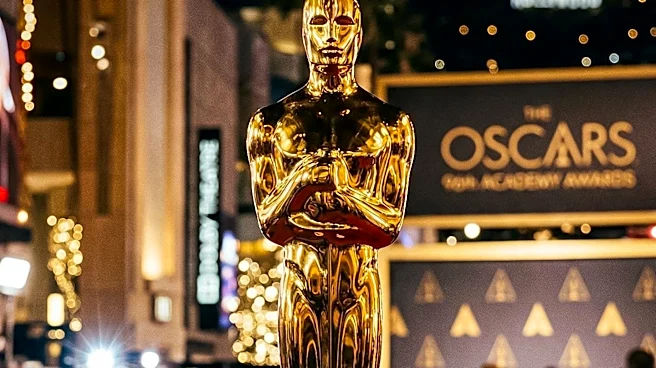
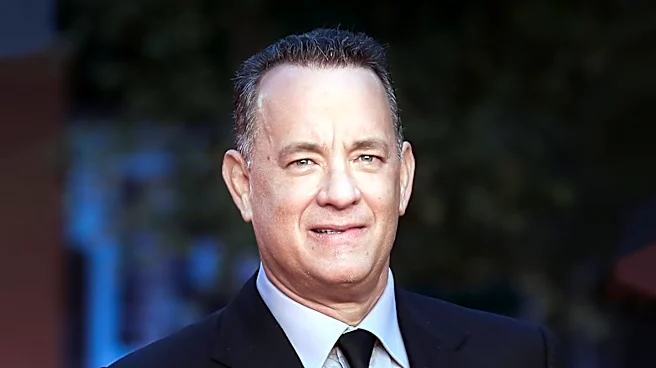
In 1992, during the Academy’s Scientific and Technical Awards at the Century Plaza Hotel, actor Tom Hanks made a surprising declaration, stating that 'Jason and the Argonauts' is the greatest film ever made. This statement was made while honoring stop-motion
pioneer Ray Harryhausen. Hanks's remark, which resurfaced during a 2023 appearance on Turner Classic Movies, was delivered at a non-televised ceremony, three weeks before the main Oscars broadcast. The film, released in 1963, is renowned for its groundbreaking stop-motion effects, particularly the iconic skeleton battle scene, which took Harryhausen four and a half months to animate. This scene involved three men fighting seven skeletons, each requiring meticulous frame-by-frame adjustments to synchronize with the actors' movements.
Why It's Important?
Tom Hanks's unconventional choice challenges the traditional hierarchy of cinematic masterpieces, which often places films like 'Casablanca' or 'Citizen Kane' at the top. His endorsement brings renewed attention to 'Jason and the Argonauts' and, more broadly, to the artistry of stop-motion animation and practical effects. This recognition from a highly respected actor can influence how audiences and critics perceive older films, particularly those celebrated for their technical innovation rather than solely their narrative or dramatic depth. It highlights the enduring impact of Ray Harryhausen's work on filmmaking and special effects, demonstrating how his painstaking craft continues to resonate with and inspire artists decades later. This perspective encourages a broader appreciation for the diverse forms of cinematic excellence.
What's Next?
The re-emphasis on 'Jason and the Argonauts' by a figure like Tom Hanks could lead to a resurgence of interest in classic stop-motion animation and the works of Ray Harryhausen. Film schools and cinematic studies programs might further integrate discussions of Harryhausen's techniques and influence into their curricula. Streaming platforms could see increased viewership for 'Jason and the Argonauts' and other films featuring pioneering special effects. This could also spark debates among film critics and enthusiasts about what truly constitutes the 'greatest film,' moving beyond conventional choices to consider technical achievement and imaginative storytelling. The legacy of practical effects, often overshadowed by modern CGI, might gain renewed appreciation.
Beyond the Headlines
Hanks's statement transcends a mere film preference; it speaks to the profound impact of childhood experiences on artistic taste and the subjective nature of what constitutes 'greatness' in art. His choice of a fantasy adventure film, rich in imaginative creatures and groundbreaking effects, over more critically 'serious' dramas, underscores the power of wonder and visual spectacle in cinema. It also implicitly champions the unsung heroes of filmmaking—the special effects artists whose meticulous work often goes unnoticed by the general public but forms the backbone of many beloved movies. This perspective encourages a deeper look into the craft behind the magic of cinema, reminding us that technical innovation can be as artistically significant as narrative complexity.