





What's Happening?
Chuck Pratt, a legendary figure in Yosemite climbing, is being recognized for his significant contributions to the sport during the 1960s and 1970s. Pratt was instrumental in numerous first ascents on prominent Yosemite formations, including Fairview
Dome, Washington Column, the Salathé and North America Wall on El Capitan, the South Face of Mt. Watkins, and Arch Rock. His climbing partner, Royal Robbins, lauded Pratt's 'fantastic native talents and unassuming demeanor,' highlighting him as an exceptional climbing companion and teacher. Beyond his impressive ascents, Pratt is also credited with pioneering balance training for climbers, a practice that was uncommon at the time. A photograph from 1968 shows him training balance by standing on one foot on a fence while juggling, demonstrating an early focus on coordination that has since become a standard skill for climbers.
Why It's Important?
Chuck Pratt's legacy is crucial to understanding the evolution of rock climbing in the United States, particularly within Yosemite National Park, a globally recognized hub for the sport. His first ascents on some of the most challenging routes in Yosemite pushed the boundaries of what was considered possible, inspiring generations of climbers. The North America Wall, a 2,400-foot, 28-pitch route on El Capitan, which Pratt completed with Royal Robbins, Yvon Chouinard, and Tom Frost, stands as a testament to his skill and endurance. Furthermore, his innovative approach to training, specifically his emphasis on balance, laid groundwork for modern climbing conditioning. This foresight in training methods underscores his impact not just on the physical act of climbing but on the broader culture and preparation within the climbing community, influencing how athletes approach the sport today.
What's Next?
While Chuck Pratt's direct influence on current climbing expeditions is historical, his pioneering spirit and innovative training methods continue to resonate within the climbing community. The stories of his ascents and his unique training regimen serve as foundational narratives for new climbers and seasoned veterans alike. His contributions are likely to be further celebrated through historical accounts, documentaries, and educational materials that delve into the golden age of Yosemite climbing. As climbing continues to grow in popularity, figures like Pratt will remain central to understanding the sport's roots and the development of its techniques and ethos. His legacy will persist as a benchmark for courage, skill, and innovation in the world of extreme sports.
Beyond the Headlines
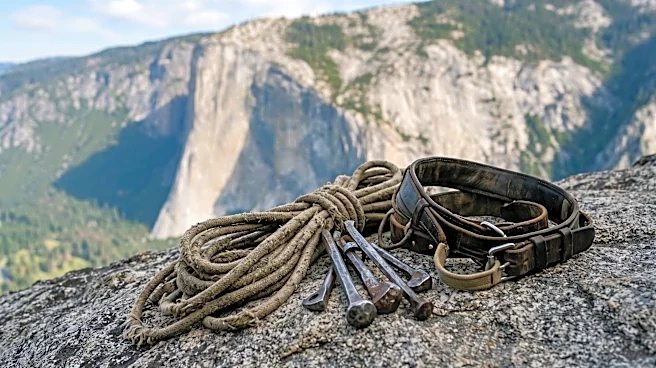
Chuck Pratt's story extends beyond mere athletic achievement; it embodies a significant cultural shift in how individuals interacted with and conquered natural landscapes. His era in Yosemite was characterized by a raw, exploratory spirit, where climbers often relied on rudimentary gear and sheer determination. This period fostered a unique subculture of individuals who pushed physical and mental limits, contributing to the mystique and allure of Yosemite climbing. Pratt's unassuming demeanor, despite his extraordinary feats, highlights a humility often found in those who truly connect with nature's grandeur. His emphasis on balance training also subtly points to a deeper understanding of physical mastery, suggesting that true strength encompasses more than just brute force, but also precision and control. This holistic approach to climbing, championed by Pratt, continues to influence the philosophical underpinnings of the sport.