



What's Happening?
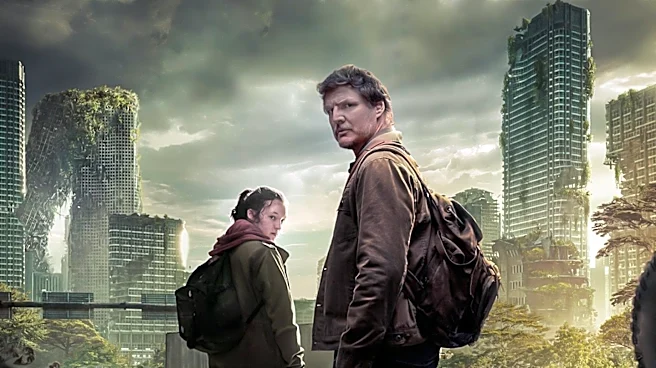
HBO boss Casey Bloys has indicated that the critically acclaimed series 'The Last of Us' may conclude after its third season. This statement comes amidst ongoing speculation regarding the show's future beyond the upcoming season. The first season of the series adapted
the entirety of 'The Last of Us' video game, spanning nine episodes. The second season is set to cover only half of 'The Last of Us Part 2' video game, focusing on Ellie's narrative. The third season is expected to delve into Abby's storyline, which constitutes the latter half of 'The Last of Us Part 2'. Previously, composer Jake Staley had suggested that at least two more seasons were anticipated after HBO announced season three. The potential conclusion after season three would mean condensing or omitting later parts of the game's narrative, which includes Ellie's life with Dina before her final confrontation with Abby.
Why It's Important?
The potential conclusion of 'The Last of Us' after its third season carries significant implications for fans and the television industry. For fans of the original video game, this could mean a departure from the full scope of the game's narrative, potentially leading to dissatisfaction if key plot points or character developments are rushed or excluded. From an industry perspective, ending a highly successful and critically acclaimed series after three seasons, especially one based on popular source material, could be seen as a strategic decision to maintain narrative integrity rather than prolonging a story beyond its natural conclusion. This approach could influence how other adaptations of extensive source material are planned and executed, prioritizing quality and faithfulness to the core story over maximizing episode count. The decision also impacts the careers of the cast and crew, including stars Pedro Pascal and Bella Ramsey, who have garnered significant acclaim for their roles.
What's Next?
The third season of 'The Last of Us' is anticipated to premiere on HBO in 2027. Following Bloys's comments, further clarification from showrunner Craig Mazin or HBO executives will be crucial to confirm whether season three will indeed be the final installment. The production team will face the challenge of adapting the remaining narrative of 'The Last of Us Part 2' within the confines of a single season, potentially requiring creative decisions on pacing and story inclusion. Viewers will be closely watching for announcements regarding the scope and direction of the third season, particularly how it handles the conclusion of the complex storylines involving Ellie and Abby. The reception of season three will likely influence future discussions about adapting expansive video game narratives for television.
Beyond the Headlines
The decision to potentially conclude 'The Last of Us' after three seasons highlights a broader tension in television adaptations: balancing fidelity to source material with the demands of episodic storytelling and network strategies. While a fourth season might logically cover the entire game's narrative, as suggested by the game's structure, the choice to end earlier could reflect a desire to avoid narrative bloat or a decline in quality often associated with prolonged series. This situation also underscores the evolving relationship between video games and television, where successful adaptations like 'The Last of Us' set precedents for how complex, interactive narratives are translated to a passive viewing experience. The show's conclusion could spark further debate on the optimal length for such adaptations and the creative liberties taken when translating beloved stories across different media.