








What's Happening?
The Insurance Institute for Highway Safety, based in Arlington, Virginia, reports that while new driver-assist technologies are helping to prevent crashes, there are still questions about their overall safety and impact on driver behavior. Advanced safety features,
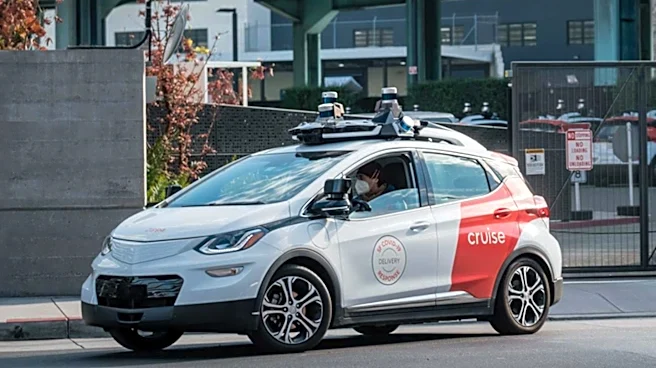
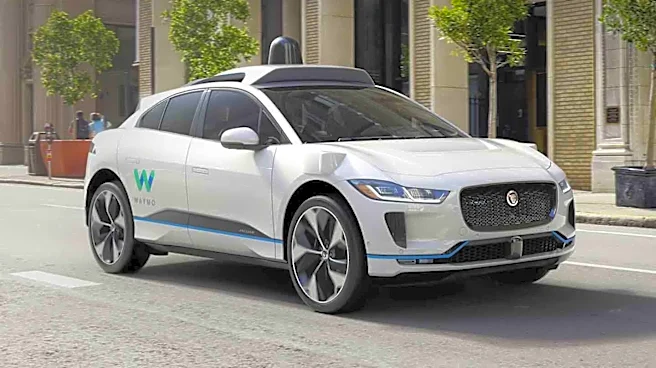
such as automatic emergency braking and partial driving automation systems, are becoming more common in new vehicles. However, the institute's president, David Harkey, emphasizes the need for more comprehensive data to assess these technologies' safety compared to human drivers. The National Highway Traffic Safety Administration requires crash data reporting from companies operating autonomous vehicles, but the limited mileage logged by these vehicles makes it difficult to draw broad conclusions.
Why It's Important?
The development and implementation of driver-assist technologies have significant implications for road safety and the automotive industry. While these technologies have the potential to reduce accidents and improve safety, their effectiveness compared to human drivers remains uncertain due to insufficient data. This uncertainty poses challenges for regulators, manufacturers, and consumers, as it affects public trust and the adoption of autonomous vehicles. The ongoing expansion of robotaxi services in U.S. cities highlights the need for rigorous safety evaluations to ensure these technologies are as safe as, or safer than, human drivers. The outcome of these evaluations could influence regulatory policies and consumer acceptance of autonomous vehicles.
What's Next?
As the automotive industry continues to innovate, gathering comprehensive safety data on driver-assist technologies will be crucial. Researchers and regulators will need to conduct extensive studies to evaluate these systems' performance in real-world conditions. This process may take several years, during which public trust in autonomous vehicles will depend on demonstrating their safety. In the meantime, advanced vehicle technologies should be viewed as tools to enhance safety, not as replacements for attentive driving. The findings from ongoing research will likely shape future regulations and consumer perceptions of autonomous vehicles.