



What's Happening?
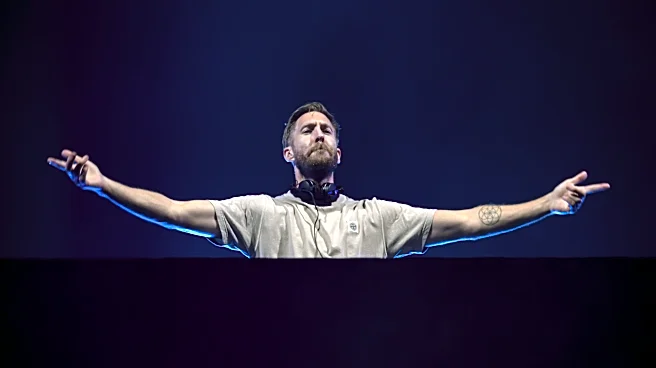
DJs John Summit, Calvin Harris, and Fisher are at the forefront of a significant resurgence in house music, particularly among Generation Z. This genre, a subgenre of electronic dance music (EDM) characterized by its consistent 4/4 beats and heavy basslines,
has transformed the club scene. The shift is evident in college towns and major festivals like EDC, where the focus is moving away from aggressive dubstep and heavy bass towards a more communal and groovy house vibe. This change reflects a desire among younger generations for music that fosters a sense of community and shared experience, contrasting with the isolation many experienced during the COVID-19 pandemic. House music's consistent and predictable nature is resonating with a generation that has grown up amidst constant technological and political changes.
Why It's Important?
The growing popularity of house music, spearheaded by artists like John Summit, Calvin Harris, and Fisher, signifies a notable cultural shift within the U.S. music landscape, particularly impacting Gen Z. This trend suggests a move towards musical genres that prioritize collective experience and consistent rhythms over individualistic or aggressive styles. For the music industry, this could mean increased investment in house music artists, venues catering to this genre, and a re-evaluation of festival programming to align with evolving audience preferences. The shift also highlights how music serves as a form of identity and belonging for younger generations, who are seeking connection and stability in a rapidly changing world. This could influence marketing strategies and artist development within the electronic music scene.
What's Next?
The continued rise of house music, driven by artists such as John Summit, Calvin Harris, and Fisher, is likely to further shape the U.S. live music and club scene. Expect to see more mainstream festivals incorporating larger house music stages and headliners, reflecting the genre's increasing appeal. College towns and urban nightlife venues will likely continue to feature house music prominently, solidifying its position as a dominant sound for Gen Z. This trend could also lead to new collaborations between house music artists and artists from other genres, further diversifying the soundscape. The emphasis on community and shared experience within house music may also influence how events are organized, with a focus on creating inclusive and interactive environments for attendees.
Beyond the Headlines
The embrace of house music by Gen Z, championed by DJs like John Summit, Calvin Harris, and Fisher, carries deeper implications beyond just musical taste. It reflects a generation's search for stability and connection in a world marked by constant flux and digital isolation. The repetitive, consistent beats of house music can be seen as a sonic anchor, providing a sense of predictability and shared rhythm that contrasts with the 'consistent chaos' of their upbringing. This cultural phenomenon suggests a collective yearning for authentic human connection and a departure from the hyper-individualized experiences often fostered by social media. The communal aspect of house music events offers a space for collective identity formation, providing a sense of belonging that many felt was missing during formative years impacted by global events.