







What's Happening?
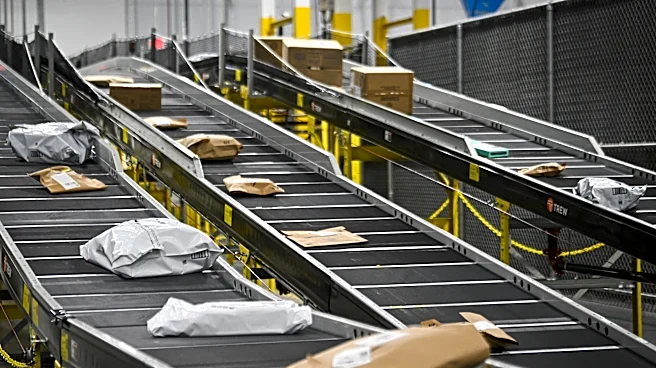
A recent survey by AlixPartners highlights a significant shift in consumer expectations regarding delivery times, with sub-three-day delivery now becoming the standard. The survey, which gathered insights from U.S. consumers and senior logistics professionals,
indicates that consumers now expect free delivery within an average of 2.7 days, a decrease from previous years. This change is largely influenced by the practices of major e-commerce players like Amazon, which have set new benchmarks for delivery speed. The survey also notes that more than 20% of demand could be at risk if these expectations are not met. Retailers are responding by diversifying their carrier options, moving away from traditional giants like FedEx and UPS, to ensure reliability and meet consumer demands.
Why It's Important?
The shift in consumer expectations for faster delivery times is reshaping the retail landscape in the U.S. Retailers are under pressure to adapt to these new standards or risk losing business. This has led to a diversification in carrier usage, with many retailers opting for multiple carriers to ensure reliability and meet demand. The trend also highlights the growing influence of technology, particularly AI, in optimizing delivery processes. AI is being used to improve estimated delivery times and reduce failed deliveries, which are critical for maintaining customer satisfaction. This evolution in delivery expectations and logistics strategies could have significant implications for the retail industry, affecting everything from supply chain management to customer service practices.
What's Next?
As consumer expectations continue to evolve, retailers will likely further invest in technology and logistics solutions to enhance delivery efficiency. The use of AI in logistics is expected to grow, with a focus on improving delivery accuracy and optimizing routes. Retailers may also explore new partnerships with emerging carriers to diversify their delivery networks. Additionally, the industry might see a segmentation of delivery services, where different tiers of service are offered based on consumer willingness to pay for speed. This could lead to a more fragmented market, with some retailers focusing on premium, fast delivery services while others maintain more traditional timelines.
Beyond the Headlines
The shift towards faster delivery times raises questions about the sustainability and environmental impact of increased logistics operations. As retailers strive to meet consumer demands, the environmental footprint of expedited shipping could become a concern. Additionally, the reliance on technology and AI in logistics may lead to workforce changes, with a potential reduction in traditional logistics roles. Ethical considerations around data privacy and the use of AI in consumer interactions may also emerge as critical issues for retailers to address.