


What's Happening?
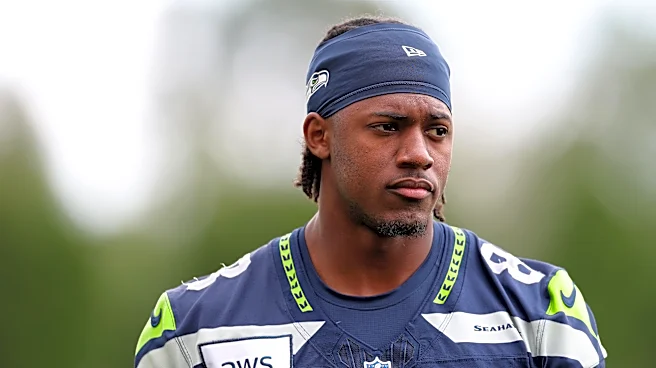
Seattle Seahawks senior reporter John Boyle has expressed concerns regarding the heavy workload of wide receiver Jaxon Smith-Njigba. Through nine games, Smith-Njigba has accumulated 99 targets, placing him second in the NFL, despite the Seahawks ranking
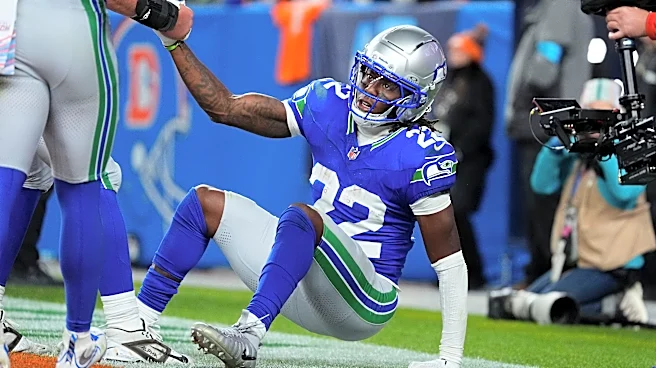
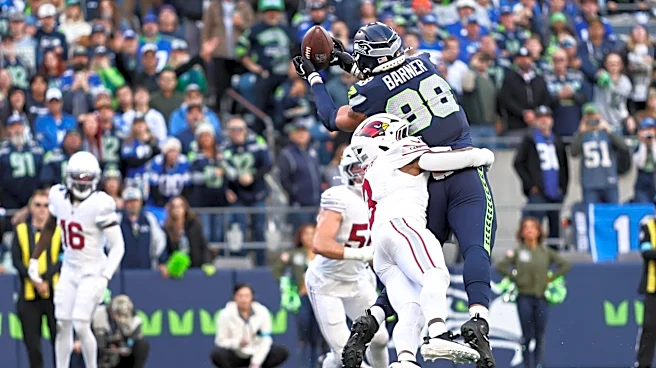
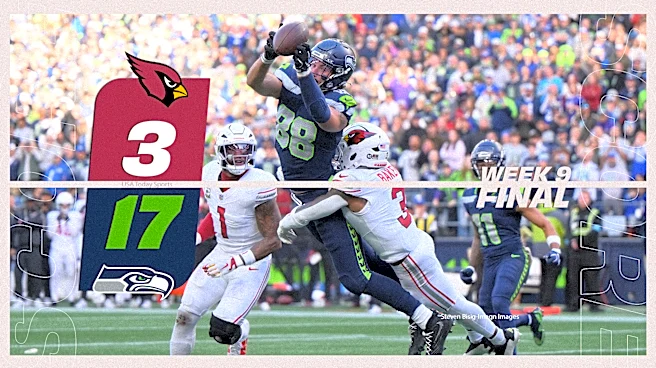
20th in total pass attempts. He leads the league in receiving yards with 1,036 and touchdowns with nine. Boyle addressed a fan's inquiry about increasing Smith-Njigba's targets, highlighting the risks of turnovers when forcing passes into heavy coverage and the importance of maintaining the star player's health. Smith-Njigba's consistent production has been a cornerstone of Seattle's offense, with 71 receptions in nine games. His performance includes a seven-catch, 51-yard game against the Arizona Cardinals and a six-catch, 118-yard outing against Chicago. The team has struggled to find consistent offensive production beyond Smith-Njigba, with veteran Cooper Kupp and Rashid Shaheed (who has been battling a knee injury) as other experienced options. Rookie running back Jadarian Price contributed with four catches for 54 yards against Arizona, indicating a potential need for more diverse offensive contributions.
Why It's Important?
The heavy reliance on Jaxon Smith-Njigba by the Seattle Seahawks carries significant implications for both the team's strategic approach and the player's long-term health and performance. For the Seahawks, an over-dependence on one player can make their offense predictable, allowing opposing defenses to focus their efforts on neutralizing Smith-Njigba. This could lead to increased double-coverage, fewer open targets, and a higher risk of turnovers, as noted by John Boyle. Furthermore, the physical toll of such a high target volume in a 17-game NFL season could increase Smith-Njigba's susceptibility to injuries, which would be a major setback for the team. For Smith-Njigba, while his current production is elite, sustaining such a pace without adequate support from other offensive players could lead to burnout or a decline in efficiency if defenses successfully adapt. The situation underscores a broader challenge for NFL teams: balancing the utilization of star talent with the need for a diversified and resilient offensive scheme to ensure sustained success and player longevity.
What's Next?
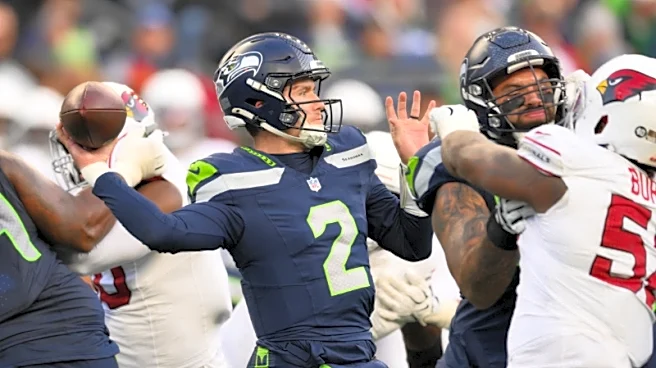
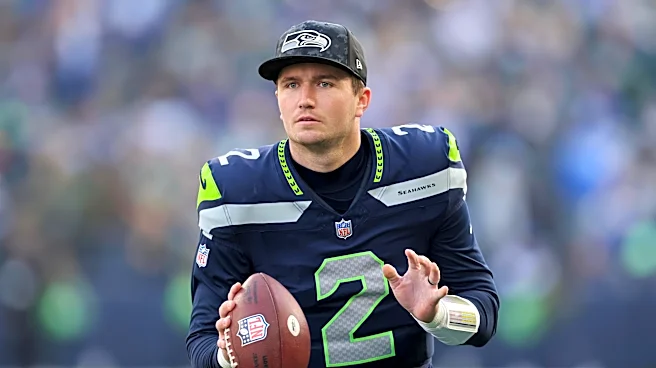
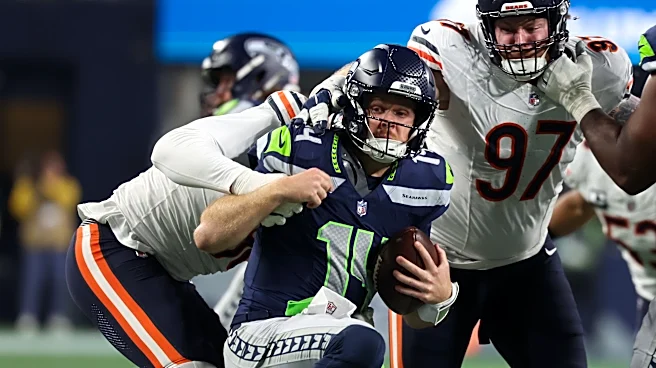
The Seattle Seahawks face the immediate challenge of diversifying their offensive attack to alleviate the heavy reliance on Jaxon Smith-Njigba. With quarterback Drew Lock expected to start against Las Vegas while Sam Darnold recovers from injuries, the passing game faces additional hurdles. The team will likely explore ways to integrate other playmakers more effectively, such as veteran Cooper Kupp and rookie running back Jadarian Price, to create more balanced offensive schemes. This could involve designing plays that draw defensive attention away from Smith-Njigba or increasing targets for other receivers and tight ends. The coaching staff will need to strategize on how to maintain Smith-Njigba's elite production while mitigating the risks of overuse and predictability. Monitoring his health will be paramount, especially as the season progresses into its later stages. The team's ability to develop other consistent receiving threats will be crucial for their playoff aspirations and for ensuring Smith-Njigba's sustained impact throughout the season and beyond.
Beyond the Headlines
The situation with Jaxon Smith-Njigba highlights a recurring theme in professional sports: the double-edged sword of exceptional individual talent. While Smith-Njigba's performance is undeniably a massive asset for the Seahawks, the team's over-reliance on him could inadvertently stunt the development of other offensive players. If the ball consistently goes to one player, others may not get the opportunities needed to grow into reliable contributors, creating a talent imbalance. This dynamic can also affect team morale, as other players might feel underutilized or less integral to the team's success. From a strategic standpoint, it forces offensive coordinators to walk a tightrope between maximizing their star's impact and fostering a more robust, multifaceted attack that can withstand injuries or defensive adjustments. The long-term implications for Smith-Njigba's career could also be significant; while current usage showcases his talent, sustained high volume without adequate protection could shorten his career or diminish his peak performance years due to accumulated wear and tear. This scenario underscores the complex interplay between individual brilliance and team-wide strategic development in the NFL.