




What's Happening?
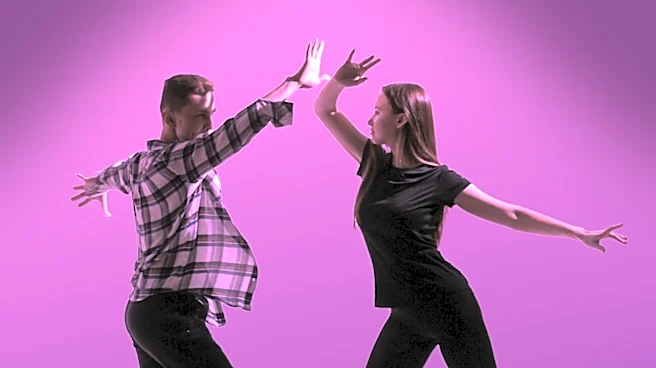
MashUp Contemporary Dance Company recently presented 'Ecstatic Resistance' at The Pickle Factory in Los Angeles, choreographed by Katherine Helen Fisher. The performance, which took place near National Women’s Equality Day, explored themes of motherhood,
systemic misogyny, and surveillance. The show incorporated live vocals by Eliza Bagg (Liesel) and featured dancers interacting with props like plastic sheets, stacked chairs, tape, ropes, and chains. A notable element was the real-time projection of images and videos captured by photographers and videographers during the performance onto a wall behind the dancers. This meta-commentary highlighted the perpetual 'performance' of gender and the concept of self-surveillance. Additionally, AI-manipulated imagery of the dancers was projected, critiquing how women's images can be manipulated and shared without consent in the digital age.
Why It's Important?
This performance is significant for its innovative use of technology, specifically AI and real-time projections, to comment on contemporary societal issues. By integrating AI-manipulated imagery, MashUp Contemporary Dance Company brings a critical artistic perspective to the growing concerns surrounding digital privacy, image manipulation, and the impact of artificial intelligence on individual autonomy, particularly for women. The critique of systemic misogyny and surveillance through dance offers a powerful and accessible medium for public discourse on these complex topics. The performance's timing near National Women's Equality Day further amplifies its relevance, prompting reflection on the ongoing struggles for gender equality and the evolving forms of control and observation women face in modern society. It underscores the role of art in challenging norms and fostering critical thinking about technological advancements and their ethical implications.
Beyond the Headlines
The integration of AI into live performance, as demonstrated by MashUp Contemporary Dance Company, signals a broader trend in the arts where technology is not merely a tool but an active participant in the narrative. This raises questions about authorship, the nature of performance in an increasingly digital world, and the boundaries between human and artificial creativity. The use of AI to manipulate images of dancers, unseen by the performers themselves, creates a powerful metaphor for the loss of control individuals experience over their digital identities. This artistic exploration could contribute to a more nuanced public understanding of AI's potential for both creative expression and ethical challenges, particularly concerning privacy and consent in the age of deepfakes and widespread digital imagery. It also highlights the evolving role of dance as a medium for social commentary, adapting to new technological landscapes to address pressing contemporary issues.