







What's Happening?
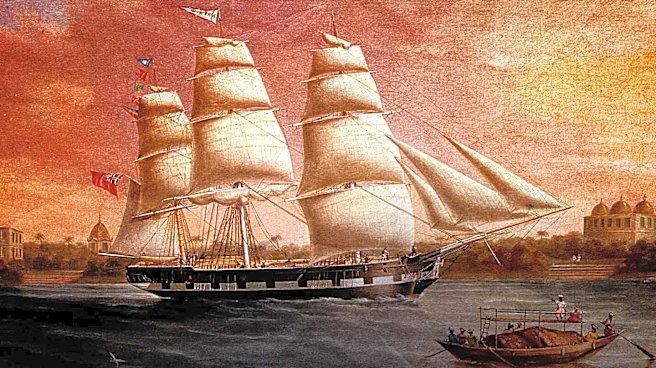
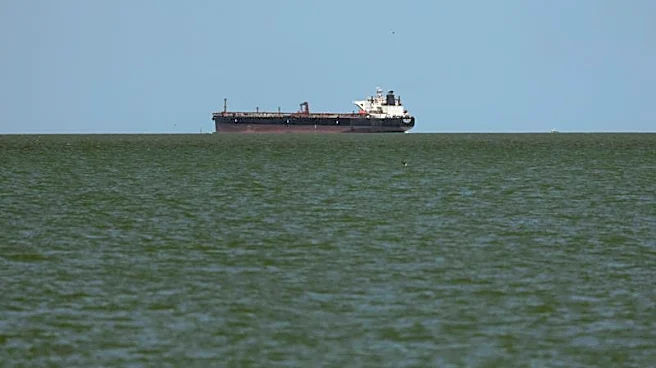
In the mid-1850s, steamships began to replace clipper ships as the dominant mode of maritime transport for the United States. This shift marked a significant development in U.S. foreign commerce. Clipper ships, known for their speed, had previously cut
the New York-to-San Francisco trip around Cape Horn from six months to as little as 89 days. However, steamships offered several advantages that led to their widespread adoption. These included greater storage capacity, lower operational costs, and more reliable schedules, as they were not dependent on wind conditions. This transition was part of a broader expansion in U.S. foreign trade, which also saw New England merchants trading with China for goods like tea, silk, and porcelain, and Commodore Matthew C. Perry pressuring Japan to open its ports in 1854 through the Kanagawa Treaty, further expanding trade routes.
Why It's Important?
The replacement of clipper ships by steamships in the mid-1850s was a pivotal moment for U.S. economic development and global trade. The enhanced storage capacity of steamships allowed for larger volumes of goods to be transported, directly boosting the profitability and scale of foreign commerce. Lower operating costs made international trade more accessible and competitive for American businesses. Furthermore, reliable schedules provided by steamships reduced uncertainties in shipping, enabling more efficient supply chain management and fostering greater confidence in international commercial ventures. This technological advancement facilitated the expansion of U.S. trade to Asia, opening new markets and sources for goods, and contributing to the nation's growing economic influence on the world stage. The ability to maintain consistent shipping timelines was crucial for the burgeoning industries and consumer markets in the U.S., ensuring a steady flow of imports and exports.
What's Next?
The continued evolution of maritime technology following the mid-1850s would see further advancements in steamship design and efficiency, solidifying their role in global trade for decades. The increased reliability and capacity offered by steamships would likely lead to the establishment of more formalized and frequent international shipping routes, further integrating the U.S. into the global economy. This shift would also spur infrastructure development in port cities to accommodate larger and more frequent steamship traffic. The precedent set by the U.S. in leveraging steam power for trade would encourage other nations to adopt similar technologies, intensifying global competition and cooperation in maritime commerce. The long-term impact would be a more interconnected world economy, driven by the efficiency and reach of steam-powered vessels.
Beyond the Headlines
The transition from sail to steam power in maritime shipping represents a broader theme of technological innovation driving economic and geopolitical change. Beyond the immediate commercial benefits, the advent of steamships had profound implications for national power projection and diplomatic influence. The ability to transport goods and personnel more reliably and independently of weather conditions enhanced the U.S.'s capacity to engage with distant nations, as exemplified by Commodore Perry's mission to Japan. This technological leap contributed to the U.S.'s emergence as a global economic and political player, laying groundwork for future naval power and international trade agreements. It also underscored the growing importance of industrialization and engineering prowess in shaping national destiny and global interactions.