









What's Happening?
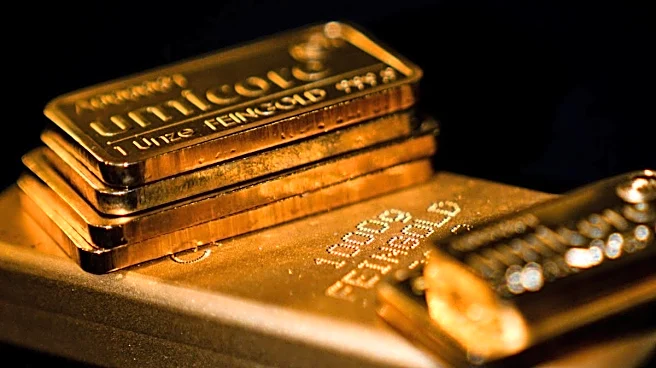
BMO Capital Markets has revised its gold price forecast downward, citing the Federal Reserve's hawkish monetary policy as a significant factor. In its third-quarter commodity outlook report, BMO predicts gold prices will average $4,625 per ounce in the second
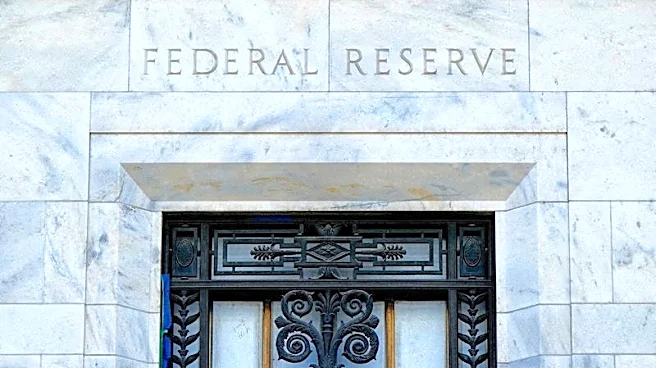
half of the year, a 5% decrease from previous estimates. Despite the current challenges, BMO maintains a positive long-term outlook, expecting prices to exceed $5,000 in the first quarter of 2027. The bank highlights macroeconomic volatility and geopolitical developments as key influences on gold prices, with U.S. monetary policy posing the most immediate threat. The Federal Reserve's recent decision to keep interest rates unchanged, while signaling potential rate hikes, has contributed to market uncertainty.
Why It's Important?
The adjustment in gold price forecasts by BMO reflects broader economic concerns, particularly regarding U.S. monetary policy. The Federal Reserve's stance impacts investor sentiment and market dynamics, influencing gold's appeal as a safe-haven asset. The potential for rate hikes could further pressure gold prices, affecting investors and industries reliant on precious metals. Additionally, geopolitical tensions, such as the ongoing conflict in Iran, could exacerbate inflation fears, influencing both gold and silver markets. The long-term outlook remains optimistic, with de-dollarization trends and central bank demand providing potential support for gold prices.
What's Next?
Future developments in U.S. monetary policy will be crucial in determining gold's trajectory. The Federal Reserve's actions, particularly any rate hikes, will likely influence market sentiment and investor behavior. Additionally, geopolitical events and their impact on energy prices could further affect inflation and, consequently, gold prices. BMO's forecast suggests a potential recovery in gold prices by 2027, contingent on stabilizing macroeconomic conditions and geopolitical risks.