




What's Happening?
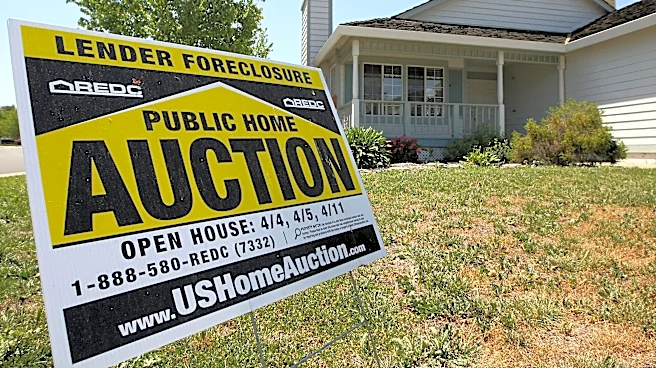
A home in East Vancouver, officially valued at over $1.7 million, was sold for $825,000 at the city's annual tax auction. The property, located on Windsor Street, was among more than 60 properties auctioned by the City of Vancouver due to owners failing
to pay taxes for three consecutive years. The reserve price for this particular home was $72,051. While the sale price appears to be a significant discount, buyers at these auctions face a crucial condition: the original owners have a one-year redemption period to pay their overdue taxes. If they do so, the bidder receives a refund of their payment plus six percent interest. This condition makes tax auctions a complex investment, often described as not for the 'faint of heart' or inexperienced. Other properties, including two valued at $5 million and $6 million near Jericho Beach, also sold for less than half their assessed values at $2 million and $2.75 million, respectively.
Why It's Important?
The Vancouver tax auction highlights the unique dynamics of the city's real estate market, where even properties with significant assessed values can be acquired at substantially lower prices under specific circumstances. This event underscores the risks and potential rewards for investors willing to engage in such auctions. For the city, these auctions serve as a mechanism to recover unpaid property taxes, ensuring municipal services can continue. For property owners, it acts as a strong incentive to remain current on their tax obligations, as failure to do so can lead to the forced sale of their assets. The one-year redemption period offers a safeguard for original owners, providing a window to reclaim their property, often by securing financing or selling the property themselves to cover the tax debt. This system balances the city's need for revenue with property owners' rights.
What's Next?
For the buyer of the Windsor Street property and other auctioned homes, the next year will involve waiting to see if the original owners exercise their right of redemption. If the original owners pay their overdue taxes within the one-year period, the bidders will receive their initial payment back along with six percent interest. If the properties are not redeemed, the bidders will then take full ownership after paying the balance of their bid within 30 days. This waiting period introduces an element of uncertainty for buyers, as the primary outcome for many participants is often to collect the interest rather than to acquire the property outright. The City of Vancouver advises potential buyers to conduct thorough research on properties before bidding, as the city is not responsible for the condition or quality of the homes.
Beyond the Headlines
The tax auction system in Vancouver, while seemingly offering bargains, reveals deeper implications regarding property ownership, financial distress, and investment strategies. The high assessed values of the properties involved, contrasted with their auction prices, reflect the intense pressure of property taxes in a high-value market. The system also highlights the potential for individuals to lose significant assets due to prolonged tax delinquency, which can stem from various personal circumstances such as inheritances or financial hardship. For investors, participating in these auctions is less about immediate property acquisition and more about a calculated risk-reward scenario, where the six percent interest rate can be an attractive return, especially when compared to traditional investment vehicles. This mechanism serves as a critical, albeit sometimes harsh, component of municipal finance and property law.