




What's Happening?
In 1967, John Lennon and Paul McCartney provided backing vocals for The Rolling Stones' song 'We Love You'. This collaboration occurred a few months after Mick Jagger, Keith Richards, and Brian Jones of The Rolling Stones were arrested on drug charges.
The song was penned by The Rolling Stones as a thank you to their fans who supported them during this period, and it also conveyed an anti-authoritarian message. The recording session for 'We Love You' was attended by poet Allen Ginsberg, who was in London for a pro-marijuana rally and met Jagger at McCartney's house. Ginsberg was invited to the session along with Lennon and McCartney. Despite the collaboration, John Lennon later expressed strong criticism of The Rolling Stones' music in 1970, particularly condemning 'We Love You' and accusing them of imitating The Beatles. He viewed 'Satanic Majesties' as a copy of 'Sgt. Pepper's' and 'We Love You' as a derivative of 'All You Need Is Love', despite his own involvement.
Why It's Important?
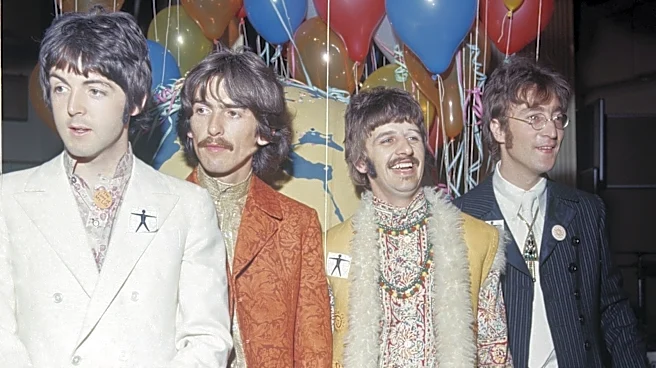
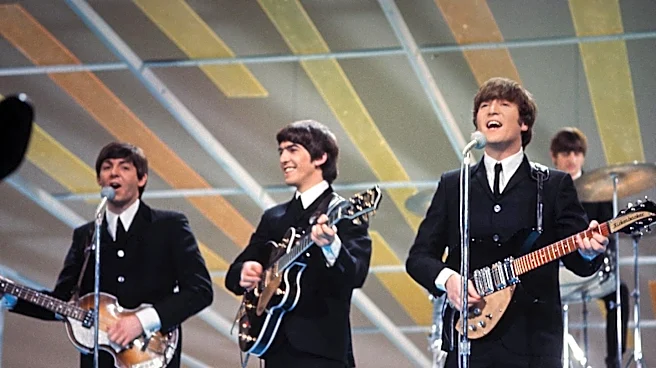
This collaboration highlights a complex and often competitive relationship between two of the most iconic bands in music history, The Beatles and The Rolling Stones. While publicly perceived as rivals, their occasional musical interactions, such as on 'We Love You' and Jagger's contribution to The Beatles' 'Baby, You're A Rich Man', demonstrate a more nuanced dynamic. The song 'We Love You' itself is significant as a direct response to legal troubles faced by The Rolling Stones, showcasing the band's connection with their fanbase and their embrace of a rebellious image. Lennon's later criticisms, despite his participation, underscore the underlying professional tension and artistic rivalry that existed, influencing how both bands were perceived and how their music evolved. This event provides insight into the cultural landscape of the 1960s, where music often intertwined with social and political statements, and bands navigated public perception and artistic integrity.
What's Next?
While the events described are historical, their legacy continues to influence music scholarship and fan discussions. The ongoing analysis of the relationship between The Beatles and The Rolling Stones, including specific collaborations and rivalries, remains a topic of interest for music historians and enthusiasts. Future documentaries, biographies, or academic studies on the 1960s music scene may further explore the intricacies of these interactions. The cultural impact of 'We Love You' as a response to legal challenges and its anti-authoritarian message could also be re-examined in contemporary contexts, particularly concerning artists' responses to public scrutiny and their role in social commentary. The differing perspectives of Lennon and Jagger on the song's meaning and the nature of their bands' relationship will likely continue to be debated.
Beyond the Headlines
The collaboration on 'We Love You' and John Lennon's subsequent disdain for it reveal deeper themes about artistic ownership, influence, and the construction of public image in the music industry. Lennon's accusation of imitation suggests a struggle for originality and a desire to maintain a distinct artistic identity, even among peers. The song's dual purpose—a thank you to fans and an anti-authoritarian statement—reflects the era's counter-cultural movements and how popular music became a vehicle for social commentary. The presence of Allen Ginsberg at the recording session further links the music scene with broader cultural and political activism, such as the pro-marijuana rally. This episode illustrates how personal relationships, professional rivalries, and societal pressures all converged to shape the creative output and public narrative of these legendary bands, offering a glimpse into the complex interplay between art, commerce, and culture.