





What's Happening?
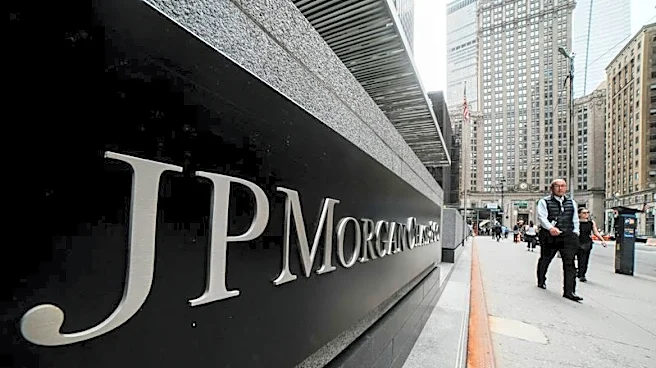
Thousands of JPMorgan Chase customers have had their private information exposed online following a cyberattack on external vendors providing services to the bank. The incident, announced on November 19, also affected Visa and Mastercard, with both payment
firms confirming security breaches involving their third-party providers. According to Associated Press (AP), the leaked data primarily included customer and employee email addresses, some phone numbers, and potentially customer names. JPMorgan Chase stated that the attackers accessed marketing information held by its vendors, but emphasized that no credit card details or particularly sensitive personal information were compromised. Mastercard reported that a limited number of email addresses from a specific benefit program were involved, while Visa confirmed its incident involved a third-party service provider in the Asia-Pacific region, with no compromise to its own systems or payment data.
Why It's Important?
This series of cyberattacks underscores the significant cybersecurity risks associated with third-party vendors, particularly for large financial institutions like JPMorgan Chase, Visa, and Mastercard. As financial organizations increasingly rely on external businesses for client services and marketing, their supply chains become potential points of vulnerability. Even if core systems remain uncompromised, breaches at third-party providers can expose substantial amounts of customer data, leading to privacy concerns, potential identity theft, and reputational damage for the primary companies. The incident highlights the critical need for robust vendor risk management and comprehensive security protocols that extend beyond an organization's immediate infrastructure to encompass its entire ecosystem of partners.
What's Next?
JPMorgan Chase has indicated it will directly contact affected customers and offer support, including complimentary credit monitoring. The financial institutions involved have not publicly identified the specific affected vendors or confirmed if the incidents are connected. Investigations into the breaches are likely ongoing to determine the full extent of the compromise and to implement corrective measures. This event will likely prompt a re-evaluation of cybersecurity practices and third-party risk assessments across the financial sector, potentially leading to stricter contractual obligations and more rigorous oversight of vendor security. Regulatory bodies may also increase scrutiny on how financial institutions manage data security with their external partners.
Beyond the Headlines
The cyberattacks on third-party vendors serving major financial entities like JPMorgan Chase, Visa, and Mastercard reveal a deeper systemic challenge in modern digital economies: the expanding attack surface created by interconnected business relationships. This incident highlights that an organization's security is only as strong as its weakest link, which often resides within its supply chain. Beyond the immediate data exposure, such breaches can erode public trust in financial institutions and the digital services they provide. It also raises questions about accountability and liability when data is compromised through a third party. The long-term implications could include increased regulatory pressure for supply chain cybersecurity, a shift towards more secure data sharing practices, and potentially, a re-evaluation of outsourcing strategies for sensitive operations.