

What's Happening?
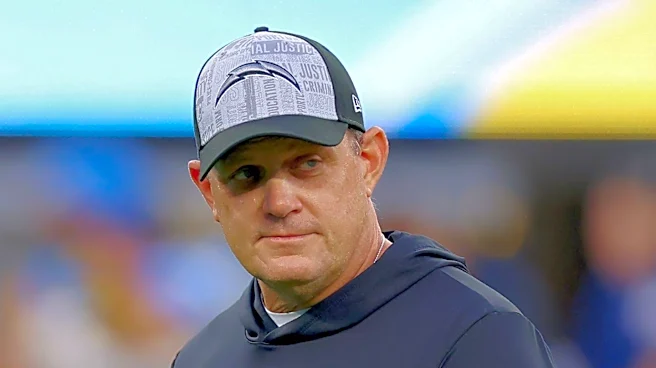
The Los Angeles Chargers continue to face significant challenges, which are now being attributed to institutional issues within the organization rather than solely to coaching or player performance. Despite efforts by owner Dean Spanos to bring in a 'can't-miss'
coach, coordinator, and quarterback, the team remains a disappointment. The recurring pattern of rising expectations followed by underperformance suggests a deeper problem beyond individual personnel. Front-office leadership, including the Spanos family and executives, is seen as instrumental in shaping the team's roster, addressing weaknesses, and setting organizational standards. The argument is that constantly changing coaching staff will not resolve these underlying issues if the decision-making at the top remains consistent. This perspective highlights that while coaching is crucial, the environment created by the leadership ultimately dictates the team's long-term success and stability.
Why It's Important?
This situation is important because it underscores the critical role of organizational leadership in professional sports, extending beyond on-field performance to the very structure and culture of a franchise. For U.S. sports, particularly the NFL, the Chargers' ongoing struggles despite significant investments in coaching and talent demonstrate that a strong foundation and consistent vision from ownership are paramount. The continuous cycle of disappointment can lead to fan disillusionment, impacting ticket sales, merchandise revenue, and local economic engagement tied to the team. It also raises questions about accountability at the highest levels of sports management. Other franchises might draw lessons from the Chargers' experience, emphasizing the need for a holistic approach to team building that prioritizes stable and effective front-office operations alongside coaching and player acquisitions. The perceived institutional failures could also influence how potential investors or partners view the stability and long-term viability of sports organizations with similar leadership structures.
What's Next?
The Chargers face a critical juncture where addressing these institutional problems will be essential for future success. While immediate changes might involve further coaching adjustments or player trades, the more significant challenge lies in evaluating and potentially restructuring the front-office leadership and decision-making processes. Stakeholders, including fans and media, will likely continue to scrutinize the Spanos family's approach to managing the franchise. The team's performance in upcoming seasons will be a key indicator of whether any fundamental changes are being implemented effectively. If the pattern of underperformance persists, there could be increased pressure for more drastic organizational overhauls, potentially including changes in ownership or a significant shift in how the team is managed from the top down. The focus will be on whether the organization can achieve alignment from the front office to the coaching staff and the locker room.
Beyond the Headlines
The Chargers' predicament extends beyond typical sports narratives of wins and losses, touching upon deeper implications regarding organizational psychology and the dynamics of family-owned businesses in high-stakes industries. The concept of 'institutional problems' suggests a deeply ingrained culture or systemic issues that resist superficial fixes. This can lead to a 'brain drain' where talented individuals, both on and off the field, may be reluctant to join or remain with an organization perceived as fundamentally flawed. Ethically, it raises questions about the responsibility of ownership to its fan base and the community, especially when a team consistently fails to meet expectations despite substantial resources. Culturally, the repeated disappointments can erode fan loyalty and create a sense of cynicism, impacting the team's legacy and its place within the broader U.S. sports landscape. The long-term shift could be towards greater transparency and accountability for sports ownership, with increasing demands for strategic vision and effective governance.