





What's Happening?
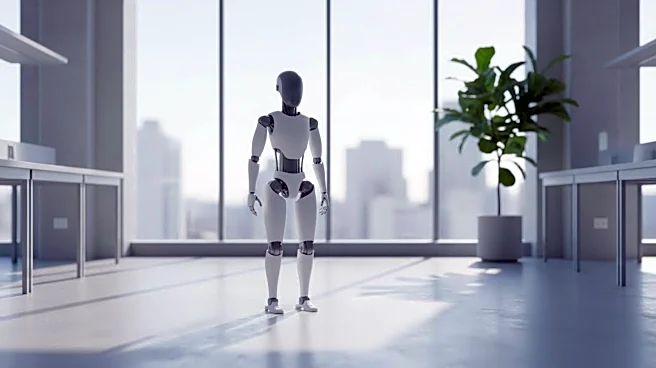
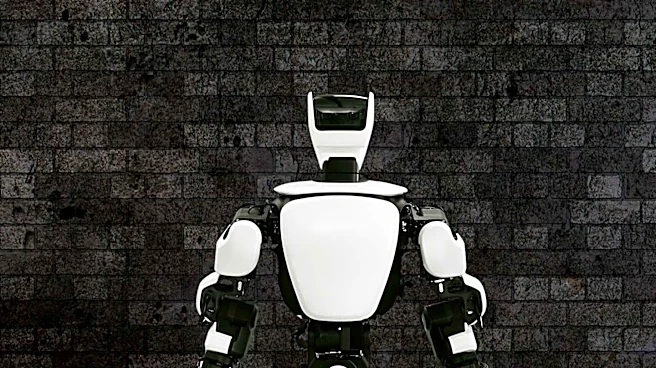
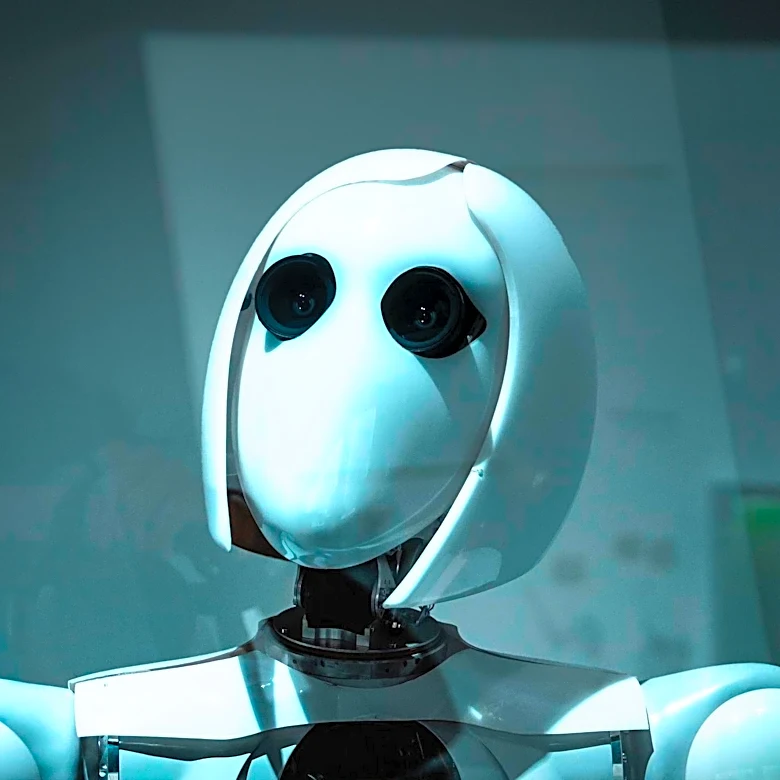
Humanoid, a robotics company based in London, has unveiled KinetIQ Ascend, a new reinforcement learning (RL) approach aimed at achieving human-level dexterity in robotic manipulation. This development is part of Humanoid's strategy to become a leading
general-purpose industrial humanoid robotics company. KinetIQ Ascend builds on the company's existing AI framework, KinetIQ, by employing trial-and-error learning to refine robotic capabilities for real-world deployment. The system has demonstrated significant improvements in various industrial tasks, such as picking parts from bins and handling objects, with increased throughput and success rates. The company has partnered with Bosch and Schaeffler to scale the production of its robots, which are designed to be commercially viable and safe for industrial use.
Why It's Important?
The introduction of KinetIQ Ascend represents a significant advancement in the field of robotics, particularly in industrial applications where precision and reliability are crucial. By enhancing the dexterity and efficiency of robots, Humanoid's technology could lead to increased productivity and reduced operational costs for industries relying on robotic automation. This development also highlights the growing role of AI in transforming traditional manufacturing processes, potentially leading to a shift in labor dynamics as robots take on more complex tasks. The ability of robots to generalize and adapt to new tasks without extensive retraining could further accelerate the adoption of robotics across various sectors.
What's Next?
Humanoid plans to continue refining KinetIQ Ascend and expanding its application across different industrial scenarios. The company is likely to focus on further improving the reliability and versatility of its robots, potentially exploring new partnerships to enhance its production capabilities. As the technology matures, industries may increasingly integrate these advanced robots into their operations, prompting discussions around workforce adaptation and the future of human-robot collaboration. Stakeholders in the robotics and manufacturing sectors will be closely monitoring the impact of these developments on productivity and employment.
Beyond the Headlines
The advancements in robotic dexterity and learning capabilities could have broader implications beyond industrial applications. As robots become more adept at handling complex tasks, there may be opportunities to apply similar technologies in healthcare, logistics, and other fields where precision and adaptability are valued. Additionally, the ethical considerations surrounding the deployment of advanced robotics, such as job displacement and the need for regulatory frameworks, will likely become more prominent as these technologies become more widespread.