





What's Happening?
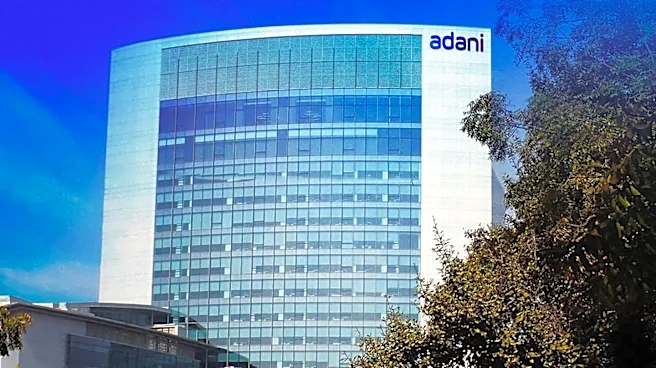
Adani Energy Solutions Ltd. (AESL), a subsidiary of Adani Group, has been awarded a Letter of Award (LoA) by West Bengal State Electricity Distribution Co. Ltd. (WBSEDCL) for the supply of 1,750 MW of Renewable Energy Round-the-Clock (RE-RTC) power for a period
of 25 years. This contract includes a 750 MW greenshoe option, which, if exercised, would increase the total contracted capacity to 2,500 MW. The award followed a competitive bidding process and an e-reverse auction where Powerpulse Trading Solutions Ltd. (PTSL), a wholly owned subsidiary of AESL, emerged as the successful bidder. Power supply for the initial 1,750 MW is scheduled to begin on July 1, 2028, with the additional 750 MW commencing on April 1, 2029, if the greenshoe option is utilized. The Trinamool Congress has raised concerns regarding the transparency of long-term power contracts, suggesting that such agreements should not grant preferential access to corporate giants.
Why It's Important?
This development signifies a substantial expansion of Adani Group's presence in India's energy sector, particularly in renewable energy, and highlights the ongoing shift towards sustainable power sources within the country. For West Bengal, securing a long-term supply of renewable energy is crucial for meeting its growing power demands and contributing to national climate goals. The 25-year duration of the contract provides long-term energy security and stability for the region. However, the concerns raised by the Trinamool Congress about transparency and potential favoritism in the bidding process underscore broader issues of corporate governance and fair competition in large-scale infrastructure projects. These concerns could lead to increased scrutiny of public-private partnerships and competitive bidding procedures in India, potentially influencing future policy decisions regarding energy contracts and infrastructure development. The scale of the investment also reflects the significant capital flowing into India's renewable energy market.
What's Next?
The Adani Group will proceed with the necessary preparations to commence power supply by July 1, 2028, for the initial 1,750 MW, and by April 1, 2029, for the additional 750 MW if the greenshoe option is exercised. The Trinamool Congress's call for transparency may lead to further political discourse and potentially increased oversight regarding the terms and conditions of this and future long-term power contracts in West Bengal. This could involve demands for public disclosure of bidding details and greater accountability from state-owned entities like WBSEDCL. The Adani Group's broader investment roadmap of over ₹1 lakh crore in West Bengal by 2035, as announced by Chairman Gautam Adani, suggests that more projects and collaborations are likely in the pipeline, which will continue to draw attention from political parties and the public regarding their economic and social impact.
Beyond the Headlines
The controversy surrounding the Adani Group's contract in West Bengal extends beyond a simple business deal, touching upon critical aspects of India's economic development and political landscape. The Trinamool Congress's allegations of 'preferential access' and 'favoritism' highlight persistent concerns about crony capitalism and the influence of large conglomerates in government contracts. This situation could fuel public debate on the ethical implications of large-scale infrastructure projects and the need for robust regulatory frameworks to ensure fair competition and prevent undue corporate influence. Furthermore, the focus on renewable energy, while positive for environmental sustainability, also brings to light the challenges of transitioning to green energy sources while maintaining transparency and public trust. The long-term implications could include a push for more stringent anti-corruption measures and greater public participation in decision-making processes for major infrastructure investments across India.