






What's Happening?
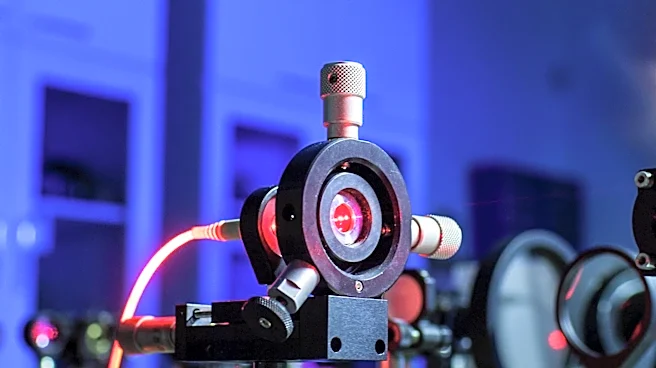
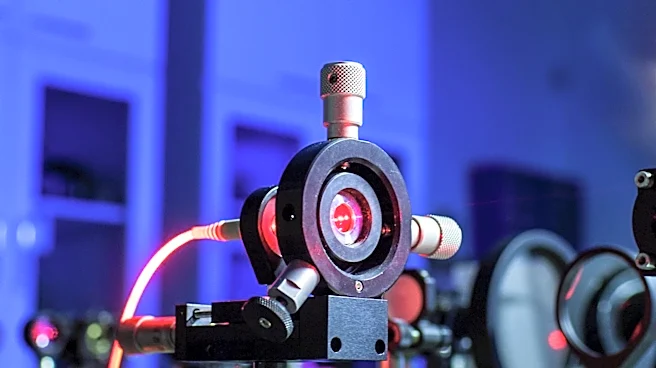
Quantum Computing Inc. (QUBT), an integrated photonics company, is offering a Quantum Random Number Generator (uQRNG) as part of its suite of quantum machines. This portable device is designed to produce genuine random numbers derived directly from quantum processes.
The company's offerings also include Dirac systems, which are portable, low-power, and room-temperature qubit and qudit entropy quantum computers (EQC), alongside solutions for reservoir computing, remote sensing, and single-photon imaging. Additionally, Quantum Computing Inc. provides quantum authentication technology aimed at eliminating vulnerabilities found in classical cryptographic schemes. This authentication solution integrates an entanglement-based quantum cyber solution into existing telecommunication fiber and communication infrastructure, enhancing security by leveraging quantum principles.
Why It's Important?
The development and commercialization of genuine random number generators like Quantum Computing Inc.'s uQRNG are crucial for enhancing cybersecurity and data integrity across various sectors. Traditional pseudo-random number generators, while effective for many applications, are deterministic and can theoretically be predicted, posing a risk in highly sensitive cryptographic contexts. Quantum random number generators, by contrast, harness the inherent unpredictability of quantum mechanics, providing a higher level of security for encryption, secure communication, and other applications requiring true randomness. This advancement is particularly important in an era of increasing cyber threats and the growing need for robust, future-proof security solutions. Industries such as finance, government, and critical infrastructure, which rely heavily on secure data transmission and storage, stand to benefit significantly from the enhanced security offered by quantum-derived randomness. The integration of such technology into existing infrastructure also signals a practical step towards broader adoption of quantum-safe solutions.
What's Next?
The continued development and deployment of devices like the uQRNG suggest a future where quantum-based security becomes a more integral part of mainstream cybersecurity strategies. As quantum computing capabilities advance, the threat to classical encryption methods will grow, making quantum-safe solutions increasingly vital. Quantum Computing Inc. and similar companies are likely to focus on further miniaturization, cost reduction, and integration capabilities of their quantum random number generators to make them more accessible and widely adopted. We can anticipate increased collaboration between quantum technology providers and cybersecurity firms to embed these advanced random number generation capabilities into a broader range of security products and services. Furthermore, as awareness of quantum threats grows, regulatory bodies and industry standards organizations may begin to mandate or recommend the use of quantum-derived randomness for critical applications, driving market demand and innovation in this space.
Beyond the Headlines
The emergence of genuine quantum random number generators like the uQRNG highlights a fundamental shift in how randomness is perceived and utilized in technology. Beyond immediate cybersecurity applications, true randomness has profound implications for scientific research, simulations, and artificial intelligence. In scientific modeling, genuine randomness can lead to more accurate and unbiased simulations, particularly in fields like climate science, drug discovery, and financial modeling. For artificial intelligence, truly random inputs can enhance the robustness of machine learning algorithms, prevent biases, and improve the exploration capabilities of reinforcement learning systems. The philosophical implications are also significant, as these devices demonstrate our ability to harness the intrinsic unpredictability of the universe for practical, technological benefits, moving beyond computational approximations of randomness. This technological leap underscores the ongoing transition from classical to quantum paradigms in computing and information theory, promising a new era of secure and sophisticated technological capabilities.