






What's Happening?
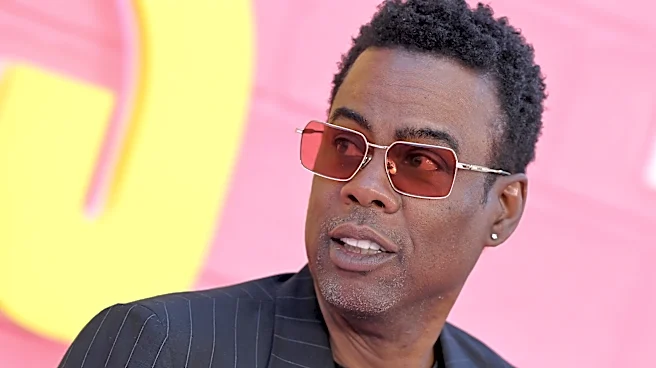
Steve Rifkind, co-founder of Loud Records, has publicly demanded an apology from comedian Chris Rock. The demand stems from Rock's speech during the Wu-Tang Clan's Rock & Roll Hall of Fame induction ceremony, where Rock stated, 'Wu-Tang rewrote the rules
of hip-hop and did it without a big machine behind them.' Rifkind took to Instagram to express his disapproval, asserting that Rock owes an apology to the staff of Loud Records. Loud Records was instrumental in the early success of Wu-Tang Clan, releasing their 1993 debut album, 'Enter the Wu-Tang (36 Chambers),' and other significant works by artists like Mobb Deep. Rifkind highlighted Loud Records' substantial role, noting the label had 30 staff members and RCA/BMG distribution in the mid-1990s, actively developing artists and employing grassroots marketing strategies.
Why It's Important?
This dispute underscores the often-complex relationship between artists, record labels, and their historical narratives within the music industry. Chris Rock's comment, intended to praise Wu-Tang Clan's independent spirit, inadvertently minimized the crucial support provided by Loud Records. For record labels like Loud, which played a pivotal role in nurturing and promoting groundbreaking hip-hop acts, such statements can be seen as a disregard for their significant contributions and the hard work of their staff. This incident highlights the importance of acknowledging the full ecosystem that enables artistic success, including the business infrastructure that helps artists reach wider audiences. It also brings to light the ongoing debate about 'authenticity' and 'independence' in music, and how these concepts are perceived versus the realities of industry operations.
What's Next?
The call for an apology from Steve Rifkind puts Chris Rock in a position to either address the statement directly, offer a clarification, or remain silent. A public apology or acknowledgment from Rock could help mend potential rifts and provide a more complete picture of Wu-Tang Clan's journey. Conversely, a lack of response might perpetuate the narrative that downplays the role of record labels in artist development. This incident could also prompt broader discussions within the music industry about how the contributions of labels and their staff are recognized during celebratory events like the Rock & Roll Hall of Fame induction. It may encourage more nuanced historical accounts that acknowledge both artistic genius and the business acumen required to bring that art to the world.
Beyond the Headlines
Beyond the immediate demand for an apology, this event touches on the broader cultural memory and historical accuracy within popular music. The narrative of 'doing it without a big machine' is a powerful one, often celebrated in hip-hop and other genres as a testament to raw talent and resilience. However, Rifkind's intervention serves as a reminder that even seemingly independent successes often rely on a network of dedicated professionals and established infrastructure. This incident could spark a re-examination of how music history is told, encouraging a more inclusive narrative that recognizes the contributions of all stakeholders, from artists to label executives and marketing teams. It also highlights the emotional investment that individuals like Rifkind have in the legacies they helped build, and their desire for that work to be accurately represented.