






What's Happening?
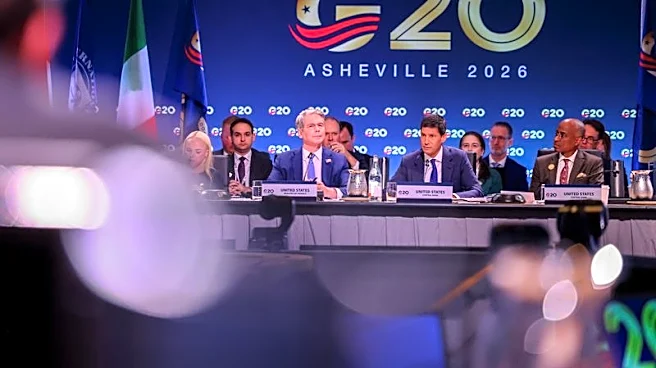
Jensen Huang, CEO of Nvidia, addressed the G20 Innovation Ministerial in Chapel Hill, North Carolina, discussing the regulation of artificial intelligence (AI) technology. Huang emphasized that existing regulatory frameworks, such as those for the FDA
or NITSA, demonstrate that humans already have regulations across numerous domains. He advocated for precise regulation that targets actual and pragmatic harm rather than hypothetical or theoretical harm. Huang stressed the importance of allowing AI technology, which is in its early stages of innovation, to advance quickly to ensure its safety and development. He warned that the worst outcome for any country in this technological-industrial revolution would be to be left behind by failing to embrace AI advancements.
Why It's Important?
Huang's statements highlight a critical debate surrounding AI governance in the U.S. and globally. His call for pragmatic regulation reflects concerns within the tech industry that overly cautious or premature regulatory measures could stifle innovation and economic growth. As AI continues to integrate into various sectors, the approach to its regulation will significantly impact the competitiveness of U.S. companies and its position as a leader in technological development. A balanced regulatory environment, as suggested by Huang, could foster responsible AI development while preventing the U.S. from falling behind other nations in this rapidly evolving field. Conversely, a restrictive approach could lead to a 'worst outcome' where the nation fails to capitalize on the transformative potential of AI, affecting industries from healthcare to manufacturing and national security.
What's Next?
The discussions at the G20 Innovation Ministerial are likely to influence ongoing policy debates regarding AI regulation in the U.S. and among international partners. Policymakers will need to consider Huang's perspective on avoiding regulation based on hypothetical harms, potentially leading to a more nuanced approach to AI governance. Future legislative efforts and international collaborations may focus on developing frameworks that balance innovation with safety, drawing on existing regulatory models where applicable. The tech industry, including companies like Nvidia, will continue to advocate for policies that support rapid AI development while addressing legitimate concerns. The outcome of these discussions will shape the trajectory of AI adoption and its societal impact in the coming years.
Beyond the Headlines
Huang's warning about the 'worst outcome'—being left behind in the AI revolution—underscores a deeper geopolitical and economic concern. The race for AI dominance is not merely about technological advancement but also about national power, economic prosperity, and global influence. Over-regulation driven by fear could inadvertently cede leadership to countries with more permissive or strategically focused AI policies. This perspective suggests that the conversation around AI safety must also consider the strategic imperative of innovation. The ethical implications of AI, while crucial, must be weighed against the potential benefits and the risks of technological stagnation. This delicate balance will define the future of AI and its role in shaping the U.S.'s standing in the global technological landscape.