








What's Happening?
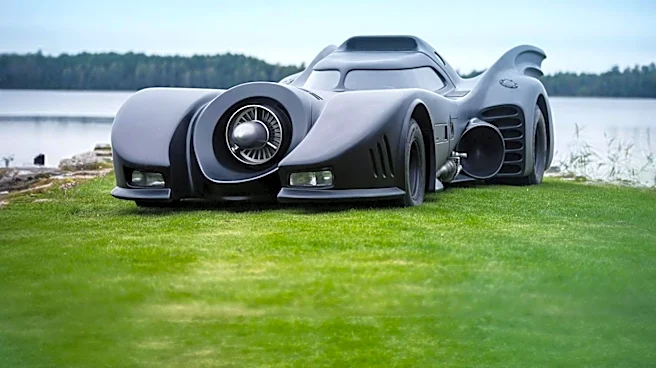
The iconic Batmobile used in Tim Burton's 1992 film 'Batman Returns' failed to sell at auction after bidding stalled at $3.25 million. The vehicle, known as the 'Number One Hero car,' was one of three custom-made versions featured in the movie and appeared
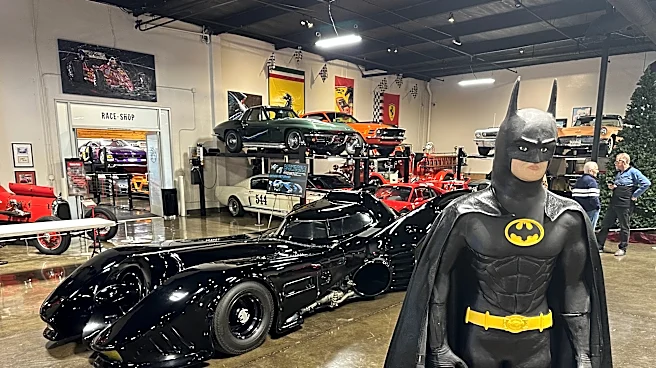
in the majority of its driving sequences. Julien's, the auction house, had estimated the car would fetch between $5 million and $7 million and hoped it would surpass the record set by the 1960s TV series Batmobile, which sold for $4.6 million in 2013. The car, measuring nearly 20 feet long, still retains its original paint, Chevrolet V-8 engine, and a radio-controlled flaming exhaust system. It had been on display at the Marconi Automotive Museum in Tustin, California, after years in storage.
Why It's Important?
The failure of this significant piece of cinematic history to meet its reserve price highlights the unpredictable nature of high-value collectibles markets. Despite its iconic status and direct association with a major Hollywood production, the market's valuation did not align with the seller's expectations. This event can influence future auctions of similar movie memorabilia, potentially leading to more conservative estimates or adjustments in reserve prices. For collectors and enthusiasts, it underscores the challenges of acquiring such unique items, where factors like 'not street legal' status and limited engine testing can impact perceived value. The Batmobile's unsold status also reflects on the broader economic climate and the discretionary spending habits of ultra-high-net-worth individuals.
What's Next?
With the Batmobile remaining unsold, the owner and Julien's will likely re-evaluate their strategy. Options could include re-listing the vehicle at a future auction with a revised reserve price, exploring private sale opportunities, or continuing its display at a museum or private collection. The publicity generated by the auction, even without a sale, might attract new potential buyers who were not actively bidding. The outcome could also prompt discussions within the movie memorabilia market about the true value of such items, especially those with operational limitations. Future attempts to sell the Batmobile will be closely watched as a barometer for the high-end collectible car market.
Beyond the Headlines
The Batmobile's unsold status goes beyond a simple transaction; it touches upon the cultural value and practical limitations of owning a piece of cinematic art. While its aesthetic and historical significance are undeniable, its lack of street legality and limited operational testing present practical challenges for a potential owner. This scenario highlights the tension between an item's iconic status and its functional utility. It also raises questions about the investment potential of movie props and vehicles, where emotional and nostalgic value often clashes with real-world usability and maintenance costs. The Batmobile, in this context, becomes a symbol of aspirational ownership, where the dream of possessing a piece of fantasy meets the realities of its practical limitations and market dynamics.