

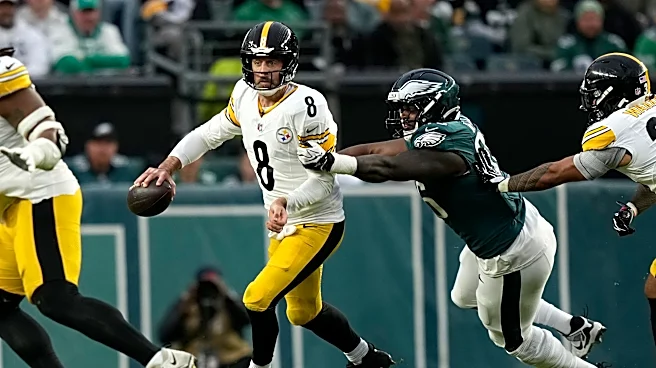
What's Happening?
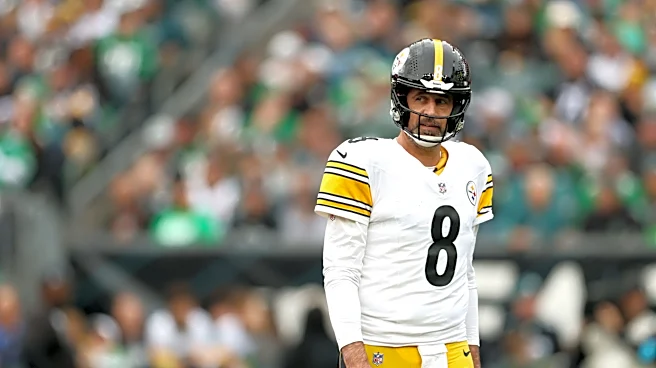
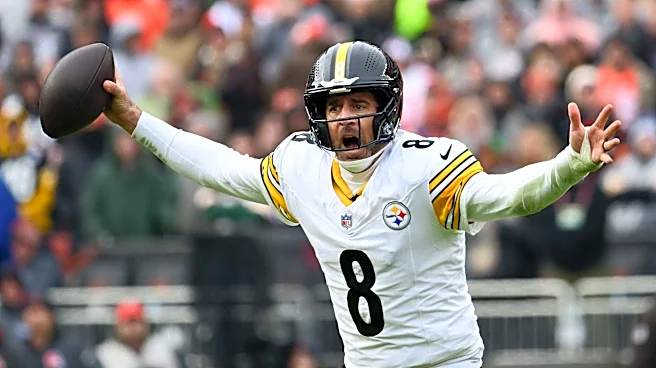
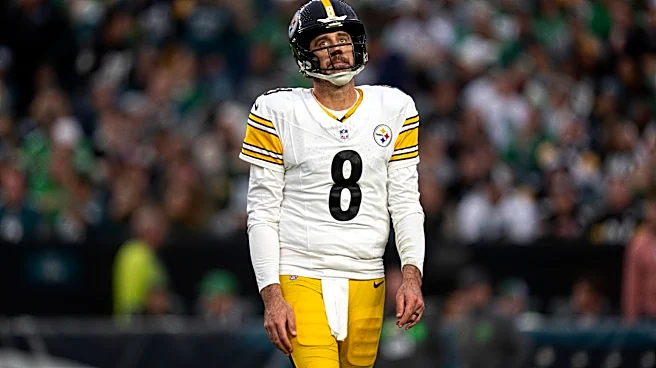
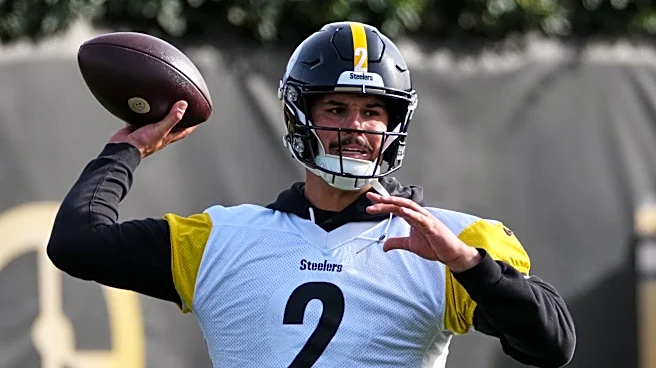
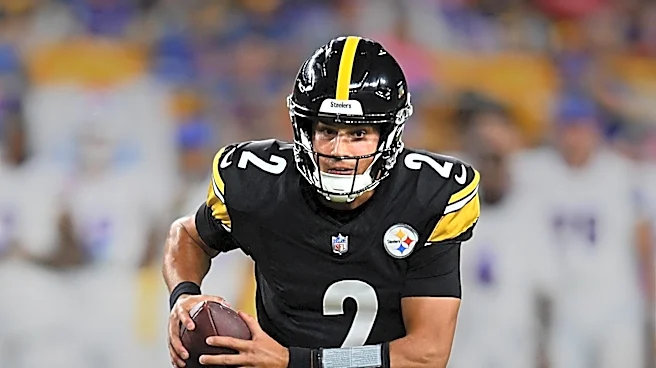
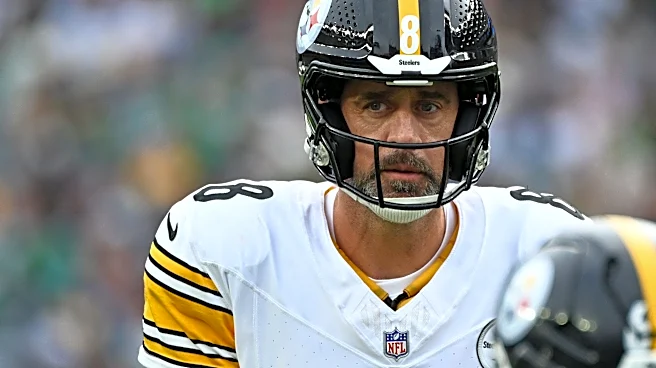
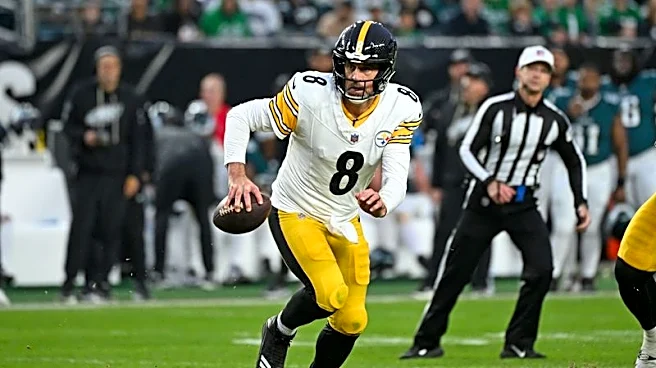
The Pittsburgh Steelers have announced that Aaron Rodgers will be benched and inactive for their upcoming game against the Denver Broncos on November 27. Steelers spokesman Burt Lauten confirmed on November 24 that Mason Rudolph will start as quarterback.
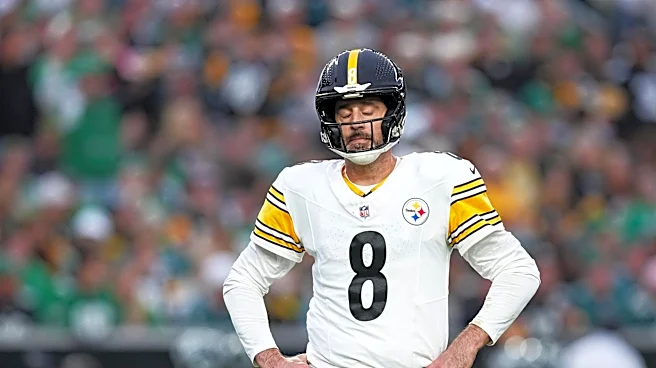
This decision follows the Steelers' loss of their last two games, during which Rodgers completed 45 of 73 passes, resulting in a completion rate of approximately 61 percent for the current NFL season. Rodgers, who is not on the team's injured reserve list, has not publicly commented on the decision and was absent from the team's November 25 practice. Despite the recent benching, head coach Mike McCarthy had affirmed Rodgers as their quarterback after the team's November 22 loss to the Eagles.
Why It's Important?
This decision by the Pittsburgh Steelers to bench Aaron Rodgers and start Mason Rudolph carries significant implications for the team's performance and the NFL season. For the Steelers, it signals a strategic shift aimed at improving their recent losing streak and potentially revitalizing their offensive play. The move could impact team morale and dynamics, as a high-profile quarterback like Rodgers being benched often draws considerable attention and scrutiny. For Mason Rudolph, this presents a crucial opportunity to prove his capabilities as a starting quarterback in a high-stakes professional environment. The outcome of the game against the Denver Broncos will be closely watched, as it could either validate the coaching staff's decision or intensify questions about the team's leadership and future direction. This change also affects fantasy football players and sports bettors who rely on quarterback performance.
What's Next?
Following the announcement, all eyes will be on Mason Rudolph's performance as the starting quarterback in the November 27 game against the Denver Broncos. The Steelers' coaching staff, particularly head coach Mike McCarthy, will face increased pressure to justify this decision with a positive outcome. Should Rudolph perform well, it could solidify his position and potentially lead to further starts, while a poor performance might prompt a reevaluation of the team's quarterback strategy. Aaron Rodgers' future with the team will also be a subject of ongoing speculation, especially given his previous statements about this being his final season. His absence from practice and lack of public comment suggest potential underlying issues that could surface in the coming weeks, impacting team cohesion and future roster decisions.
Beyond the Headlines
The benching of a prominent player like Aaron Rodgers extends beyond immediate game results, touching upon broader themes within professional sports. It highlights the intense pressure on athletes and coaching staff to deliver consistent performance, especially in the highly competitive NFL. This situation could spark discussions about player loyalty versus team strategy, and the psychological impact of such decisions on veteran players. Furthermore, it underscores the transient nature of professional sports careers, where even established stars can face unexpected setbacks. The narrative surrounding Rodgers' benching may also influence public perception of the Steelers' organizational stability and their approach to managing high-value talent, potentially affecting fan engagement and future player recruitment.