





What's Happening?
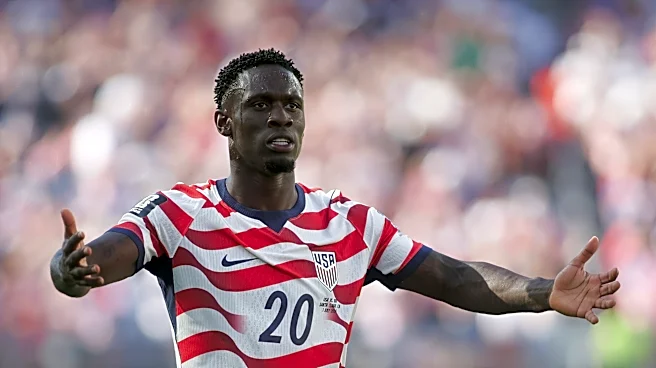
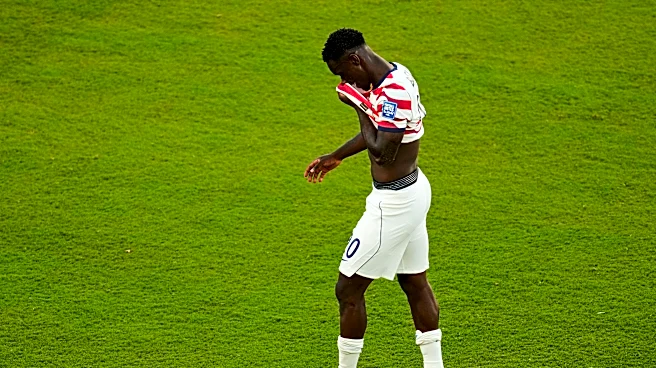
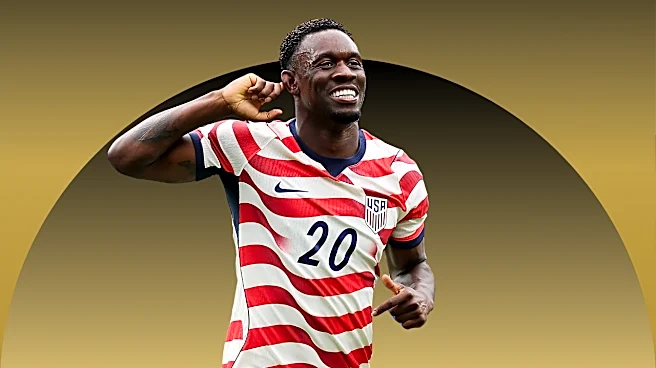
FIFA has decided to overturn the red card suspension of United States striker Folarin Balogun, allowing him to play against Belgium in the World Cup Round of 16. This decision mirrors a previous case involving Portugal's Cristiano Ronaldo, who was allowed
to participate in the World Cup despite a red card suspension. Ronaldo's suspension was deferred, allowing him to play, with the remaining games of the suspension to be served after a one-year probation period. Similarly, FIFA has not provided detailed reasoning for Balogun's case but has exercised its discretion to withhold the suspension, suggesting that they may have deemed the red card harsh or simply want Balogun on the field for the U.S. team.
Why It's Important?
This decision is significant as it highlights FIFA's discretionary power in handling player suspensions, potentially impacting the competitive balance of the World Cup. For the U.S. Men's National Team (USMNT), having Balogun available could be crucial in their match against Belgium, potentially altering the team's strategy and performance. The precedent set by Ronaldo's case suggests that FIFA can prioritize the presence of key players in major tournaments, which may influence future disciplinary decisions. This could lead to debates about fairness and consistency in FIFA's disciplinary actions, affecting teams and players worldwide.
What's Next?
The immediate consequence is that Balogun will be available for the USMNT's critical match against Belgium, which could influence the outcome of the game. Looking ahead, FIFA's decision may prompt discussions among football associations and stakeholders about the transparency and criteria used in such disciplinary decisions. Teams may seek clarity on the rules governing suspensions to better prepare for similar situations. Additionally, this case may encourage other teams to appeal suspensions, hoping for similar outcomes, potentially leading to more frequent challenges to FIFA's disciplinary rulings.