






What's Happening?
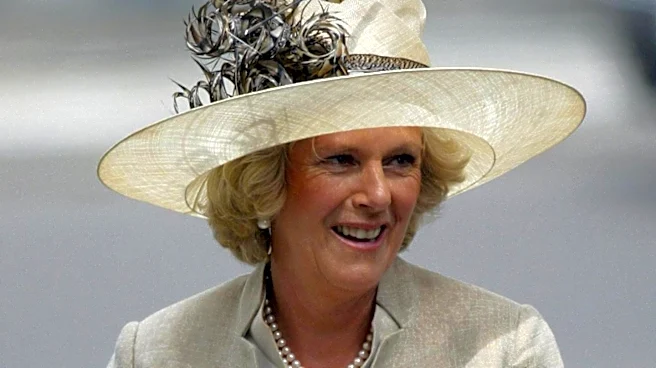
Queen Camilla has shared her teenage experience of secretly reading D.H. Lawrence's controversial novel, 'Lady Chatterley's Lover,' in the 1960s. She recounted reading the 'forbidden' book under her pillow by torchlight, noting that the allure of something
prohibited made it more desirable. This personal anecdote was shared during a BBC documentary titled 'The Book That Changed My Life,' where she discussed the transformative power of literacy and books. The Queen also offered insights into her reading habits with King Charles, mentioning that they often read quietly before dinner. She highlighted the King's preference for biographies and P.J. Wodehouse, while she enjoys a variety of books, sometimes finding his laughter or her own emotional reactions to her reading disruptive to their shared quiet time. She also spoke about being 'mesmerized' by Charles Dickens's 'A Tale of Two Cities' in her youth.
Why It's Important?
Queen Camilla's personal reflection on reading 'Lady Chatterley's Lover' offers a unique perspective on the cultural impact of literature and censorship, resonating with broader discussions in the U.S. about intellectual freedom and the role of books in shaping individual perspectives. Her advocacy for literacy, particularly through her Queen's Reading Room project, underscores the importance of reading in education and personal development. This initiative aligns with efforts in the U.S. to combat illiteracy and promote reading among adults and children. The Queen's emphasis on reading as a 'best tonic' and a means of escape, as exemplified by her father's experience as a prisoner of war, highlights the therapeutic and educational value of books. This message is particularly relevant in the U.S., where literacy rates and access to educational resources remain critical societal issues, impacting economic mobility and social engagement.
What's Next?
Queen Camilla's continued work with her Queen's Reading Room project is expected to further promote literacy and the value of reading. This initiative, which includes festivals, events, and outreach programs like bringing books to homeless shelters, will likely continue to expand its reach and impact. The documentary 'The Book That Changed My Life' will contribute to public discourse on the importance of reading and its personal and societal benefits. Discussions around adult illiteracy, as highlighted by figures like John Bird, may gain renewed attention, potentially leading to increased support for adult education projects in the U.S. and beyond. The Queen's personal stories are likely to inspire more individuals to engage with literature and recognize its profound influence on life experiences.
Beyond the Headlines
Queen Camilla's candid revelation about reading 'Lady Chatterley's Lover' as a teenager touches upon deeper themes of societal norms, rebellion, and the enduring power of literature to challenge and shape individual thought. The novel itself was at the center of an obscenity trial, making her experience a personal connection to a significant moment in literary history concerning freedom of expression. Her broader advocacy for literacy, particularly her observation that reading served as her primary education due to limited opportunities for women in her youth, highlights historical gender disparities in education. This underscores the critical role of books in personal empowerment and intellectual growth, especially for those who may have been denied formal educational pathways. The initiative to bring books to vulnerable populations, such as the homeless and prisoners, further emphasizes the belief in literature's capacity to provide solace, education, and a pathway to a better life, reflecting a universal human need for stories and knowledge.