







What's Happening?
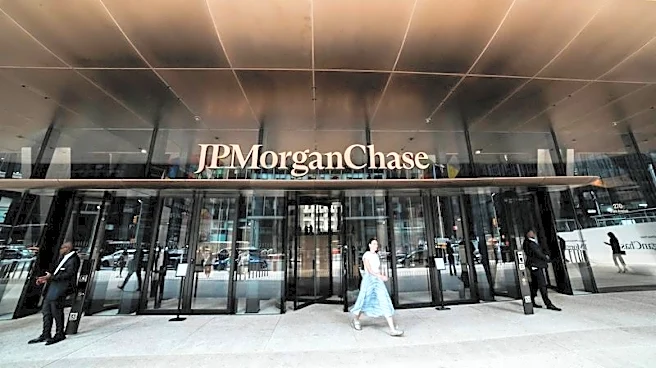
JPMorgan Chase, the largest U.S. lender, reported third-quarter results that fell short of both revenue and earnings expectations. The bank experienced weakness in its fixed income trading and asset management divisions, while expenses increased at a faster
rate than revenue. Despite these misses, management provided more optimistic net interest income (NII) forecasts for the fourth quarter and the year 2027 during their earnings call. Initially, the bank's stock faced a downturn but largely recovered as investors processed the updated outlook. This performance was part of a broader trend among major U.S. banks, which delivered mixed third-quarter results, yet saw overwhelmingly negative reactions from Wall Street, with all six major bank stocks declining despite some individual strong performances. JPMorgan also reported a 4% rise in average deposits and a 2% increase in loans compared to the previous year.
Why It's Important?
The mixed results from JPMorgan Chase and other major U.S. banks highlight the current volatility and uncertainty within the financial sector. The negative Wall Street reaction, even to some positive individual bank performances, suggests that investors are more concerned about future economic conditions, including persistent inflation, rising interest rates, and unstable capital markets, rather than past earnings. JPMorgan's struggle in fixed income trading and asset management, coupled with rising expenses, indicates challenges in traditional banking revenue streams. However, the bank's positive NII forecasts for the future could signal confidence in its ability to navigate the interest rate environment and maintain profitability, potentially influencing investor sentiment for the broader banking industry. The increase in deposits and loans also suggests underlying stability in customer engagement despite market headwinds.
What's Next?
Following the mixed third-quarter results, JPMorgan Chase's management will likely focus on strategies to capitalize on their positive net interest income forecasts for the fourth quarter and 2027. This could involve optimizing their loan and deposit portfolios to benefit from higher interest rates. The broader banking sector will continue to face scrutiny regarding their ability to manage expenses, adapt to changing market conditions, and mitigate risks associated with inflation and interest rate fluctuations. Investors will be closely watching upcoming economic indicators and central bank decisions for further clues on the future trajectory of the financial markets. The performance of other major banks in the coming quarters will also provide a clearer picture of the overall health and outlook for the U.S. banking industry.
Beyond the Headlines
The market's overwhelmingly negative reaction to mixed bank earnings, despite some strong individual results, points to a deeper investor anxiety about the long-term economic outlook. This sentiment suggests a shift from evaluating current performance to anticipating future challenges, such as a potential recession or prolonged economic stagnation. The focus on net interest income forecasts by JPMorgan Chase underscores the critical role of interest rate management in bank profitability, especially in an environment of rising rates. This situation could lead to a more conservative lending environment and increased competition for deposits, impacting consumers and businesses reliant on credit. Furthermore, the challenges faced by banks in fixed income trading and asset management may prompt a re-evaluation of their business models and a greater emphasis on diversified revenue streams to withstand market volatility.