



What's Happening?
Cadillac Formula 1 drivers Sergio Pérez and Valtteri Bottas experienced significant equipment failure issues during the 2026 F1 São Paulo Grand Prix, leading to a challenging weekend for the team. Pérez finished P18, two laps behind the race winner, while
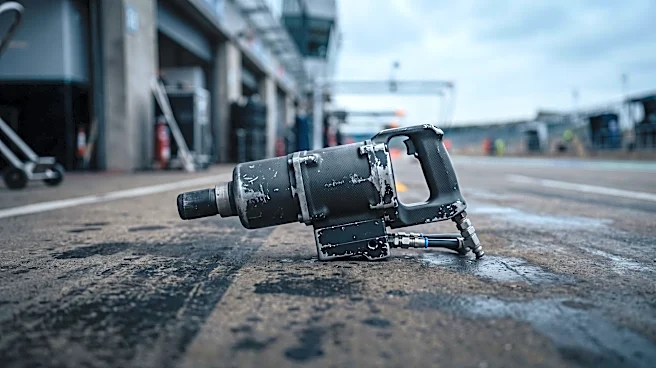
Bottas suffered his first DNS (Did Not Start) of the season due to a cross-threaded right-rear wheel nut that could not be removed. Pérez also encountered a slow pit stop on Lap 15 due to a wheel gun issue, which he noted was a recurring problem, having faced similar equipment failures at his home race in Mexico a week prior. Both drivers emphasized the urgent need for Cadillac to address the reliability of its pit stop equipment and tools to prevent future incidents and improve performance.
Why It's Important?
The persistent equipment failures faced by Cadillac, particularly with pit stops, highlight a critical operational vulnerability that can severely impact a team's competitiveness in Formula 1. In a sport where milliseconds can determine race outcomes, unreliable equipment directly translates to lost track position, missed opportunities, and ultimately, poor results. For Cadillac, a team with aspirations in F1, these issues undermine driver performance and team morale. The repeated nature of these problems, as noted by Sergio Pérez, suggests systemic issues in equipment maintenance, design, or operational protocols. Addressing these reliability concerns is paramount for Cadillac to ensure fair competition for its drivers and to protect its reputation and investment in the highly competitive F1 landscape.
What's Next?
Following the 2026 F1 São Paulo GP, Cadillac is under pressure to thoroughly investigate and rectify the equipment reliability issues. Sergio Pérez explicitly stated, “We need to make sure we fix our tools,” indicating an immediate focus on technical solutions. The team will likely conduct a comprehensive review of its pit stop equipment, procedures, and potentially its supplier relationships. With Bottas's contract extending through 2027 and speculation surrounding his future, resolving these operational shortcomings is crucial for team stability and driver confidence. Cadillac's ability to address these fundamental problems before the end of the season and heading into 2027 will be a key determinant of its future performance and its standing in Formula 1.
Beyond the Headlines
The recurring equipment failures at Cadillac extend beyond mere technical glitches; they touch upon the broader challenges of operational excellence and quality control in high-stakes environments like Formula 1. Such issues can erode trust between drivers and their teams, impact sponsor confidence, and potentially influence strategic decisions regarding driver lineups and long-term investments. The pressure on Cadillac to resolve these problems quickly reflects the unforgiving nature of F1, where every component and process must function flawlessly. This situation also underscores the intricate balance between technological innovation and robust operational execution, a challenge faced by many advanced engineering sectors. The team's response will be a case study in how a major automotive brand navigates and overcomes significant performance hurdles in a global sporting arena.