






What's Happening?
Christopher Nolan's 'The Odyssey' has become a major box office success, grossing over a billion dollars worldwide. The screenplay, an adaptation of Homer's epic, incorporates themes of hospitality and home, central to the original text. Nolan's adaptation is noted
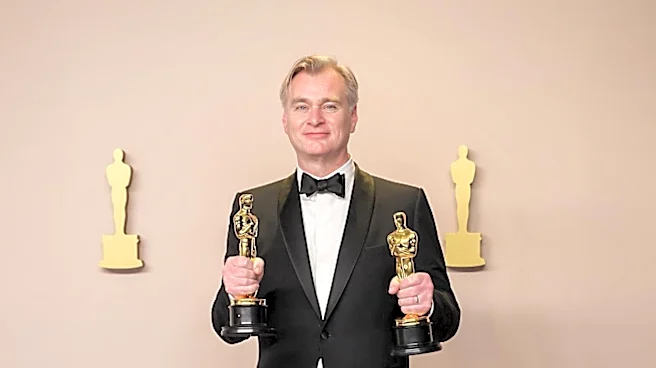
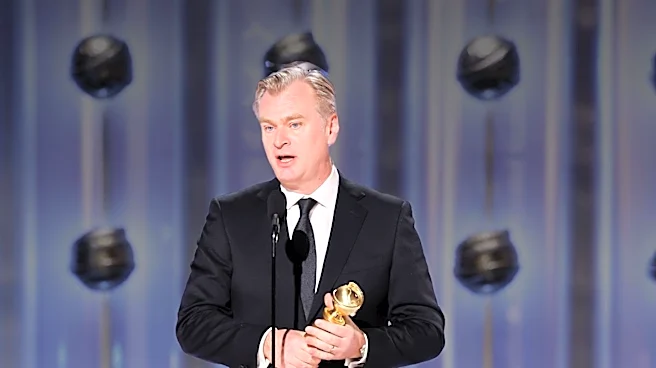
for its thematic anchor in 'Xenia,' the Greek concept of hospitality, which serves as a moral compass throughout the film. The screenplay employs Nolan's signature style of non-linear storytelling, blending past and present timelines. This approach, along with the film's exploration of identity and hubris, has been praised for its depth and complexity, making it a contender for the Best Adapted Screenplay at the Academy Awards.
Why It's Important?
The success of 'The Odyssey' screenplay underscores the enduring relevance of classical themes in modern storytelling. By focusing on hospitality and the journey home, the film resonates with contemporary audiences, reflecting universal human experiences. Nolan's adaptation highlights the importance of thematic consistency in successful storytelling, demonstrating how ancient narratives can be reimagined for today's viewers. The film's potential recognition at the Academy Awards could further cement its impact on the film industry, influencing future adaptations of classical literature. This success also illustrates the power of cinema to bridge cultural and temporal divides, bringing ancient stories to life for new generations.