






What's Happening?
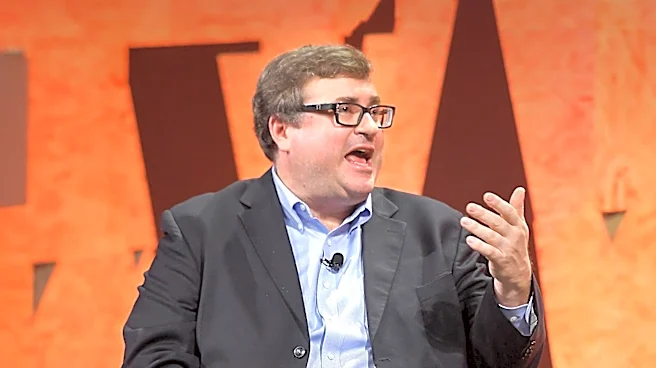
Reid Hoffman, co-founder of LinkedIn, is actively engaged in discussions regarding the transformative impact of artificial intelligence (AI) on economic opportunity and entrepreneurship. In a recent podcast, Hoffman, alongside Aria Finger, explored how
AI can empower more individuals to launch their own businesses. The conversation highlighted the increasing importance of entrepreneurial skills across various careers as AI reshapes traditional job markets. Hoffman also shared insights into his long-standing commitment to expanding access to quality employment, a focus that originated with LinkedIn and continues through his work with Opportunity@Work, an organization dedicated to creating opportunities for workers without college degrees. The discussion also touched upon Hoffman's AI-generated album, created to commemorate America's 250th anniversary, illustrating how creative AI applications can deepen human connections. He emphasized a framework for AI decision-making that prioritizes humanity, then society, and finally industry.
Why It's Important?
Hoffman's perspective is significant because it frames AI not merely as a disruptor of jobs but as a catalyst for new economic models and increased entrepreneurship. His advocacy for AI as a tool to help more people start businesses could influence policy discussions and investment in AI-driven entrepreneurial platforms. By focusing on expanding access to good jobs, particularly for those without traditional college degrees, Hoffman addresses a critical societal challenge of economic inclusion. His framework for guiding AI decisions—placing humanity first—is crucial for developing ethical AI that serves broader societal good rather than solely corporate interests. This approach could shape how AI is integrated into education, workforce development, and economic policy, potentially leading to a more equitable distribution of AI's benefits.
What's Next?
The ongoing dialogue initiated by figures like Reid Hoffman is likely to spur further exploration into how AI can be leveraged to democratize entrepreneurship. We can anticipate increased investment in AI tools designed to assist aspiring business owners, potentially leading to new platforms that simplify business creation and management. Discussions around AI's impact on the workforce will continue, with a focus on reskilling and upskilling initiatives to prepare workers for an AI-driven economy. Hoffman's emphasis on ethical AI development may also influence regulatory bodies and industry standards, pushing for AI systems that are designed with human and societal well-being at their core. Future developments may include more collaborations between tech leaders, non-profits, and government entities to implement strategies that harness AI for inclusive economic growth.
Beyond the Headlines
Beyond the immediate economic implications, Hoffman's vision touches upon a fundamental shift in the nature of work and human potential. By suggesting that AI can foster entrepreneurship, he implies a future where individuals have greater autonomy and creative control over their livelihoods, moving away from traditional employment structures. This could lead to a more dynamic and resilient economy, less susceptible to large-scale job displacement. The ethical framework he proposes for AI development—prioritizing humanity and society—underscores a growing recognition within the tech community of its responsibility to guide technological progress responsibly. This philosophical stance could influence the long-term trajectory of AI, ensuring it remains a tool for human flourishing rather than a source of societal division or economic inequality. The creative applications of AI, such as his AI-made album, also hint at a future where AI augments human creativity, opening new avenues for artistic expression and cultural connection.