



What's Happening?
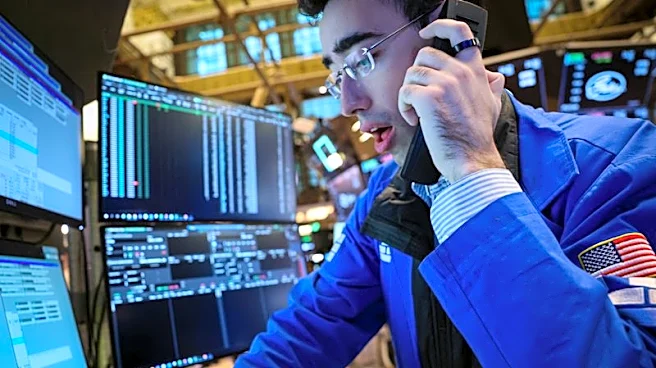
Technology stocks, particularly those in the artificial intelligence (AI) and semiconductor sectors, have led a broader market decline. This sell-off has put pressure on the Nasdaq, which is heavily weighted with large technology and growth companies.
Reports indicate weakness in Nvidia and Anthropic-related interests, contributing to the overall market retreat. Global equities have also moved lower, and Treasury yields have declined as investors either reduced risk or sought safer assets. While the exact cause of the sell-off is not definitively identified, possible explanations include increased scrutiny of the technology sector, concerns over AI valuations, and the sustainability of heavy AI spending. The decline in Treasury yields could reflect demand for government bonds, weaker growth expectations, changing interest-rate forecasts, or a broader shift towards defensive assets, but no single cause has been confirmed.
Why It's Important?
This technology-led market decline is significant because large technology companies represent substantial weightings in major indexes like the Nasdaq. When several highly valued companies in this sector fall together, it can significantly pull down the entire index, even if other sectors remain stable. The performance of companies like Nvidia, a key supplier of AI infrastructure, is often seen as an indicator of AI infrastructure demand. Weakness in such companies can raise questions about the pace of AI spending and its returns. The sell-off also highlights investor concerns regarding the high valuations of AI companies, questioning whether current prices are justified by future revenue growth, long-term margins, and sustained customer spending. This reassessment of AI-related assets could impact investment strategies and capital allocation across the U.S. technology sector.
What's Next?
The duration and depth of the technology sell-off will largely depend on several factors. Investors will closely monitor upcoming company earnings reports and guidance from key players like Nvidia, cloud-service providers, semiconductor manufacturers, and enterprise software companies. Specific attention will be paid to forward guidance, data-center capacity expansion, customer spending plans, margin trends, and capital-expenditure forecasts. Additionally, verified information regarding private-market valuations, particularly for companies like Anthropic, will be crucial. Broader economic data, including Treasury yields, inflation reports, employment figures, and central-bank communications, will also influence the valuation of growth stocks. The market's breadth and any potential sector rotation will indicate whether the selling is concentrated in technology or signals a broader economic concern. A stabilization of technology stocks and continued AI infrastructure demand could suggest a temporary correction, while reduced capital spending plans or falling AI valuations could indicate a deeper reset.
Beyond the Headlines
The current market dynamics underscore a deeper financial question: can companies generate sufficient revenue and profit to justify the substantial costs associated with AI infrastructure? Developing AI requires significant investment in expensive chips, data centers, electricity, engineering talent, and cloud capacity. Companies might initially increase capital expenditure while offering competitive pricing to gain market share, leading to rapid adoption but uncertain near-term returns. Potential warning signs include capital expenditure rising faster than revenue, delayed enterprise deployments, intense price competition, persistent pressure on gross margins, and difficulty in measuring productivity gains from AI. This situation could trigger a re-evaluation of business models within the AI sector, pushing companies to demonstrate clearer paths to profitability and sustainable growth rather than relying solely on speculative valuations. The sell-off also highlights the inherent risks of concentrated market leadership, where the performance of a few mega-cap companies can disproportionately influence overall market sentiment and stability.