


What's Happening?
Social media platforms are increasingly shaping how personal style is communicated, leading to a paradox where an abundance of fashion imagery does not necessarily result in greater visual diversity. Instead, platforms efficiently package and circulate
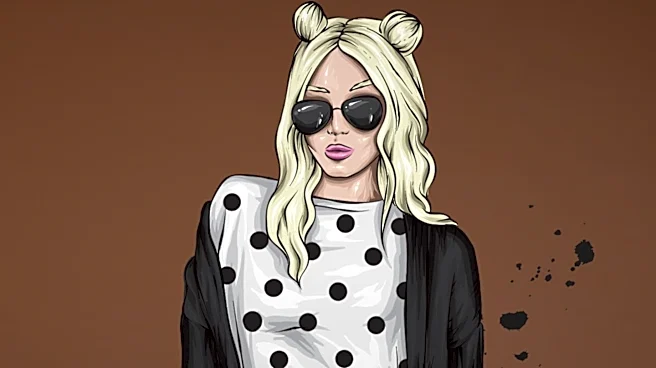
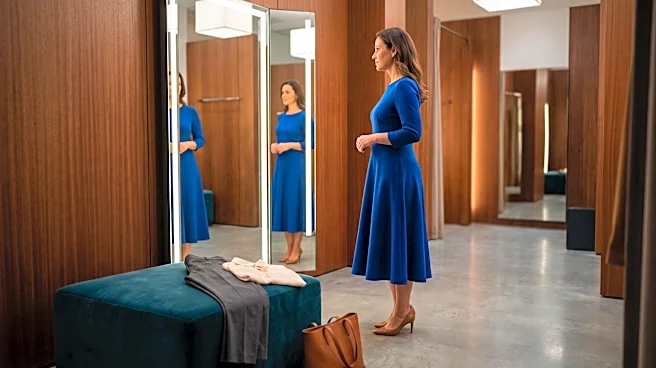
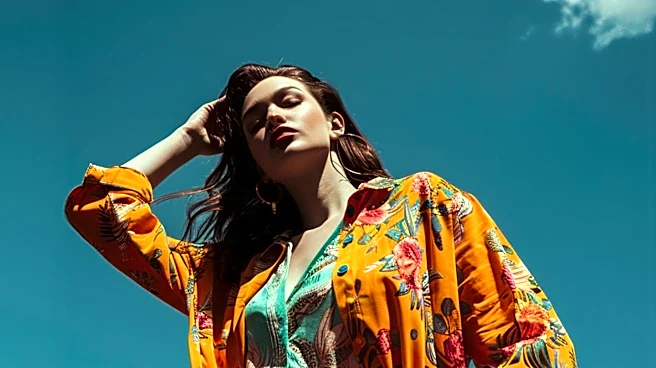
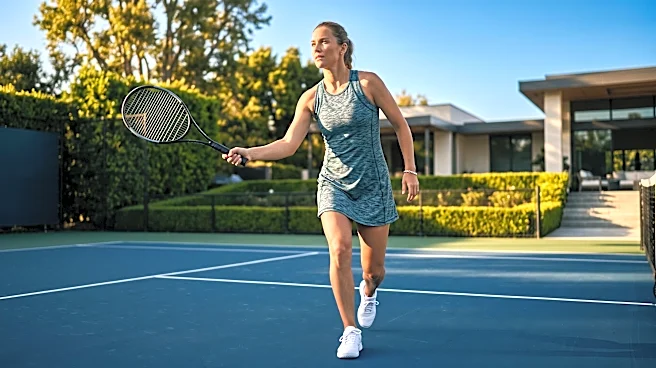
specific styles and conventions, making them easily reproducible and commercialized. This trend is evident in the rise of named aesthetics such as 'clean girl,' 'old money,' 'coastal grandma,' and 'mob wife,' which connect particular garments with locations, objects, beauty choices, and behaviors. These aesthetics, once recognizable, become searchable and easier to recommend and commercialize. Influencers play a crucial role by translating fashion into formats suitable for these platforms, often retaining recognizable signs of taste while reshaping them to fit social media's demands for speed, intimacy, entertainment, searchability, and visibility. This process can lead to individuals with vastly different wardrobes presenting their styles in remarkably similar ways online, using recurring visual cues like specific poses, settings, and captions.
Why It's Important?
This shift in fashion communication has significant implications for the U.S. fashion industry and consumer behavior. The commercialization of easily reproducible aesthetics means that trends can emerge and dissipate more rapidly, potentially increasing consumption cycles and the demand for fast fashion. For businesses, understanding these platform-driven communication patterns is crucial for marketing and sales strategies. Influencers, by acting as intermediaries, hold considerable power in shaping consumer preferences and driving sales. However, the homogenization of style communication could also lead to a decrease in genuine personal expression, as individuals may feel pressured to conform to popular online aesthetics. This could stifle creativity within the industry and among consumers, potentially leading to a less diverse and more uniform fashion landscape. The emphasis on 'searchability' and 'reproducibility' also means that brands and designers who can quickly adapt to and capitalize on these trends are more likely to succeed, while those focused on niche or truly unique styles might struggle for visibility.
What's Next?
The trend of social media standardizing fashion communication is likely to continue, with platforms further refining algorithms to promote easily digestible and reproducible aesthetics. We can anticipate an ongoing proliferation of new 'named aesthetics' as influencers and users continuously seek novel ways to categorize and present style. Fashion brands will likely invest more in social media marketing and influencer collaborations to tap into these trends, potentially leading to more direct-to-consumer models and a greater emphasis on digital content creation. Consumers may become even more adept at identifying and adopting these aesthetics, but there could also be a counter-movement towards more authentic and individualistic expressions of style as some users push back against perceived homogenization. The efficiency of trend circulation will continue to challenge traditional fashion cycles, demanding quicker responses from designers and retailers.
Beyond the Headlines
Beyond the immediate commercial and stylistic impacts, the standardization of fashion communication on social media raises deeper questions about individuality, authenticity, and the nature of self-expression in the digital age. While platforms offer unprecedented access to fashion imagery, they also impose a certain uniformity on how that imagery is presented and interpreted. This can create a paradox where the pursuit of individuality through fashion becomes channeled into a limited set of recognizable, platform-optimized aesthetics. The constant circulation of similar references and styling cues might inadvertently diminish the perceived value of truly unique personal style, favoring instead a performative version of individuality that aligns with social media's conventions. This phenomenon could also influence broader cultural perceptions of taste and distinction, as what is deemed 'fashionable' becomes increasingly intertwined with what is easily communicable and shareable online, potentially blurring the lines between genuine personal preference and algorithm-driven trends.