



What's Happening?
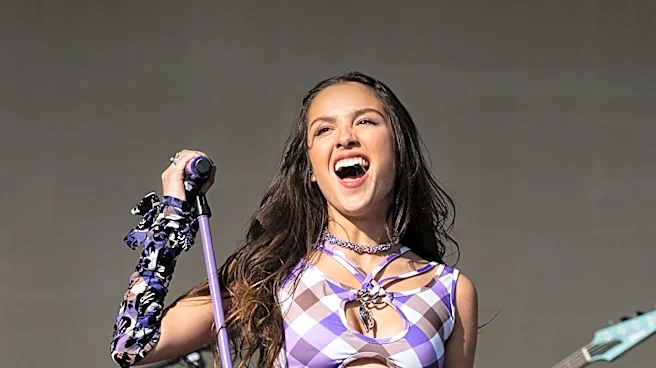
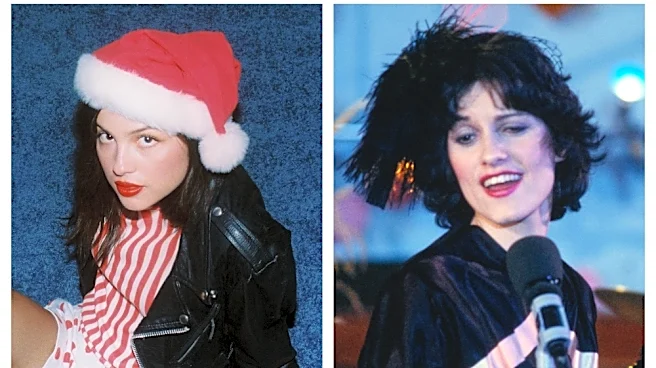
Olivia Rodrigo's new holiday single, 'Take Me Home (4 Christmas),' has drawn comparisons to 'Christmas Wrapping' by the Waitresses due to similar vocal styling and a twangy track. Initially, some internet users and fans of rival artists raised accusations
of plagiarism. However, Rodrigo had proactively contacted Chris Butler, the writer of 'Christmas Wrapping' and a member of the Waitresses, before releasing her song to acknowledge his original work and its inspiration. Butler subsequently defended Rodrigo on social media, clarifying that her song does not copy the melody or chord progression of 'Christmas Wrapping,' distinguishing it as an homage rather than plagiarism. This incident highlights ongoing discussions within the music industry regarding creative inspiration and intellectual property, particularly as other artists like Olivia Dean and Stella Lefty have faced similar accusations or controversies.
Why It's Important?
This event is important as it underscores the fine line between artistic homage and plagiarism in the music industry, a recurring issue with significant implications for artists' careers and intellectual property rights. For Olivia Rodrigo, a prominent artist, the pre-emptive communication with Chris Butler and his subsequent public defense have likely mitigated potential damage to her reputation and Grammy prospects. This situation could set a precedent for how artists approach and acknowledge their inspirations, potentially encouraging more transparent practices to avoid legal disputes and public backlash. The distinction between 'vibe' and direct musical copying, as articulated by Butler, is crucial for legal interpretations and public perception. For the broader music industry, it reinforces the need for clear guidelines and ethical considerations when drawing inspiration from existing works, especially in an era where digital platforms amplify both creative works and accusations of infringement.
What's Next?
The clarification from Chris Butler is expected to largely resolve the plagiarism accusations against Olivia Rodrigo regarding 'Take Me Home (4 Christmas).' This incident may influence how other artists and their legal teams approach new releases that bear resemblances to existing works, potentially leading to more proactive outreach and credit given to original creators. For Rodrigo, her Grammy nomination predictions remain strong, suggesting that this 'controversy' has not significantly impacted her standing. The broader conversation around intellectual property in music will likely continue, with future cases potentially referencing this situation as an example of successful resolution through transparency and direct communication. The music industry may see an increased emphasis on distinguishing between inspiration and infringement, particularly as digital sampling and creative reinterpretation become more prevalent.
Beyond the Headlines
Beyond the immediate headlines, this situation touches upon the evolving nature of creativity and originality in the digital age. The ease with which music can be shared and analyzed online means that similarities, whether intentional or coincidental, are quickly identified and debated. This creates a challenging environment for artists who draw inspiration from a vast catalog of existing works. The concept of 'vibe' versus direct copying, as highlighted by Chris Butler, points to a deeper cultural and legal discussion about what constitutes a unique artistic creation. It also raises questions about the role of social media in shaping public opinion and potentially escalating minor resemblances into full-blown controversies. This incident could contribute to a more nuanced understanding of artistic influence, encouraging both creators and audiences to appreciate the complexities of musical composition and the ethical responsibilities that come with it.