



What's Happening?
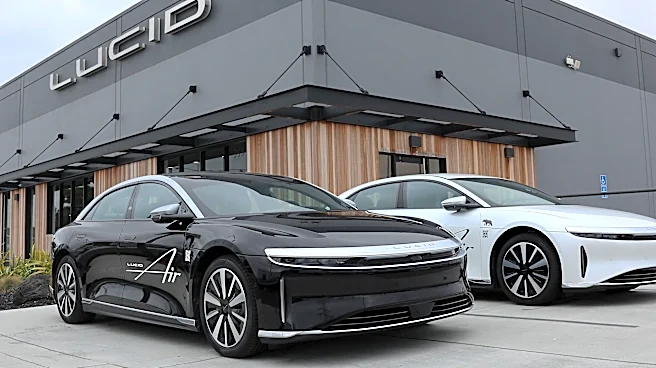
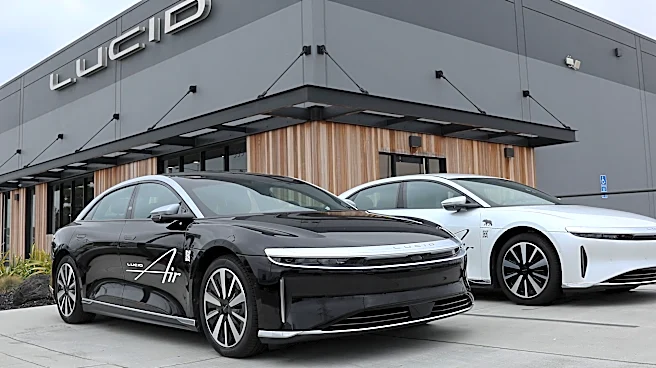
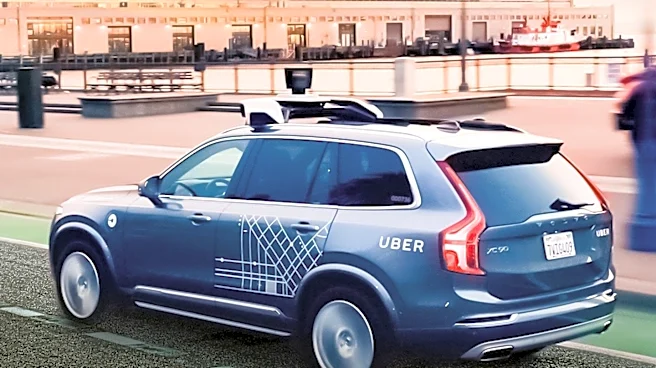
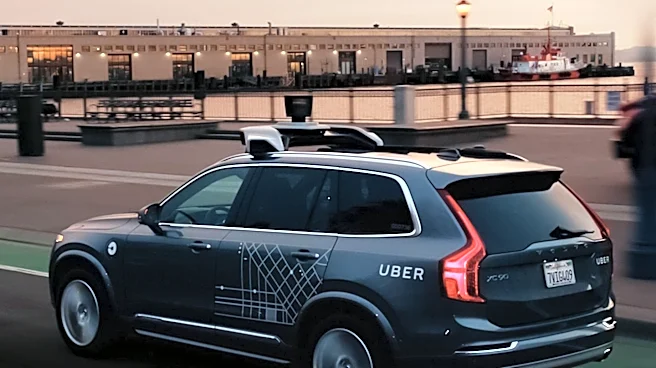
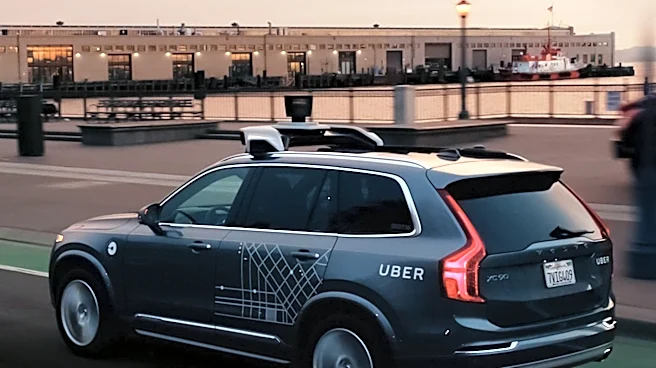
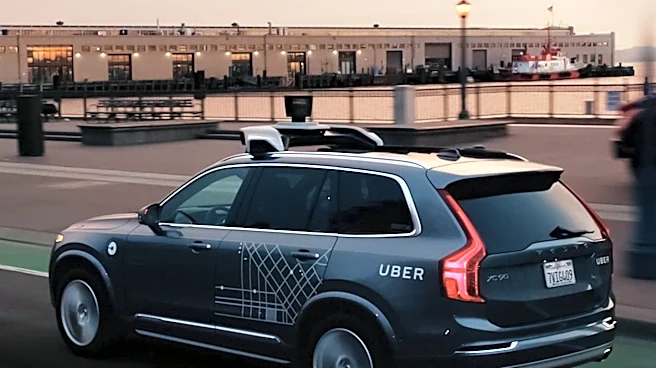
Lucid Group, Inc. and Uber, in collaboration with autonomous driving technology developer Nuro, have initiated driverless testing of Lucid Gravity SUVs on public roads in the San Francisco Bay Area. This development follows Nuro's receipt of a California
Department of Motor Vehicles permit in May 2026, allowing for autonomous vehicle testing without a human safety operator. The companies had previously conducted nearly a year of supervised public-road testing, alongside closed-course testing and simulation. The Lucid Gravity robotaxi, unveiled in January 2026, is equipped with high-resolution cameras, solid-state lidar sensors, and radar systems for autonomous navigation. Nuro is responsible for the autonomous driving technology, while Uber will manage the fleet operations and passenger experience. The partnership aims to offer driverless rides to employees before a commercial robotaxi service launch in the first quarter of 2027. Supervised autonomous-vehicle testing is also ongoing in Houston.
Why It's Important?
This advancement is a significant step towards the commercialization of Lucid's electric vehicles for autonomous mobility and could substantially impact the robotaxi market. The partnership provides Lucid with increased production visibility, as Uber initially committed to purchasing at least 20,000 Lucid Gravity SUVs over six years, later increasing the target to 35,000 vehicles. This commitment, coupled with Uber's increased investment from $300 million to $500 million, could support Lucid's manufacturing scale, capacity utilization, and revenue growth. For Uber, this collaboration strengthens its position in the evolving autonomous ride-hailing sector. The division of responsibilities allows Lucid to focus on vehicle manufacturing, while Nuro and Uber leverage their expertise in autonomous driving and mobility operations, respectively. The success of this venture could accelerate the adoption of autonomous electric vehicles in urban transportation.
What's Next?
The companies plan to offer driverless rides to employees in the near future, preceding a full commercial robotaxi service launch in the first quarter of 2027. The successful validation of the autonomous technology, securing necessary regulatory approvals, and ensuring operational readiness are critical next steps. Lucid's ability to efficiently fulfill the fleet commitment while maintaining healthy vehicle economics will determine the financial gains from this increased production opportunity. The ongoing supervised testing in Houston suggests a broader rollout strategy beyond the Bay Area. The progress of this partnership will be closely watched by the automotive and technology industries as a benchmark for the viability and scalability of autonomous ride-hailing services.
Beyond the Headlines
The collaboration between Lucid, Uber, and Nuro highlights a growing trend of strategic partnerships in the autonomous vehicle sector, where companies combine their specialized expertise to accelerate development and market penetration. This model allows for a more efficient allocation of resources and risk. The ethical and legal implications of widespread driverless robotaxi services, particularly concerning liability in accidents and data privacy, will become increasingly prominent as these services expand. Furthermore, the impact on traditional taxi and ride-sharing drivers, as well as urban planning and infrastructure, will be significant. The success of this initiative could set a precedent for how autonomous technology is integrated into public transportation, potentially reshaping urban mobility and reducing traffic congestion and emissions in the long term.