





What's Happening?
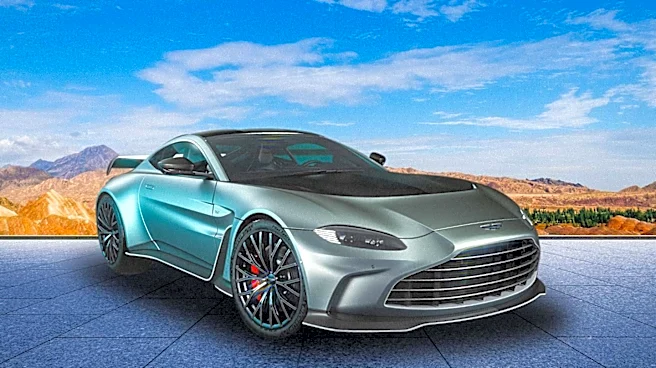
Aston Martin has revealed the 2025 Vantage, a luxury grand touring sports car that maintains its classic front-engine, rear-drive configuration while receiving substantial upgrades. The vehicle's AMG-sourced 4.0-liter twin-turbo V8 engine now produces
656 horsepower and 590 lb-ft of torque, marking a 128 hp increase over the previous model. This power is delivered to the rear wheels via an 8-speed automatic transmission, enabling a 0-60 mph acceleration in 3.4 seconds and a top speed of 202 mph. Beyond the powertrain, the 2025 Vantage features significant exterior revisions, including a larger grille, reshaped bumper, new LED headlamps, and 21-inch alloy wheels. The interior has also undergone a major overhaul, introducing a new center console, an updated infotainment touchscreen, and a single instrument display, aiming to provide a more modern and refined cabin experience. The starting MSRP for the 2025 Aston Martin Vantage is $191,000.
Why It's Important?
The introduction of the 2025 Aston Martin Vantage signifies the brand's commitment to enhancing performance and luxury in the competitive high-end sports car market. The substantial increase in horsepower and the modernized interior aim to position the Vantage more favorably against rivals such as the Porsche 911 Turbo, Mercedes-AMG GT, and Chevrolet Corvette Z06. For the U.S. market, this release caters to a niche but affluent consumer base seeking a blend of British elegance and raw power. The focus on a more engaging rear-drive chassis and a significantly improved cabin experience could attract buyers who prioritize driving dynamics and interior sophistication. However, the high price point, lack of a manual transmission option, and limited cargo space might be considerations for potential buyers, influencing its market penetration compared to more versatile or value-driven competitors. The upgrades reflect a broader trend in the luxury automotive sector towards integrating advanced technology and higher performance while retaining brand identity.
What's Next?
Following its unveiling, the 2025 Aston Martin Vantage will likely enter production and become available for purchase in the U.S. market. The automotive press and potential buyers will closely evaluate its real-world performance and driving experience, particularly how the increased power and chassis refinements translate on the road. Aston Martin will monitor sales figures and customer feedback to gauge the success of these significant updates. The brand may also introduce further customization options or special editions to maintain interest and cater to individual preferences. The competitive landscape will continue to evolve, with other luxury sports car manufacturers potentially responding with their own updates or new models, creating an ongoing cycle of innovation and competition in the high-performance segment. The long-term success of the 2025 Vantage will depend on its ability to consistently deliver on its promise of enhanced performance and luxury, while also addressing any perceived drawbacks.
Beyond the Headlines
The redesign of the 2025 Aston Martin Vantage highlights the ongoing evolution of luxury sports cars in an era increasingly focused on electrification and autonomous driving. By doubling down on a powerful internal combustion engine and a traditional sports car formula, Aston Martin is appealing to enthusiasts who value raw driving experience and heritage. This strategy could differentiate it from competitors that are rapidly transitioning to hybrid or electric powertrains. The significant interior technological upgrades, such as the new infotainment system, also reflect the necessity for luxury brands to integrate modern digital experiences without compromising their classic appeal. This balancing act between tradition and innovation is crucial for maintaining relevance and attracting a new generation of buyers while retaining loyal customers. The high price point also underscores the exclusivity and aspirational value inherent in the Aston Martin brand, positioning it as a symbol of luxury and performance rather than mass-market appeal.