





What's Happening?
IndiGo is set to introduce a three-class cabin configuration on its new Airbus A350 fleet as part of its strategy to expand into long-haul international routes. According to IndiGo CEO Willie Walsh, the airline expects its first A350-900 deliveries in the second
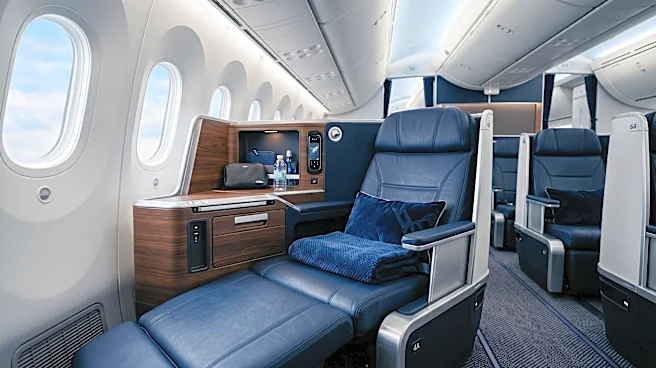
quarter of 2028. The initial 10 A350s will feature 16 business-class lie-flat seats, along with premium economy and economy sections. This move signifies a departure from IndiGo's traditional no-frills model, aiming to broaden its appeal and support longer international flights. IndiGo currently holds approximately 65% of India's domestic market share, and these wide-body aircraft are central to its long-haul ambitions, complementing its existing A321 XLR network. The airline will continue to operate A321 XLR services to Amsterdam until the A350s become operational to maintain valuable flight slots.
Why It's Important?
This strategic shift by IndiGo to offer a three-class cabin on its A350s is significant for the aviation industry, particularly in the context of long-haul travel. By introducing premium offerings like lie-flat business class seats, IndiGo aims to attract a higher-yield customer segment, which could enhance its revenue per seat on international routes. This move positions IndiGo to compete more directly with established full-service international carriers, potentially increasing competition and offering more diverse options for travelers, including those from the U.S. seeking flights to India and beyond. The expansion into long-haul routes with wide-body aircraft also underscores IndiGo's ambition to solidify its dominance beyond the domestic market, potentially reshaping the competitive landscape of international air travel to and from India.
What's Next?
IndiGo anticipates the delivery of its first Airbus A350-900s in the second quarter of 2028. The initial 10 aircraft will have a finalized layout featuring 16 business-class lie-flat seats, premium economy, and economy sections. IndiGo plans to evaluate the possibility of incorporating more business-class flat beds in subsequent A350s. The airline will continue to operate A321 XLR services to destinations like Amsterdam until the A350s are integrated into the fleet, ensuring the preservation of valuable flight slots. Additionally, IndiGo is assessing fuel hedging strategies, a decision that could impact its operational costs and margins as it expands its international network. Mumbai and the future Navi Mumbai airport are highlighted as pivotal hubs for the airline's long-haul growth.
Beyond the Headlines
IndiGo's strategic evolution from a purely low-cost carrier to one offering premium long-haul services reflects a dynamic shift in the global aviation market. This move suggests that even budget airlines are recognizing the demand for enhanced comfort and services on extended flights. The introduction of lie-flat seats and premium economy cabins could set a new standard for value propositions in long-haul travel, potentially blurring the lines between traditional full-service and low-cost models. This development also highlights the growing importance of the Indian aviation market as a key player in international air travel, with IndiGo aiming to leverage its domestic strength to build a formidable global presence. The careful consideration of fuel hedging further illustrates the complex financial planning required for such ambitious expansions in a volatile economic environment.