








What's Happening?
ID's new docuseries, 'O.J. Unseen: Exploitation of Evil,' delves into the making and subsequent failure of 'Juiced,' a hidden-camera prank show starring O.J. Simpson in 2006. The show, intended to kickstart Simpson's career comeback a decade after his
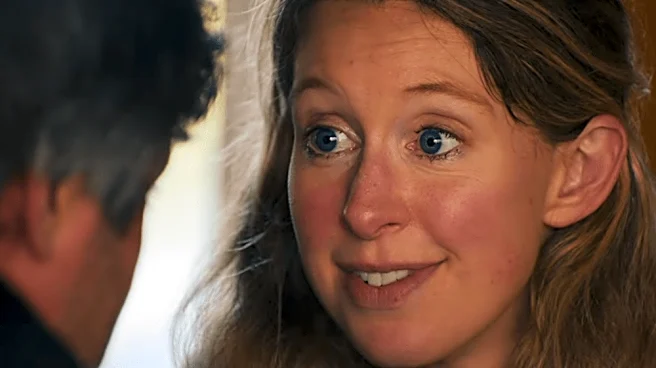
acquittal in the murders of Nicole Brown Simpson and Ron Goldman, never saw a full release. Details of 'Juiced' leaked, leading to public outrage and condemnation from the victims' families, which ultimately derailed its planned DVD release. While 'Juiced' was briefly available via video on demand, it largely remained unseen by the public. The docuseries utilizes over 60 hours of behind-the-scenes footage and interviews with the cast and crew, some of whom express remorse for their involvement. Executive producers Eric Day and Mark Koops, along with director Rebecca Halpern, aim to tell the story of how this controversial project came together and ultimately fell apart.
Why It's Important?
This documentary is important as it sheds light on a largely forgotten, yet highly controversial, chapter in O.J. Simpson's post-trial life and the broader landscape of early 2000s reality television. It highlights the ethical dilemmas and public backlash that can arise when figures associated with high-profile criminal cases attempt to re-enter the public eye through entertainment. The series also serves as a historical marker for the evolution of celebrity brand management and media gatekeeping. In an era before widespread social media, the public's reaction and the collective decision of distributors to withhold 'Juiced' demonstrated a significant, albeit uncoordinated, boundary for what was deemed acceptable content. This contrasts sharply with today's 'Wild West' media environment, where such gatekeepers are largely absent, raising questions about accountability and the potential for unchecked content dissemination.
What's Next?
The docuseries 'O.J. Unseen: Exploitation of Evil' is airing on ID and HBO Max, which will likely bring renewed attention to the 'Juiced' project and O.J. Simpson's attempts to re-establish a public presence. The interviews with the original cast and crew, particularly those expressing remorse or offering new insights, could spark further public discussion about the ethics of exploiting tragedy for entertainment. Given the enduring public fascination with O.J. Simpson's story, the documentary may prompt additional analyses or retrospectives on his post-acquittal life and the media's role in shaping public perception. It could also lead to discussions within the entertainment industry about the responsibility of content creators and distributors when dealing with sensitive subjects and controversial figures.
Beyond the Headlines
Beyond the immediate narrative of O.J. Simpson's failed reality show, 'O.J. Unseen' touches upon deeper societal implications regarding celebrity culture, media ethics, and the public's role in shaping content. The documentary implicitly explores the tension between freedom of expression and the moral responsibility of media outlets, especially when dealing with individuals linked to profound public tragedies. The 'Juiced' project, with its tone-deaf pranks like Simpson posing as a used car salesman selling a white Ford Bronco, highlights a significant lapse in judgment and a disconnect from public sentiment. The series also offers a unique perspective on Simpson himself, showing him watching Court TV while in prosthetic makeup, offering 'informed opinions' on celebrity and the justice system. This surreal imagery underscores the complex and often disturbing intersection of crime, celebrity, and media exploitation that continues to resonate in contemporary culture.