







What's Happening?
The Japanese government has approved an additional $635 million in investments for five of the country's shipbuilders as part of a broader plan to revitalize its shipbuilding industry. This recent approval, announced on September 11, follows earlier grants
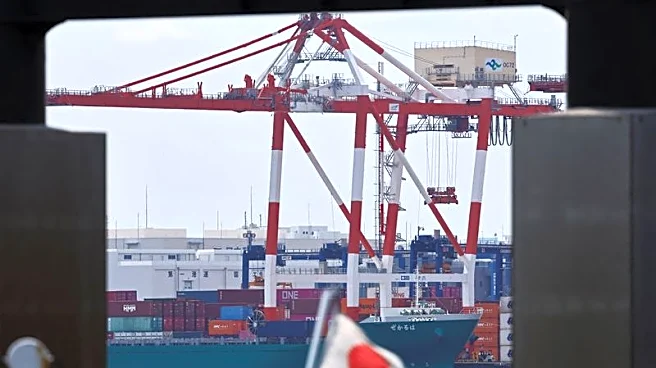
totaling $1.4 billion awarded on September 4. The overall government initiative aims for a total investment of approximately 1 trillion yen ($6.4 billion) through public-private partnerships, with certifications continuing until 2034. The Ministry of Transport is spearheading this effort, emphasizing the critical role of maritime trade for Japan's essential goods like energy and food. The goal is to significantly increase shipbuilding capacity, combat a declining market share, address an aging workforce, and boost employment within the sector. The Shipbuilding Industry Revitalization Fund reviews company plans focusing on enhancing shipbuilding capabilities. Among the latest recipients, Mitsubishi Shipbuilding received $260 million, Shin Kurushima Group $208 million, Kawasaki Heavy Industries $102 million, Oshima Shipbuilding $40 million, and Naikai Zosen $28 million.
Why It's Important?
This substantial investment by the Japanese government underscores a strategic national effort to secure its maritime trade capabilities and industrial strength. Japan's reliance on sea transport for vital resources makes a robust shipbuilding industry a matter of national security and economic stability. By aiming to double shipbuilding output by 2035 and increase its global market share from the current nine percent, Japan is directly challenging the dominance of competitors like South Korea and China. The investments are targeted at modernizing facilities, introducing automation, expanding docks, and acquiring larger cranes, which are crucial for improving efficiency and competitiveness. This move could lead to a significant shift in the global shipbuilding landscape, potentially intensifying competition and influencing international maritime trade dynamics. For the U.S., a stronger Japanese shipbuilding sector could mean more resilient supply chains in the Indo-Pacific and potentially new opportunities for collaboration or competition in maritime technology and defense.
What's Next?
The Japanese government plans to continue certifying investment plans through 2034, indicating a long-term commitment to this revitalization strategy. Shipbuilders like Kawasaki Heavy Industries and Oshima Shipbuilding have already outlined their intentions to use these funds for specific enhancements, such as expanding LNG carrier construction capabilities and strengthening production systems. The industry will likely see a phased implementation of these investments, leading to gradual increases in capacity and technological advancements. The success of this initiative will be measured by Japan's ability to achieve its target of 18 million gross tons of shipbuilding capacity by 2035, up from under 9 million gross tons in 2025. This ongoing investment program is expected to stimulate innovation, create jobs, and potentially attract further private sector investment into the Japanese maritime industry. International observers will be watching to see how these developments impact global shipping markets and geopolitical maritime strategies.
Beyond the Headlines
Beyond the immediate economic and industrial implications, Japan's shipbuilding revitalization plan reflects a broader national strategy to maintain self-sufficiency and influence in a rapidly evolving global environment. The emphasis on shipbuilding as one of 17 priority industries highlights a recognition of its foundational role in national security and economic resilience. This initiative also addresses demographic challenges, such as an aging workforce, by promoting automation and labor-saving equipment, which could serve as a model for other industrialized nations facing similar issues. The long-term success of this plan could redefine Japan's position as a leading maritime power, potentially influencing international standards for shipbuilding technology and environmental sustainability in the industry. It also signals a strategic response to geopolitical shifts and the increasing importance of secure maritime supply routes, reinforcing Japan's commitment to safeguarding its economic interests and national security through industrial strength.