




What's Happening?
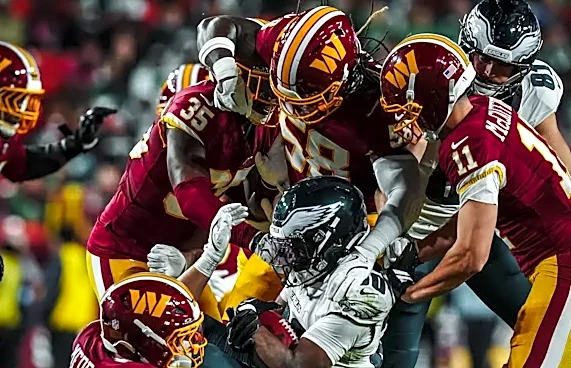
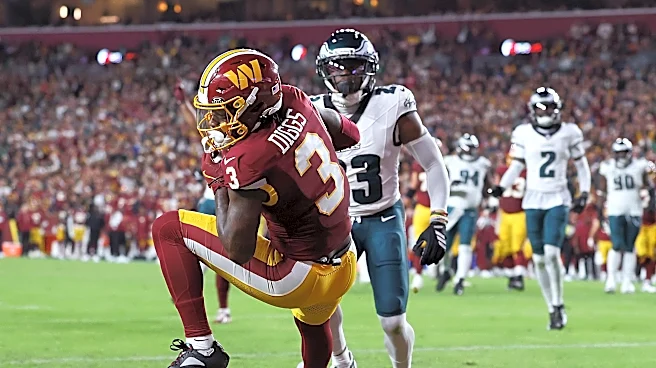
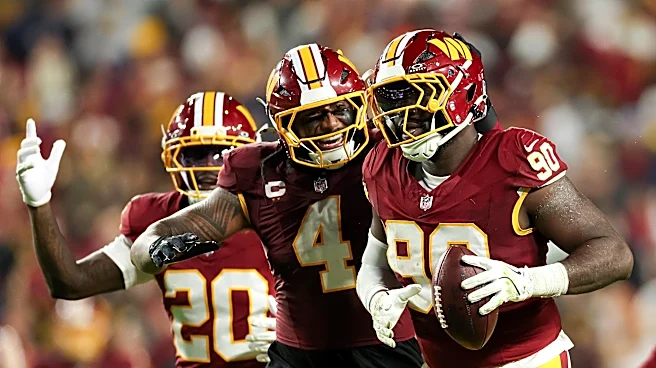
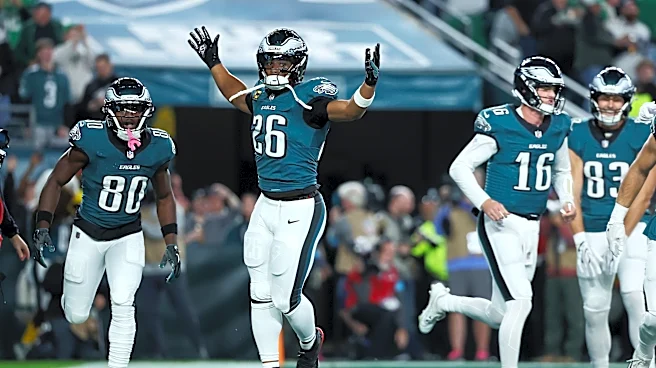
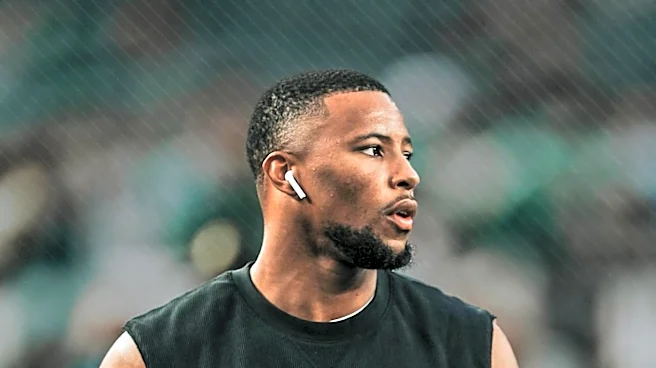
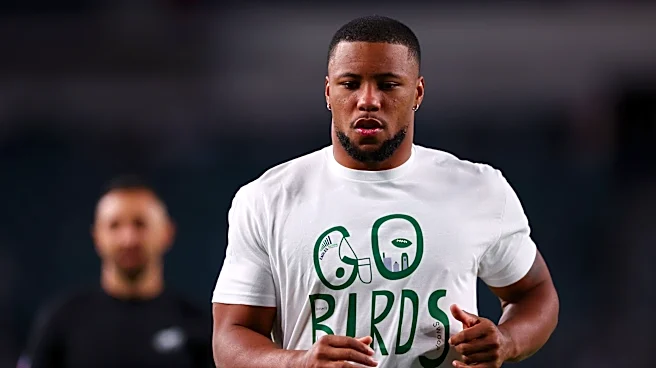
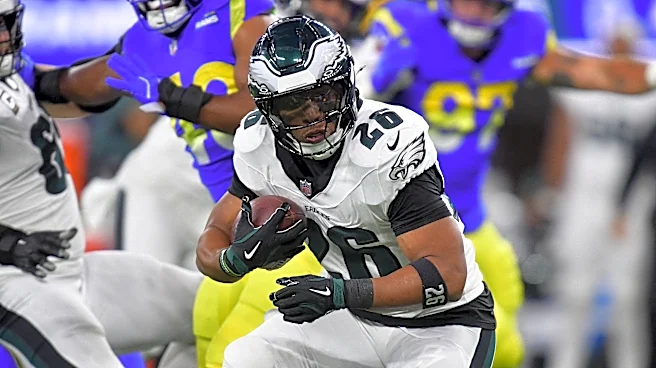
Philadelphia Eagles running back Saquon Barkley has publicly stated his desire to remain with the team despite recent trade rumors and the team's current six-game losing streak. Following the Eagles' 27-10 loss to Washington, Barkley told reporters, "I
would love to be here. I plan on being here." He emphasized that he is not one to "jump ship" and prefers to be part of the solution to the team's problems. The Eagles, with a 2-6 record, are in last place in their division, and the trade deadline is approaching on November 10. Barkley has been dealing with hamstring and back injuries, which have limited his snaps. In his third season with the Eagles, he has accumulated 274 rushing yards on 56 carries, averaging 4.9 yards per carry, and has scored two rushing touchdowns. He has also caught seven passes for 41 yards. The team has already made one trade, sending offensive lineman Cam Jurgens to the Ravens, fueling speculation about further roster changes.
Why It's Important?
Barkley's public commitment to the Eagles is significant for team morale and fan perception, especially during a challenging season marked by injuries and a losing streak. His statement could help stabilize the locker room and project a sense of unity, which is crucial for a team struggling with performance. For the Eagles' front office, Barkley's stance might influence their decisions regarding the upcoming trade deadline. Retaining a high-profile player like Barkley, even amidst a difficult season, could signal a long-term vision and a commitment to building around key talent rather than initiating a full rebuild. Conversely, if the team continues to underperform, the pressure to make significant changes, including trading valuable assets, could intensify. His presence, even if injured, provides a veteran leader and a potential offensive spark once healthy, which could be vital for the team's future competitiveness.
What's Next?
With the NFL trade deadline on November 10, the Eagles' management will need to make definitive decisions regarding their roster. While Barkley has expressed his desire to stay and reports suggest the Eagles have no plans to trade him, the team's poor performance could still lead to further roster adjustments. The Eagles are set to face the NFC East-leading Giants next, a game that could further shape the team's outlook. Barkley's health will also be a critical factor; his ability to return to full strength and contribute significantly could impact the team's second-half performance. The team's strategy moving forward will likely involve balancing immediate competitive needs with long-term rebuilding efforts, especially given the injuries to key players like quarterback Jalen Hurts.
Beyond the Headlines
The situation with Saquon Barkley and the Eagles highlights the complex dynamics between player loyalty, team performance, and the business aspects of professional sports. Barkley's decision to publicly commit to a struggling team, rather than seeking a move to a contender, speaks to a deeper sense of responsibility and leadership. This narrative can resonate with fans who value dedication and resilience, potentially strengthening the bond between the player and the fan base. From a broader league perspective, how the Eagles handle this period of adversity, particularly with a star player like Barkley, could set a precedent for how teams manage talent during downturns. It also underscores the constant pressure on NFL teams to balance short-term results with long-term strategic planning, especially when faced with unexpected challenges like a rash of injuries.