
What's Happening?
The Nasdaq Composite experienced a significant surge of 6.5% on November 23, interrupting a seven-session losing streak for U.S. stocks. This rally was primarily driven by a sharp recovery in technology
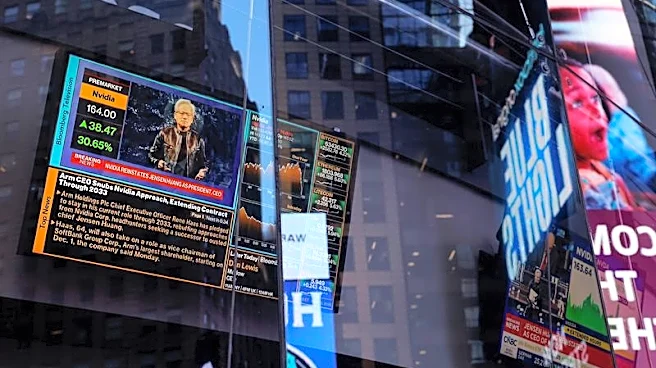
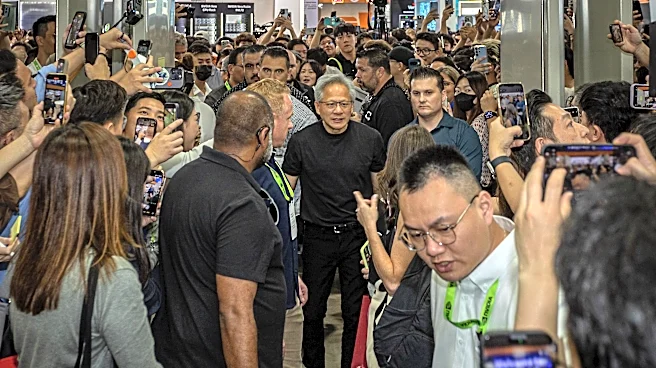
shares, following one of Wall Street's worst weeks in years. The S&P 500 also gained 4.6%, and the Dow Jones Industrial Average jumped over 1,500 points, approximately 3%. A key catalyst for this market rebound was Nvidia's decision to reinstate Jensen Huang as its chief executive officer. Following this announcement, Nvidia's shares surged more than 30%, adding over $1 trillion in market value at its intraday peak. The company's board unanimously reinstated Huang as president, CEO, and director, effective immediately, less than two weeks after his resignation. Nvidia's board stated that discussions with Huang and consultations with senior U.S. government officials confirmed his return posed no national security risk, despite an ongoing independent investigation into reports of him being targeted by foreign intelligence. The company also established a National Security and Export Control Committee to oversee related risks.
Why It's Important?
This market surge is important as it signals a potential, albeit cautious, shift in investor sentiment after a period of significant losses, particularly in the technology sector. The substantial rebound, especially in Nvidia's stock, highlights the market's sensitivity to leadership stability and perceived corporate strength within key technology companies. Nvidia's reinstatement of Jensen Huang, despite previous concerns, underscores the company's confidence in his leadership and its strategic direction, particularly in the burgeoning AI sector. The broader recovery across semiconductor companies and AI infrastructure providers suggests that investors are still keen on the long-term prospects of artificial intelligence, even amidst recent volatility. However, the rally's durability remains a question, with some analysts, like Nomura, warning that forced short covering and options-related buying might be amplifying the rebound, rather than reflecting a fundamental change in market outlook. Goldman Sachs has identified three conditions for a sustained market recovery: stronger confidence in future earnings from AI investment, improved macroeconomic conditions including a more accommodative Federal Reserve, and a substantial reduction in investor positioning.
What's Next?
The immediate focus for the market will be on whether this rally can be sustained beyond short covering and hedging adjustments, translating into consistent investor demand. Investors will closely monitor the Federal Reserve's December policy decision, as expectations of further interest rate increases continue to influence the market outlook. Higher interest rates disproportionately affect technology companies by increasing financing costs and reducing the present value of future earnings. Corporate earnings reports, including those from Hewlett Packard Enterprise and Zoom Communications, are also on the calendar, which will provide further insights into the health of various sectors. The ongoing independent investigation into reports concerning Jensen Huang and potential foreign intelligence connections will also be watched, though Nvidia's board has stated his return poses no national security risk. The market will also be looking for clearer signals regarding the profitability of expanding AI infrastructure, as this remains a key concern for investors.
Beyond the Headlines
The rapid reinstatement of Jensen Huang as Nvidia's CEO, despite an ongoing investigation into potential foreign intelligence connections, raises deeper questions about corporate governance, national security implications in the tech sector, and the perceived indispensability of certain leaders. The board's decision to consult with U.S. government officials before his return highlights the increasing intersection of corporate leadership, national security, and geopolitical considerations, especially for companies at the forefront of critical technologies like AI. This event could set a precedent for how major U.S. tech firms navigate leadership changes when national security concerns are present. Furthermore, the market's immediate and dramatic positive reaction to Huang's return underscores the significant influence individual leaders can have on investor confidence and market valuation, particularly in innovative and rapidly evolving industries. It also brings to light the delicate balance between corporate autonomy and government oversight in matters deemed vital to national interests.